
How a ppline automated packaging line keeps hopper feed, access, and pallet transfer steadier
For plants that need to move bulk material from feed hopper to filled sacks and then into warehouse logistics, the weak link is usually not the filling step itself. It is the handoff: unstable feeding, awkward access for operators, and a messy discharge zone that slows pallet work. This article shows how a ppline automatic packaging line is built to make that chain steadier from the first bag to the last pallet.
Why the old bagging setup starts to fall behind
Many bulk packing rooms still depend on a patchwork layout: one hopper feeds the filler, a separate line moves the bags, and operators work around the machine instead of with it. That works at low speed, but it becomes fragile when the plant asks for stable throughput, cleaner bag transfer, and more predictable dispatch.
The practical problems are easy to recognize. Feed surges create weighing fluctuation. Tight machine spacing makes maintenance slower. And if the discharge conveyor is not aligned with the pallet area, sacks get handled twice, which adds labor and raises the risk of bag damage. The result is a line that looks productive on paper but loses time in the handoff points.
When a packing line mixes filling, bag presentation, and discharge without clear mechanical separation, the plant spends more time correcting bag position, clearing access, and managing downstream stacking than actually packing material.
What makes ppline a better fit for this job
A ppline automatic packaging line is a better fit because the machine layout is built around the flow path itself. The bag magazine, clamp zone, discharge conveyor, and platform access are organized as one system rather than as unrelated add-ons. That matters in daily work: operators can reach the machine, the sack path stays controlled, and the plant can keep the line running without constantly interrupting the process.
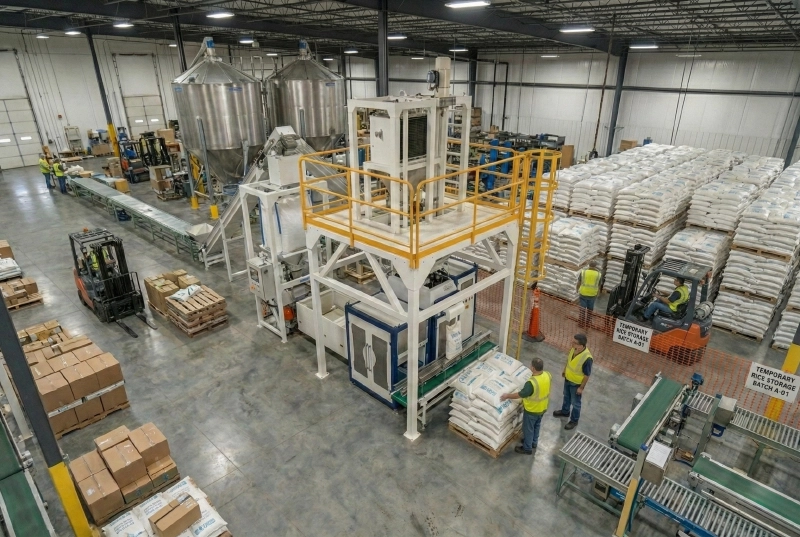
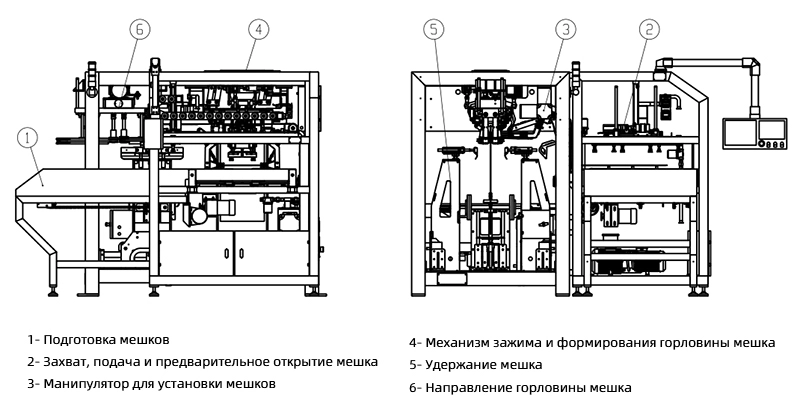
The visual evidence in the product images shows this clearly. The high-angle plant photo shows a real industrial layout with twin storage silos, conveyors, and active forklift logistics. The CAD blueprint shows how the bag magazine and handling mechanism are positioned for repeated, controlled bag presentation. The line render shows the accumulation belt, large bag gripper, and discharge conveyor working together so the machine does not depend on manual improvisation at the last step.
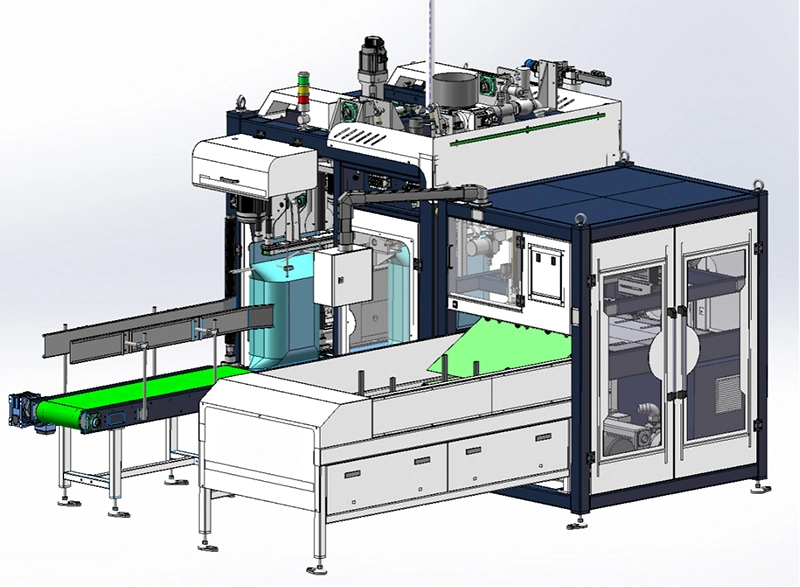
Operational note: In a bulk-bagging environment, the strongest improvement usually comes from reducing re-handling. When the conveyor, clamp, and bag release zones are aligned, the plant gains steadier bag transfer and cleaner pallet preparation without needing a more complex control philosophy.
Structure, parameters, and what the images prove
The line evidence points to three practical strengths. First, the feed and storage side is arranged for continuous supply from hopper or silo rather than ad hoc manual refilling. Second, the handling section is designed for repeatable bag positioning, which helps stabilize the filling and release sequence. Third, the discharge zone is organized for conveyor transfer, so filled sacks leave the machine in a cleaner, more predictable stream.
That combination is why plants choose an automatic packaging line like ppline when they want to reduce operator dependence. Instead of asking workers to correct each bag by hand, the line gives the machine the structure it needs to do the repetitive work consistently. The payoff is not only steadier output, but also less congestion around the packing point and a more orderly handoff to forklifts and pallet movement.
| Issue in the old line | What ppline changes | Результат на производстве |
|---|---|---|
| Unstable feed and inconsistent bag presentation | Hopper/silo-fed layout with controlled bag handling | Steadier filling rhythm |
| Poor access around the machine | Platform and structural layout designed for service access | Faster maintenance and fewer interruptions |
| Messy discharge and double handling | Conveyor-based outfeed and clearer transfer path | Cleaner pallet flow and lower labor load |
For plants planning a new bulk bagging room or upgrading an older packaging station, the key is not just speed. It is whether the structure supports stable feed, clean bag movement, and practical warehouse transfer. That is the point where ppline earns its place in the line.
Need a steadier bagging line layout?
If your current setup depends too much on manual correction, ppline can be configured around your feed source, bag type, and discharge route so the whole packaging sequence runs with less friction.
Request a packaging line layout review English
 Русский