
How an FFS Line Packages Pellets into Polyethylene Bags with Cleaner Handoffs, Safer Access, and Steadier Dispatch
For pellet producers that need to move from loose material to sealed polyethylene bags without slowing the warehouse, an FFS packaging line gives a cleaner and more controlled path: hopper feed, stable bag forming and filling, enclosed machine protection, and downstream palletizing in one connected flow.
Why pellet bagging gets messy on older lines
Pellet packing often starts with a simple request: move product from bulk storage into polyethylene bags that are consistent, clean, and easy to ship. In older setups, that job is usually split across separate machines, manual bag placement, and a lot of operator touch points. The result is familiar: slower cycle time, more risk of misaligned bags, more product spill around the filling point, and more forklift pressure at the back end because the line cannot discharge steadily.
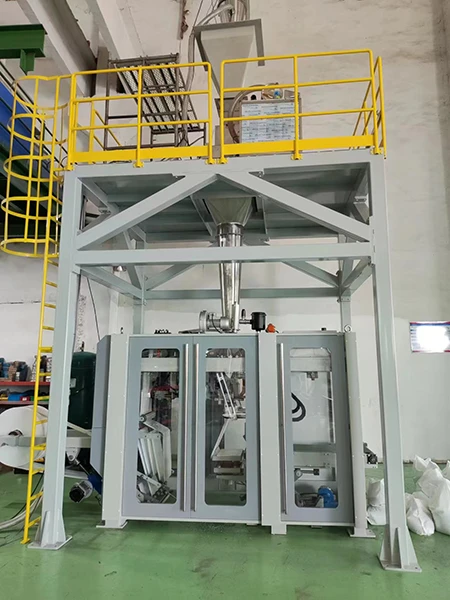
That is where an integrated FFS line changes the logic. Instead of treating filling, transfer, and palletizing as separate jobs, the line keeps the material path compact. The hopper sits above the main frame, the bag forming and filling zone stays guarded, and the outfeed side connects directly to conveyors and end-of-line handling. For pellet producers, this matters because pellets need a controlled flow and a stable bag mouth if you want the finished pack to look uniform on the pallet.
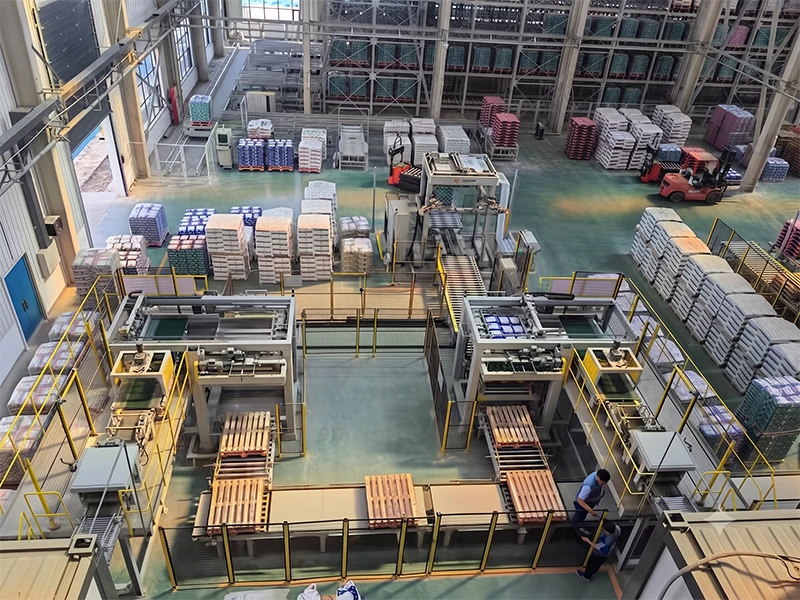
Operational note: The layout matters as much as the machine itself. A clean infeed-to-outfeed path helps keep pellet bagging stable when the line runs all day.
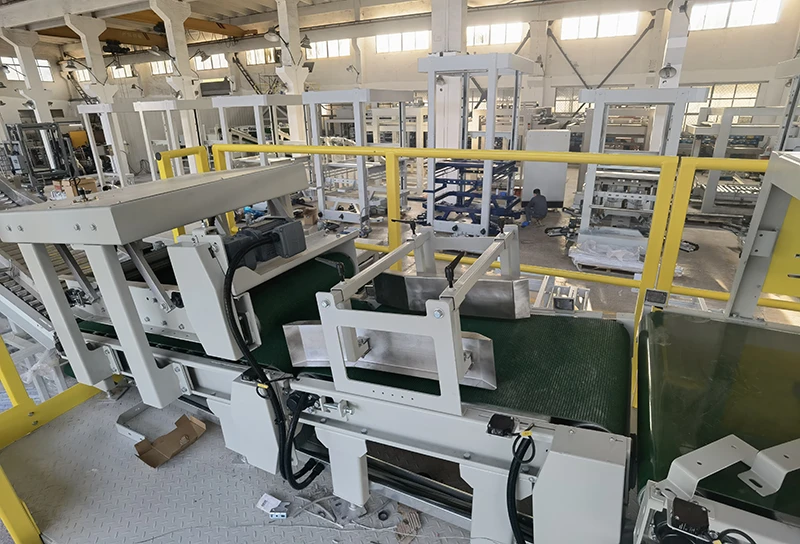
Manual bagging usually looks flexible at first, but it becomes the bottleneck when you need cleaner transfer, fewer interruptions, and a stable warehouse rhythm. The line slows down whenever bag placement drifts, filling needs repeated correction, or the discharge side cannot keep up with pallet movement.
Why this FFS structure fits polyethylene bag pellet packing
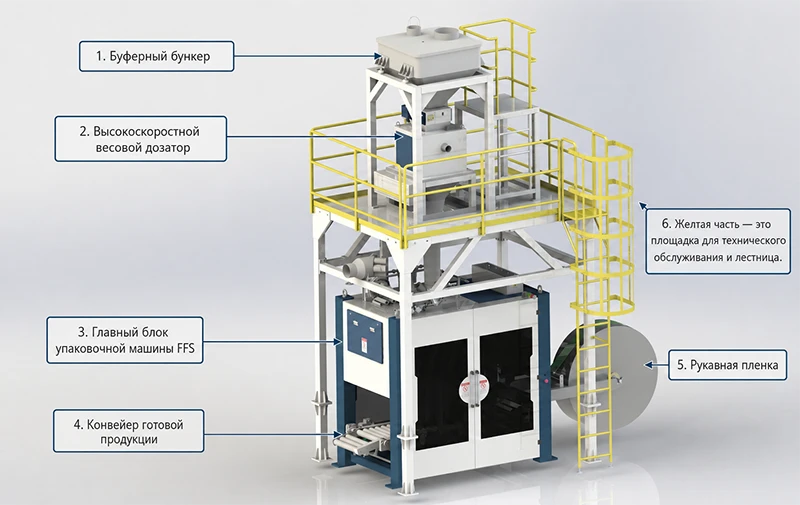
The machine structure shown in the line photos supports the exact needs of this application. The elevated service platform gives operators access without crowding the filling zone. Yellow safety rails separate people from the working area. The enclosed cabinet protects the core machine section and keeps the layout compact. On the process side, the bag forming and filling module gives the operator a defined point for film handling and product release, which is much easier to control than an open manual station.
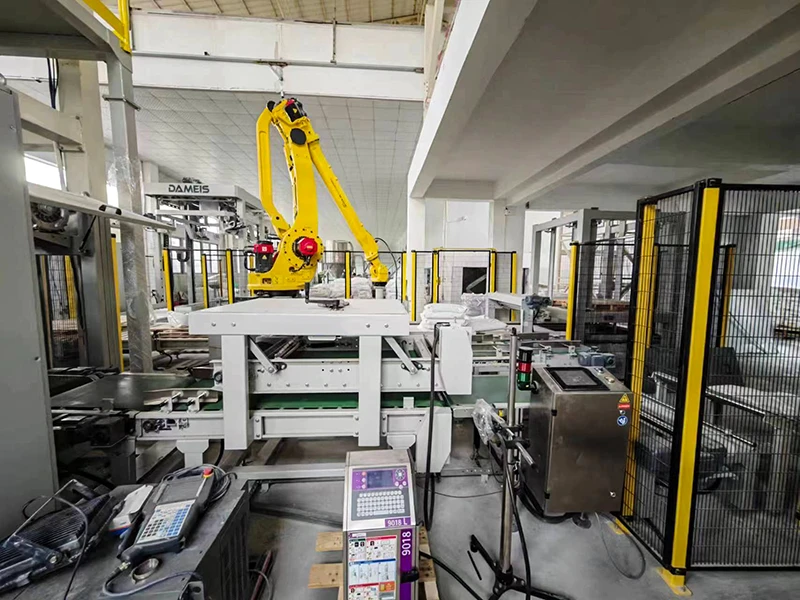
At the back end, the connected conveyor and robotic palletizing station show the practical result: bags leave the filling zone in a more regular flow and move into stacking without forcing the warehouse team to improvise. The annotated structure image makes the same point from a different angle. It shows where the process modules, film handling, control area, and service points sit, which is useful when a buyer needs to understand not just what the line does, but how it stays maintainable during daily operation.
What the buyer gets at the end of the line
The real value of this type of pellet packing equipment is not just that it bags product. It organizes the full transfer path so the bagging point, the discharge flow, and the palletizing area stop fighting each other. That means fewer manual corrections, cleaner handoffs between process stages, and a warehouse that can keep moving without stopping to fix the same problem again and again.
For pellet projects, that usually translates into three practical outcomes. First, the filled polyethylene bags look more uniform because the forming and filling zone is controlled. Second, the line is easier to operate because access, guarding, and service space are already built into the layout. Third, the downstream palletizing side can run with steadier rhythm, which helps protect the packaging schedule when demand rises.
| Customer issue | FFS line response |
|---|---|
| Bag placement drifts during manual filling | Defined bag forming and filling section with guarded machine frame |
| Product flow becomes uneven before dispatch | Hopper feed and connected conveyor layout keep transfer steadier |
| Warehouse handling slows at the end of the line | Robotic palletizing station supports cleaner end-of-line movement |
| Operators need access without crowding the process | Elevated platform and safety rails separate service access from working zones |
If you are planning pellet packing into polyethylene bags, send us your target bag size, expected output, and factory layout. We can help map the right FFS line structure to the way your material actually moves, so the package, the pallet, and the warehouse flow all stay aligned.
Need a pellet bagging line that matches your warehouse flow?
Share your pellet type, bag weight, and target speed, and we will suggest a packaging line layout that fits the filling point, transfer path, and downstream palletizing needs.
Request a line proposal English
 Русский