
Cement M400 Packaging in Valve Bags: A Cleaner Route to Stable 25 kg Pallets
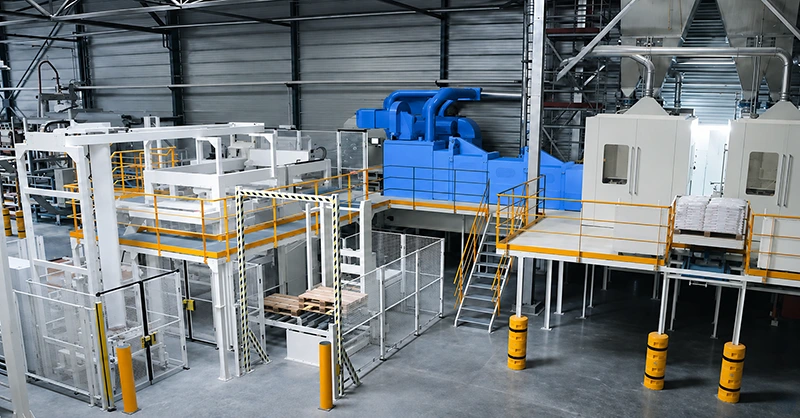
For cement and dry-mix plants evaluating automatic cement bagging, VPLINE connects valve-bag filling, dust control, weight inspection, metal detection, bag shaping and robotic palletizing in one engineered line. The typical reference is a 25 kg valve bag; final bag weight, material behavior and throughput require project confirmation.
Why cement plants move beyond open-bag filling
A cement or dry-mix producer shipping 25 kg bags needs more than a dosing machine. The line must accept empty valve bags, fill them with a powder that can generate dust, close the valve area, verify the finished weight and deliver a pallet that can survive storage and transport. Manual or semi-automatic filling in open bags usually leaves operators to hold, sew, move and stack each bag. That creates variable handling time, more opportunities for dust release and a less repeatable pallet pattern.
VPLINE is designed for this production-line context: automatic valve-bag packing, pneumatic material conveying and an integrated downstream route. It is not a VFFS, Doypack or Flow Pack machine, and it is not a universal promise for every cement grade. Flowability, aeration behavior, valve dimensions, bag permeability and available exhaust routing should be tested before the final configuration is approved.
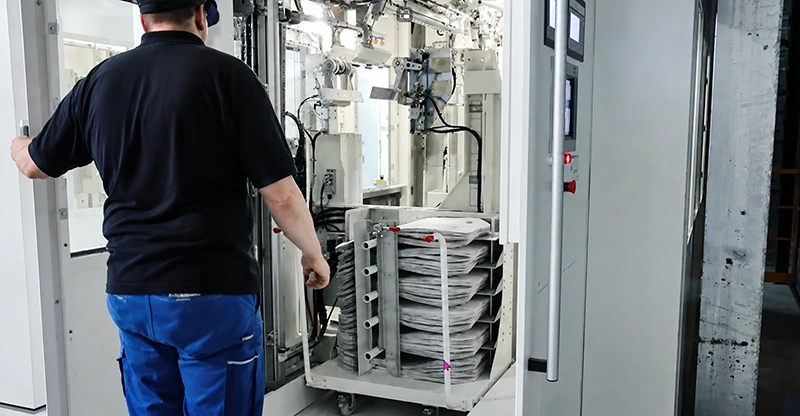
When an operator manually positions a bag, feeds cement, closes the mouth and carries it to a pallet, the process depends on individual timing. Residual air can leave a bag swollen before stacking. An uneven bag can then weaken an interlocked pallet, while a missed weight check or foreign-metal inspection allows an abnormal package to move into dispatch.
How the VPLINE configuration fits Cement M400 packaging
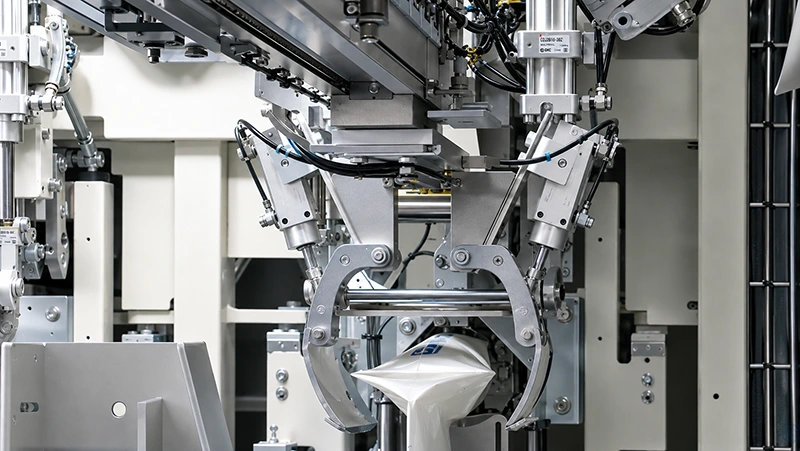
The front end uses a movable bag magazine and an automatic bagging mechanism to pick, open, guide and place the valve bag onto the filling nozzle. The expansion-type valve nozzle creates the filling interface; a main material passage and return-air path support enclosed filling when the product and bag are correctly matched. This is the practical difference between a valve-bag packing line and a simple open-bag filling station.
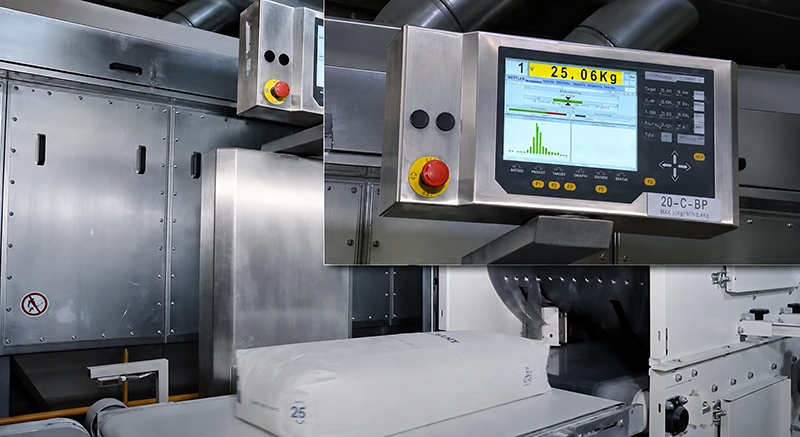
After filling, ultrasonic sealing closes the valve area. The source specification identifies a 20–40 kHz working range, while the actual bag construction, sealing layer and cement dust condition still require a sealing trial. The line then moves each bag through checkweighing and metal detection before negative-pressure shaping removes excess air and prepares the package for a compact pallet pattern.
Engineering note: The published reference data lists 5–12 bags per minute and a nominal dosing accuracy of plus or minus 1–2 per mille, but test method, bulk density and operating conditions are not defined. Treat these figures as selection references rather than unconditional production guarantees.
What the integrated line changes at the plant
The result is a connected route from empty-bag supply to finished-pallet protection instead of several isolated machines. Material-contact parts are specified as 304 stainless steel, with carbon steel used elsewhere. The packaging machine reference is AC 380 V, 50 Hz and 15 kW, and the compressed-air reference is 0.5–0.7 MPa; site utilities and dynamic pressure stability must be checked during engineering.
At the end of the line, negative-pressure shaping supports a flatter bag before robotic palletizing. The video reference shows three bags per interlocked layer, with rotation and alignment used to adjust orientation; pallet height and layer count remain project-dependent. Automatic pallet supply, roller conveying and stretch-hood or stretch-film protection can then support the finished-goods warehouse and long-distance dispatch route.
| Selection point | VPLINE reference | What must be confirmed |
|---|---|---|
| Product and bag | Cement or suitable fine, flowable material in a valve bag | Bulk density, moisture, flowability, valve tolerance and bag venting |
| Pack size | 25 kg demonstration; 10–50 kg source range | Final target weight and changeover requirements |
| Filling and closure | Pneumatic filling with expansion nozzle and ultrasonic valve sealing | Dust extraction, sealing layer and trial results |
| Quality gate | Checkweigher, reject function and metal detector | Detection limits, reject layout and product-specific validation |
| Plant integration | Conveying, negative-pressure shaping, palletizing and stretch protection | Approx. 15–20 m line length, 4–6 m width and 4.5 m+ clear height as planning references |
Confirm the right cement packaging line before you specify it
Send the cement grade, target bag weight, valve-bag drawing, bulk density, required bags per minute, available compressed air, dust-extraction conditions and workshop layout. BPM can use those inputs to confirm whether VPLINE is suitable for automatic cement packaging, define the filling and sealing tests, and build the palletizing and stretch-protection scope around the real dispatch requirement.
Discuss your valve-bag packing line English
 Русский