
Sugar Packaging Line for Industrial Bags, Not Stick Sachets
A sugar packaging line must match the requested bag format. Mipline is configured for controlled filling, closure, transfer, and inspection of industrial dry-powder or granular bags, especially 25 kg formats—not retail stick sachets.
Start with the sugar pack format
A buyer searching for sugar stick packaging equipment may actually mean one of two very different production routes. Stick sachets require a narrow-web form-fill-seal machine, small-dose dosing, film registration, and sachet cutting. That is not the job of Mipline. A sugar packaging line from the Mipline range is intended for an industrial bag workflow where the target may be a 25 kg kraft paper, paper-plastic composite, or coated woven bag, subject to material and bag trials.
For a sugar processor, the practical question is therefore not simply whether to buy an automatic powder packing machine. It is whether the line must fill small retail sticks or move stable industrial bags to closure and palletizing. When the requirement is an industrial bag, the sugar packaging line combines bag supply, opening, clamping, bottom-up filling, closure, transfer, shaping, inspection, and discharge instead of leaving operators to correct each bag by hand.
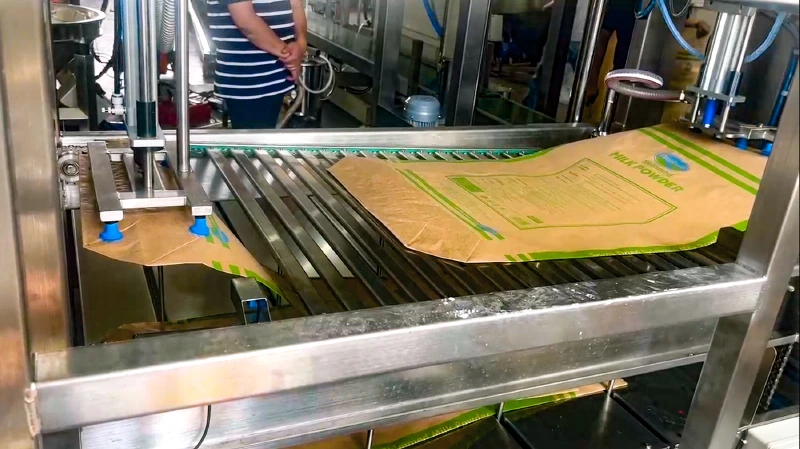
Manual bag opening and free-fall filling can leave sugar around the bag mouth and closure area. Operators may have to hold a heavy bag, straighten a twisted body, or push a skewed mouth toward the sewing or sealing head. Air retained in the filled bag can also produce an uneven shape, while weight drift may be found only after the bag has reached dispatch. These are process handoff problems, not just filling problems.
Why a sugar packaging line fits the industrial-bag route
Mipline treats the bag as a controlled process unit. A bag magazine and pickup sequence present the empty bag; a clamp holds the mouth while vertical screw feeding and a lifting platform support bottom-up filling. The reference control logic uses fast, medium, and slow dosing stages so the final dose can be managed around the product and bag. Where configured, vacuum extraction or de-aeration helps prepare the bag for closure.
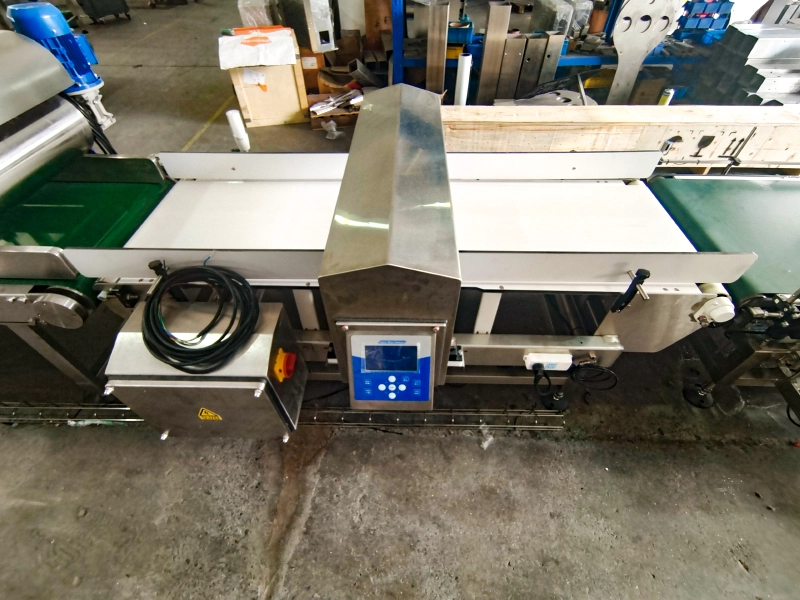
After filling, the sugar packaging line can be configured with dust removal, trimming, inner heat sealing, sewing, paper-tape wrapping, pressing, and counting for compatible composite bags. A roller or belt transfer then gives the filled bag a defined path toward settling, shaping, metal detection, checkweighing, reject, and discharge. The goal is to reduce manual bag straightening before sewing or sealing, while keeping the actual closure and inspection requirements visible during line design.
Engineering note: Sugar behavior still decides the final configuration. Confirm bulk density, particle size, flowability, moisture, aeration, bag construction, target weight, closure method, throughput, and site utilities before specifying the machine. A stick-sachet request should be redirected to the correct sachet technology rather than forced into an industrial bagger.
Sugar packaging line structure and reference data
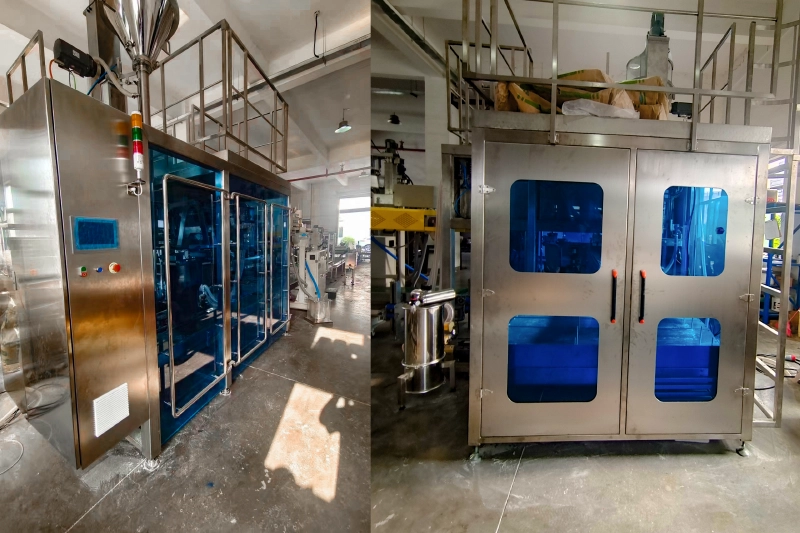
The transfer evidence matters because the final metre often decides whether the bag reaches the closure head square and clean. The twin-belt transfer image shows central guarding and adjustable side guides; the enclosed-machine image shows blue viewing windows, double doors, a control interface, and a top maintenance platform. These are visible design references, not proof of a universal model, capacity, or customer result.
For a project team comparing dry powder packaging equipment, the following figures define the reference range rather than a blanket promise. The selected sugar packaging line must be confirmed against trials and the approved machine configuration. For more detail on stable handoff, compare the related powder bag transfer before sewing discussion and the automatic powder bagging machine overview.
| Design point | Mipline reference | What must be confirmed |
|---|---|---|
| Bag format | Nominal 25 kg industrial dry-powder or granular bags | Bag dimensions, material, filling factor, and closure |
| Filling method | Vertical screw feeding with bottom-up lifting and three-stage dosing | Sugar bulk density, flowability, dust behavior, and target weight |
| Reference capacity | DS25K: 1–3 bags/min; another 25 kg reference: 1.5–2 bags/min | Material trials, bag format, and approved line configuration |
| Reference accuracy | DS25K stated at ≤±0.2%; other references vary | Final checkweigher and filling validation for the project |
| Controls and utilities | PLC/HMI control; DS25K reference includes 380/220 V, 50–60 Hz and 5 kW | Plant voltage, compressed air, extraction, and interface layout |
| Downstream control | Settling, shaping, metal detection, checkweighing, reject, and roller discharge can be configured | Inspection limits, reject logic, palletizing, and food-safety requirements |
Specify the result before you buy
The right sugar packaging line keeps the selected industrial bag under control from pickup to final discharge: cleaner filling, a more repeatable handoff before sewing or sealing, defined inspection, and fewer manual corrections. If the target is retail stick sachets, request a different machine category. If the target is 25 kg industrial bags, send the sugar properties, bag drawing, closure route, speed, and utilities for a Mipline configuration review.
Discuss your bag format English
 Русский