
Salt Powder Bagging Line: Smallest Pack Size
If you are asking which is the smallest salt pack that Mipline can be configured to handle, the practical reference starts at 5 kg on the DS25K range. The line is built for dry-powder bags, not stick sachets, and the final minimum depends on salt flowability, bulk density, moisture, bag construction, closure and the required output.
What a salt processor is really asking
A salt, seasoning or compatible dry-powder producer may begin with a simple question: can one line fill a smaller industrial bag before moving to the familiar 25 kg format? In a powder bagging line, the answer is not determined by the auger alone. Bag dimensions, salt particle size, aeration, humidity and the way the bag is closed all affect the usable lower limit. A line that fills 25 kg reliably is not automatically a good 5 kg line.
The old approach is usually manual weighing or an open, free-fall filling point followed by hand-held bags. That creates dust around the mouth, uneven settlement and extra straightening before sewing or sealing. Operators may also have to reposition a light, partly filled bag because the conveyor does not control its handoff. For a small salt pack, these problems can be more visible because a small weight error becomes a larger percentage of the target.
“5 kg” is a useful reference point, not a universal promise. Salt can bridge, absorb moisture or aerate differently from flour or milk powder. The bag may also need a different clamp position, fill profile and closure sequence. Confirming these inputs prevents a nominal small-pack request from becoming a manual correction station.
Why Mipline fits a smaller salt bag project
Mipline treats bag supply, opening, clamping, filling, closure, transfer, shaping and inspection as one controlled process. For a smaller salt bag, the DS25K reference covers 5–25 kg, with a stated reference accuracy of no more than ±0.2% and a reference rate of 1–3 bags per minute. These are configuration values to verify against the salt sample and the final bag; they are not a blanket performance claim for every build.
The filling section uses vertical screw feeding with staged dosing and a bottom-up lifting motion. Keeping the fill point close to the rising powder level is intended to reduce the uncontrolled dust path associated with free-fall filling. A bag magazine, pickup and clamp sequence holds the bag during dosing. Where the project requires it, vacuum extraction or de-aeration can be reviewed before closure. The downstream powder bagging line can then be arranged around sewing, heat sealing, paper-tape closure or another approved method.
Engineering view: The smallest practical salt pack is established by a material test and bag trial. The current reference answer is 5 kg, while a 25 kg industrial configuration remains a separate, common application.
Structure, parameters and image evidence to check
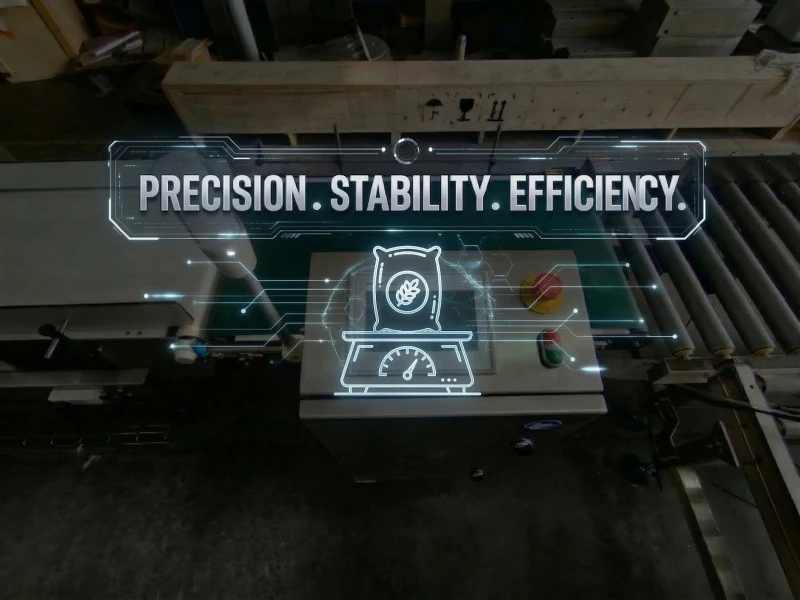
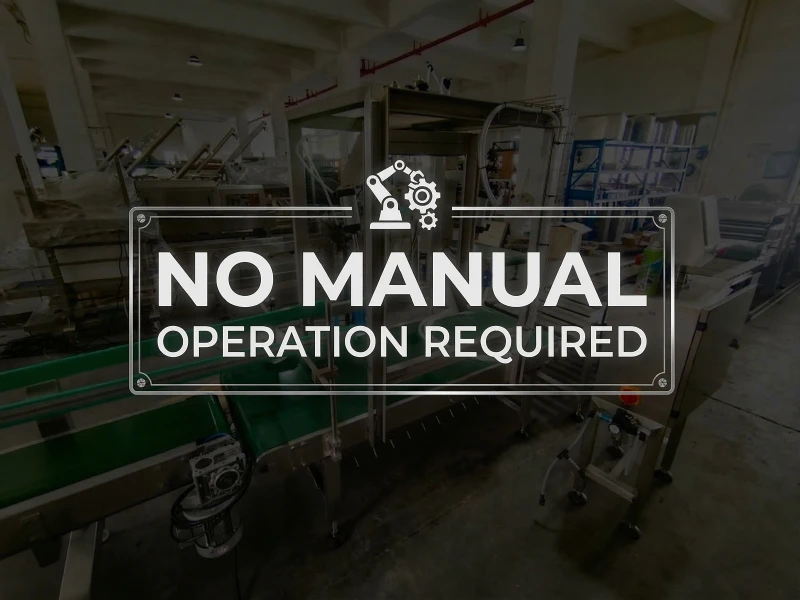
For a buyer comparing a small salt filler with a complete powder bagging line, the important evidence is the controlled sequence between stations. The factory images show conveyor controls, emergency-stop protection, wheeled machine modules and connected transfer sections. They support the line-integration concept; they do not by themselves prove salt capacity, final accuracy or a particular customer result.
Use the following project inputs to convert the reference into a buildable specification. The salt sample, empty bag and closure sample should be reviewed together, because the right dosing setting is only useful when the filled bag can transfer squarely to the next operation.
| Item to confirm | Mipline reference or visible evidence | Why it changes the result |
|---|---|---|
| Smallest target weight | DS25K reference: 5–25 kg | Sets screw, clamp and weighing trial requirements |
| Filling method | Vertical screw feed, staged dosing, bottom-up lift | Controls dust, aeration and final dosing behavior |
| Bag handling | Magazine, pickup, opening and clamp sequence | Reduces manual holding and mouth repositioning |
| Transfer | Green belts, roller sections, guides and controlled handoff | Keeps the filled bag aligned before sewing or sealing |
| Utilities and inspection | Reference 380/220 V, 50–60 Hz, 5 kW and 6 kg/cm² air; detector and checkweigher selected by project | Prevents a nominal pack size from being disconnected from the plant |
Get the correct salt pack-size recommendation
The short answer is 5 kg as the current Mipline reference minimum, subject to testing. Send the target weight, salt type and particle range, bulk density, moisture, bag dimensions, bag material, closure method, required bags per minute and available utilities. We can then confirm whether a small-bag setup or a 25 kg powder bagging line is the right route. For related process context, see the stable bag transfer guide and the final bag inspection guide.
Request a salt pack-size review English
 Русский