
How a Grain Warehouse Stabilized Woven-Sack Transfer Before Sewing and Palletizing
A southern grain warehouse operator was losing time at the exact point where filled woven sacks moved from the bagging head to sewing and palletizing. The fix was not more labor; it was a bagging line that holds the sack, guides the handoff, and keeps the flow repeatable from one cycle to the next.
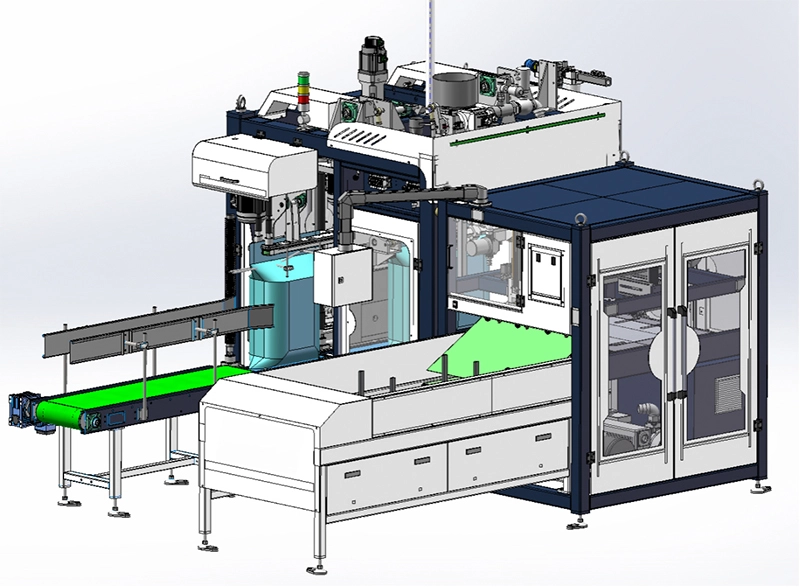
Why the handoff point kept failing
In this warehouse, the old scheme relied on operators to re-square each filled sack by hand before it could move to sewing. That created the usual problems: twisted bags, inconsistent presentation to the sewing head, and short stoppages every time the line had to wait for someone to reset the sack.
The ppline approach addresses that exact failure point. The line uses a guided conveyor path, a large bag gripper, and a machine frame that keeps the sack in a controlled position instead of letting it swing, curl, or drift across the transfer zone.
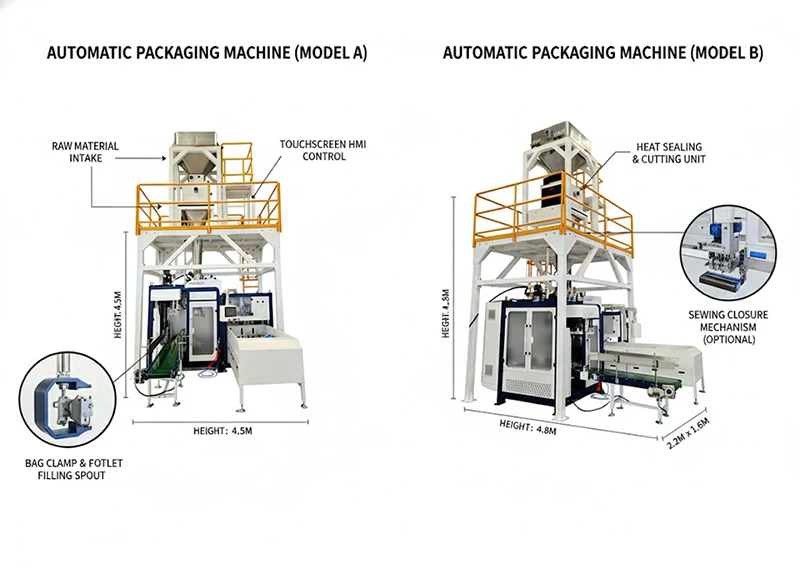
When a woven sack arrives at the stitching station without clean alignment, the real cost is not only a bad seam. It is the ripple effect: rework, slower pallet buildup, and more operator intervention at the one point in the line where flow should be smooth.
Why ppline fit this job
The product images show the right mix of structure and control for this application: an elevated steel frame, enclosed machine cabinet, HMI-based operation, and a transfer layout that can sit between the bagging head and downstream sewing or palletizing steps. That combination matters because grain warehouses do not need a flashy concept; they need the sack to leave the filling point in a predictable orientation.
The internal close-up also shows the mechanism-level reason the line works better: vacuum suction cups, a green conveyor, and a height-adjustment handwheel. Those details are what make the transfer stable enough for routine production, especially when bag weight, sack stiffness, or operator speed changes during a shift.
bpmpack Инженерный взгляд: At woven-sack transfer points, the biggest improvement usually comes from controlling the bag’s position before the seam, not after the seam. If the product stays upright, centered, and easy to reach, sewing becomes a repeatable downstream step instead of a rescue operation.
Structure, parameters, and the result
The engineering images support the setup clearly. The external render highlights the HMI, heat-sealing option, and optional sewing closure, which shows the machine family is built for different bag-end finishes. The interior detail adds the practical elements that matter on the floor: a guided transfer path, adjustable bag presentation, and a compact working zone that keeps operators close to the action without forcing them to manually chase the sack.
That is why the result is more than cleaner appearance. The warehouse gets steadier sack transfer, fewer misaligned bags at the stitching point, easier pallet buildup, and less dependence on last-second manual correction. In a high-throughput grain operation, that usually means a line that feels calmer even when the shift is busy.
| Legacy issue | ppline response | Operational effect |
|---|---|---|
| Bag twist before sewing | Vacuum suction cups and guided transfer keep the sack upright | Cleaner stitch alignment |
| Frequent line pauses | HMI control and enclosed cabinet simplify repeat operation | Less operator intervention |
| Unstable pallet buildup | Modular conveyor integration supports downstream handoff | Steadier palletizing flow |
Need a layout review for your grain bagging line?
If your woven sacks are still slowing down at the sewing point, bpmpack can help map the transfer, control, and downstream handoff so the line runs with fewer stops and cleaner bag presentation.
Request a bagging line review English
 Русский