
Secondary packaging automation for a Russian salt producer
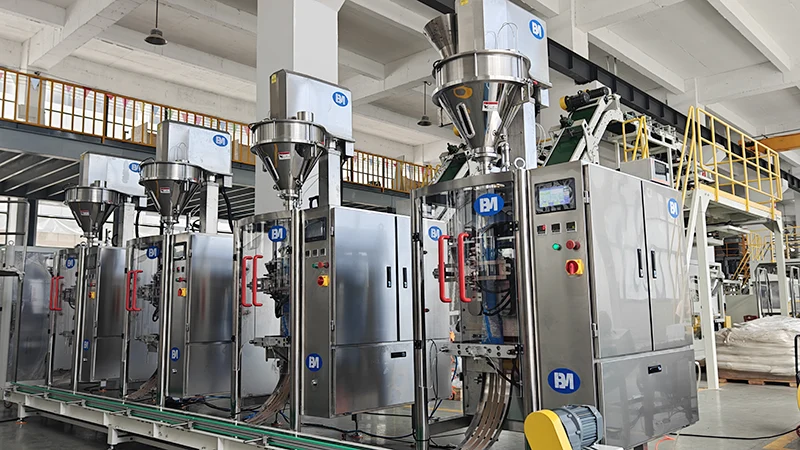
A salt plant in Tyret needed a way to move primary bags into woven sacks without trapped air, loose load geometry, or sewing-line stoppages. The line below shows how BIBPU stabilizes the handoff from filling to bag-in-bag transfer, compaction, and final stitching.
- Primary bags enter the secondary line in a controlled array.
- 316L contact parts resist chloride-driven corrosion.
- Compression before sewing reduces bulging and improves pallet stability.
Why the old workflow was failing the line
The customer’s old setup depended too much on manual handling. Operators had to move small salt bags, open woven sacks, and keep the load shape under control by feel. In a humid, chloride-heavy environment, that created three problems at once: bags held too much air, stacks shifted during transfer, and low-grade metal parts aged too quickly.
That is exactly the kind of line where secondary packaging stops being a simple bagging task and becomes a mechanical control problem. If the transfer is uneven, the load will not sew cleanly. If the load is not compacted, pallet geometry becomes weak. If the contact parts are not corrosion-resistant, maintenance cost starts to rise faster than output.
Why BIBPU fits a salt plant better than a generic packaging line
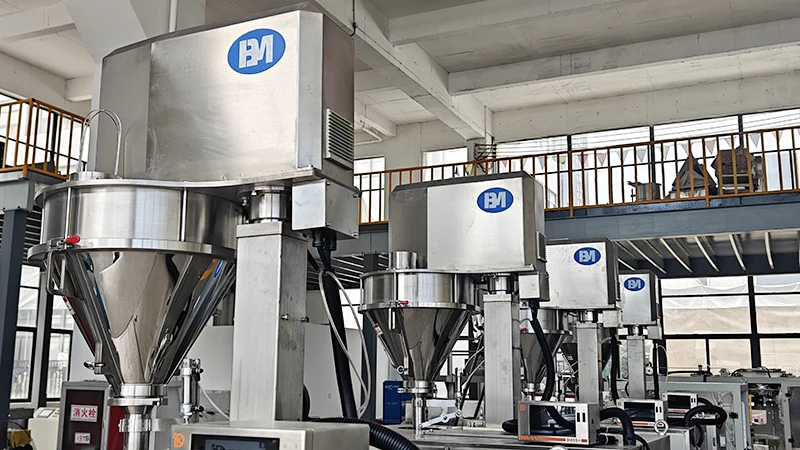
BIBPU is built around the real chemistry of salt production. The product documentation for this line emphasizes high-corrosion environments, and the image above shows the material choice clearly: 316L stainless steel at the contact zones. That matters because chloride attack is not a theoretical risk in salt plants; it is the reason ordinary housings, hoppers, and fasteners age early.
The line also uses a controlled transfer architecture. Primary bags do not simply fall into a sack and hope for the best. They are guided, grouped, held, and then compressed. That mechanical sequence is what turns a soft, irregular load into a rigid transport unit that can survive sewing, stacking, and shipping.
In practical terms, the fit is simple: the plant needed a line that can handle salty dust, humid air, and inconsistent bag shape without losing rhythm. BIBPU answers that with corrosion-resistant steel, pneumatic handling, and a layout that keeps the load moving in one direction.
What the line does at each step
| Observed problem | Mechanical response | Result for the plant |
|---|---|---|
| Loose small bags and uneven feed | Controlled infeed and pneumatic holding | Cleaner transfer into the woven sack |
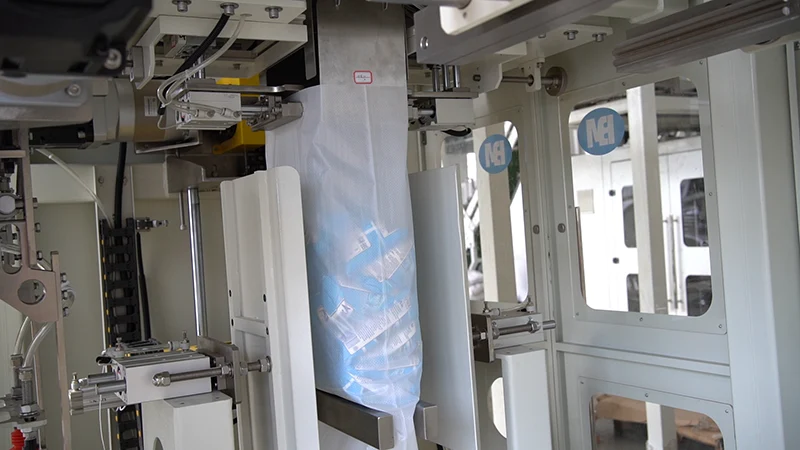
| Air trapped inside the loaded sack | Side compression before sewing | Flatter bag profile and stronger stack shape |
| Corrosion and maintenance pressure | 316L contact parts and robust structure | Longer service life in a salt environment |
Why the compaction stage matters before sewing
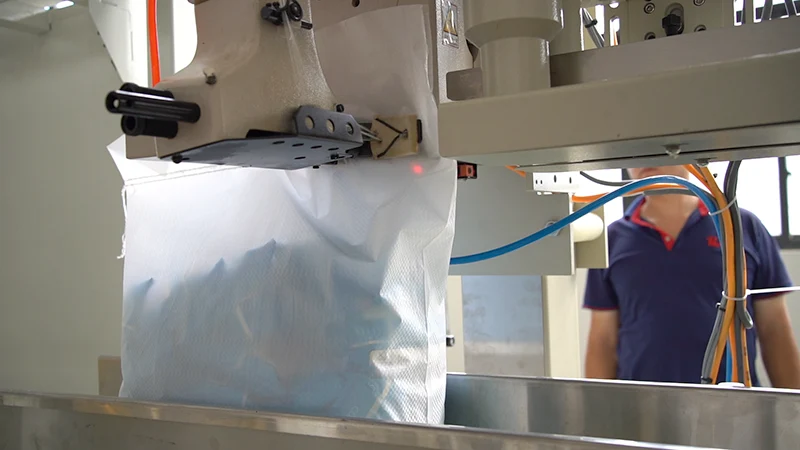
The photo of the side compression stage shows the key move that most manual lines miss: the load is flattened before the sewing head closes the sack. That step removes excess air, evens out the sack body, and gives the sewing station a stable edge to work with. For salt, that is not cosmetic. A bag that stays puffy is harder to stack, more likely to slide, and more likely to waste trailer space.
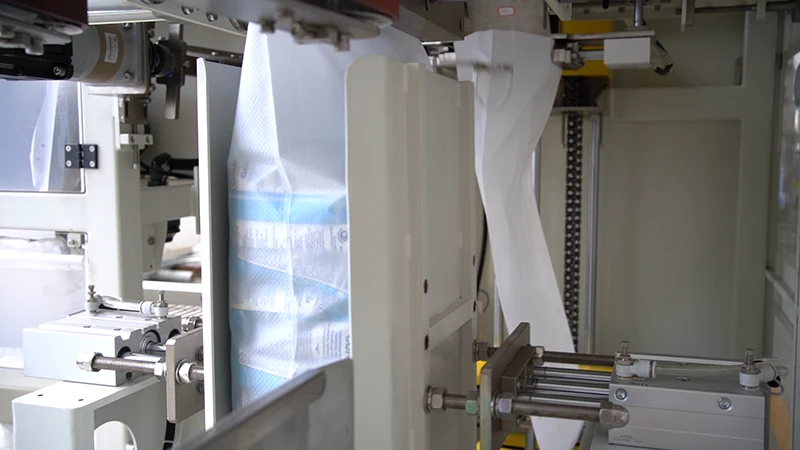
The downstream sewing image confirms the end of the process: once the sack is shaped, the Newlong head can close it cleanly. In other words, sewing is not the first fix; it is the final step after the load has already been disciplined into a better transport form.
What the customer gets at the end
The final result is not just a sealed bag. It is a more regular transport unit that loads better, stacks better, and behaves better on the pallet. In a salt plant, that directly supports the two metrics managers care about most: fewer interruptions on the line and fewer losses in storage or shipping.
That is why this case makes sense as a secondary packaging story rather than a generic machine story. The value comes from matching the customer’s harsh environment, the bag behavior, and the sewing requirement to one controlled mechanical sequence.
If the plant wants to keep pushing output without letting bag shape drift, the answer is not a stronger operator. It is a line that already knows how to handle salt, humidity, and compaction.
If you are planning a salt secondary packaging project, the fastest way to size the line is to share your primary bag format, target sack weight, and the way you want the pallet to leave the plant.
Send your packaging data English
 Русский