Automatic Bagging Machine & Palletizing Systems Manufacturer

Category: Articles

  • BIBPU for Secondary Packaging Automation in a Russian Salt Plant

    BIBPU for Secondary Packaging Automation in a Russian Salt Plant

    На одном из соляных предприятий в России вторичная упаковка долго упиралась не в скорость, а в стабильность передачи мешка. После дозирования и формирования первичной упаковки мешок шёл дальше с остаточным воздухом, чувствительной кромкой шва и риском перекоса перед зашивкой. Для влажной соли такой режим быстро даёт замятие, скольжение и нестабильную укладку на выходе.

    Линия BIBPU для автоматизации вторичной упаковки закрывает именно этот участок. Здесь важен не один узел, а весь переход: от подачи и формирования пакета до укладки во внешний мешок, выравнивания корпуса и закрытия шва. Поэтому ниже — только конструкция, логика работы и то, что видно на фото.

    Подача продукта и устойчивый ритм линии
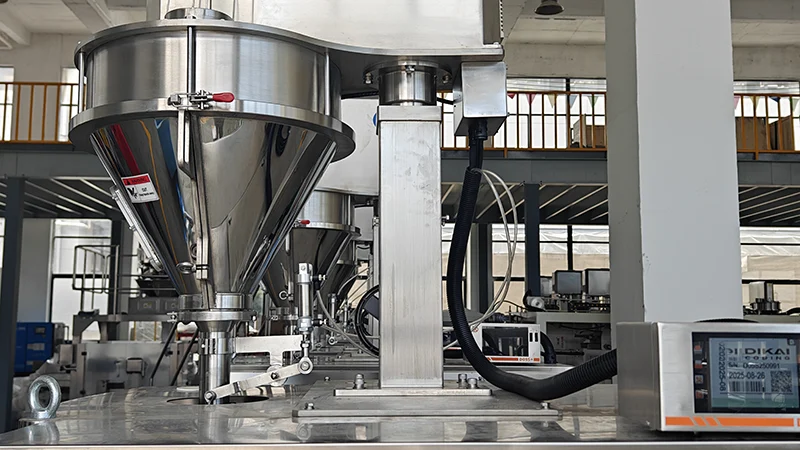
    Автоматизация вторичной упаковки влажной соли: стабильная подача от бункеров к линии

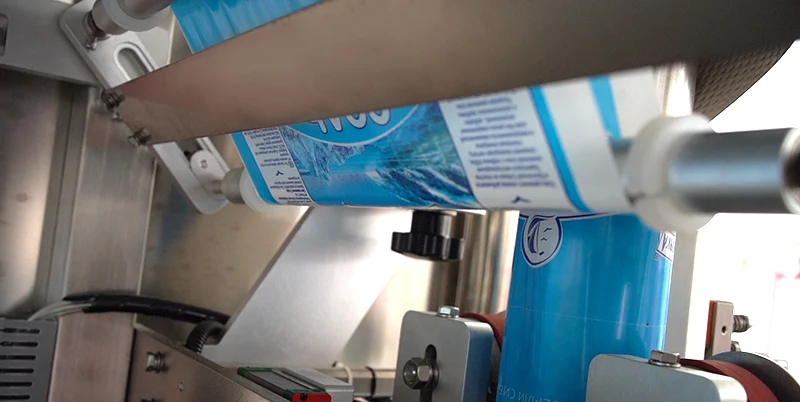
    На первом фото видно, что линия держит подачу без провалов и без лишней ручной подстройки. Для соляного производства это критично: если подача идёт рывками, следующий узел начинает работать нестабильно, а мешок уходит в шов уже с перекосом. Поэтому в BIBPU применена компоновка с жёстко организованным потоком и контролируемым переходом между операциями.

    Такой подход помогает сохранить ритм линии при вторичной упаковке мешков с солью, когда каждая задержка сразу влияет и на качество шва, и на последующую укладку в транспортную тару.

    Почему влажная соль требует другой геометрии узлов
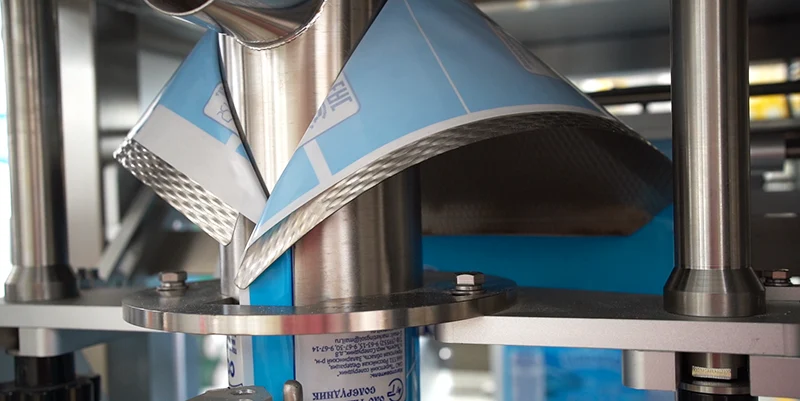
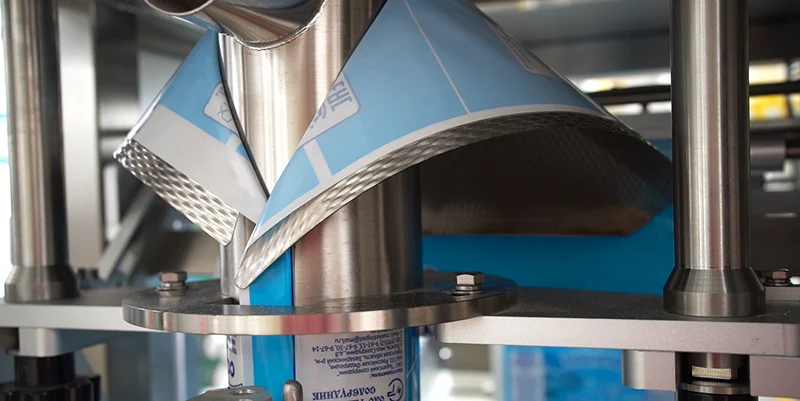
    Формующая горловина с рельефной поверхностью для влажной соли

    Влажная соль ведёт себя иначе, чем сухая: плёнка цепляется сильнее, кромка мешка хуже скользит, а в зоне формирования появляется лишнее сопротивление. Поэтому на формующей горловине важна не просто нержавейка, а поверхность, которая снижает прилипание и облегчает проход материала. На фото как раз видна рельефная обработка формующей детали, уменьшающая контактное сопротивление в зоне хода плёнки.

    Для заказчика это не декоративная доработка, а практический запас по стабильности. Когда продукт и плёнка не борются с геометрией узла, меньше брака на старте цикла и меньше остановок из-за налипания.

    Закрытие шва без потери продукта
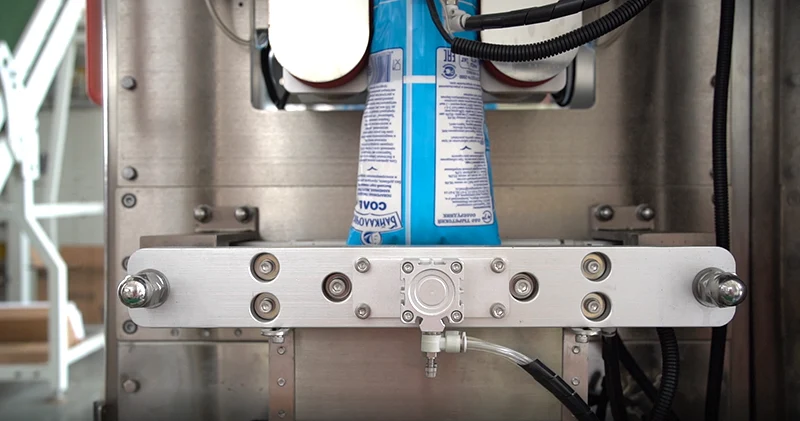
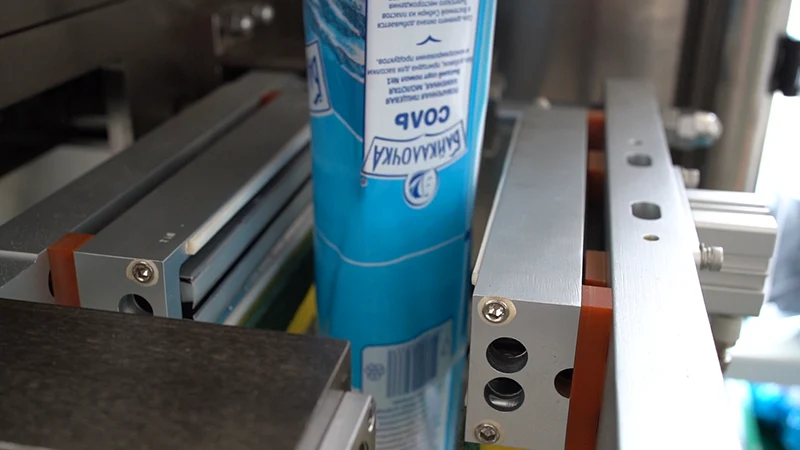
    Ход узла поперечной запайки на линии вторичной упаковки соли

    На участке поперечной запайки главное — удержать шов чистым и не дать мешку раскрыться от остаточного воздуха или внутреннего напряжения. Узел запайки в BIBPU рассчитан на повторяемый прижим и стабильную термозону, чтобы мешок закрывался без подсоса и без рассыпания кромки. Для соляной линии это особенно важно: даже небольшая утечка на шве быстро превращается в грязную зону и ручную доработку.

    В результате линия получает предсказуемый шов, а предприятие — меньше возвратов по качеству упаковки на отгрузке.

    Укладка во внешний мешок и выравнивание перед зашивкой
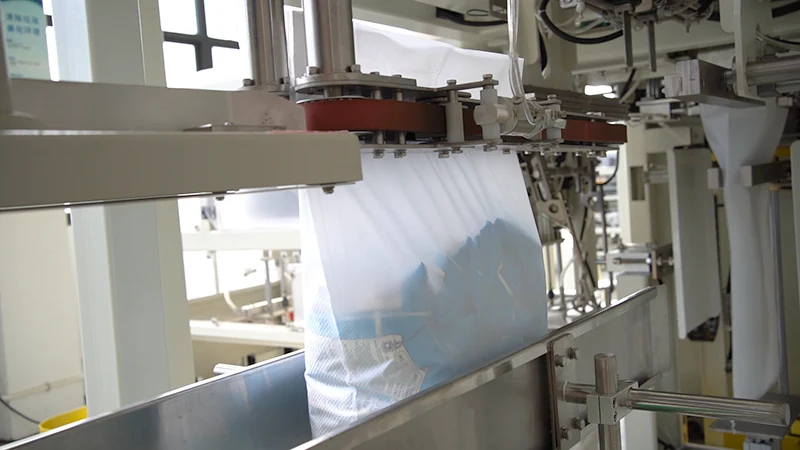
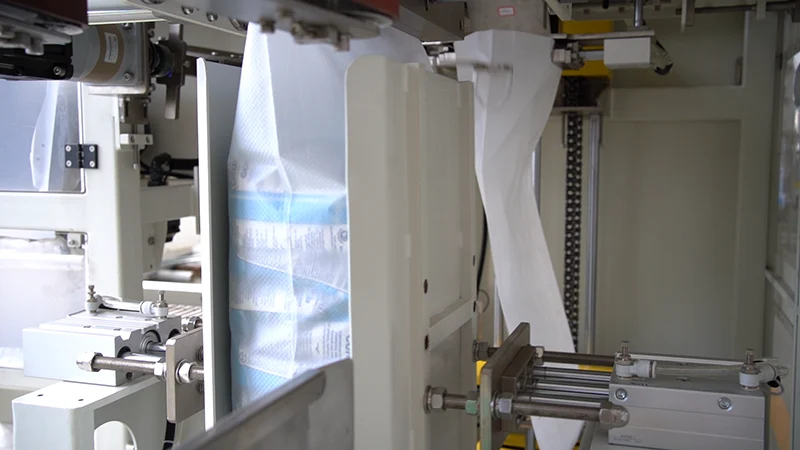
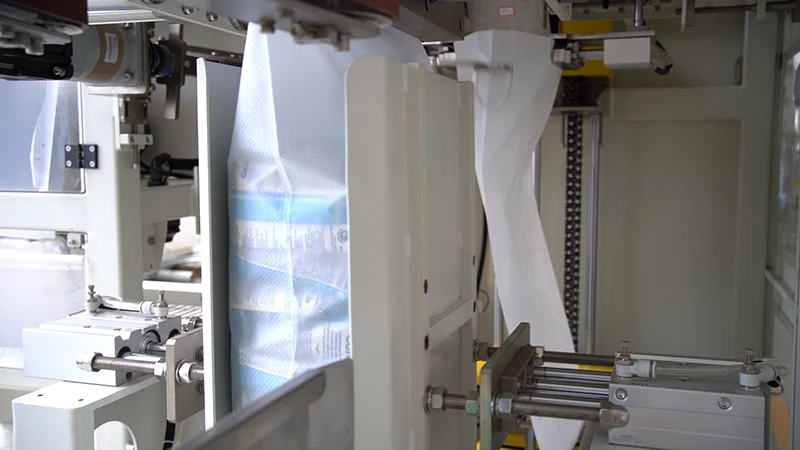
    Пакеты соли падают в полипропиленовый вкладыш на участке вторичной упаковки

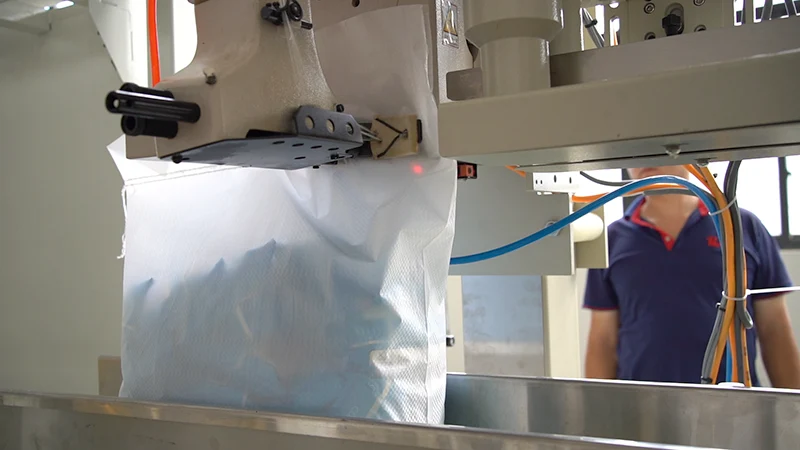
    Когда пачки уже уложены во внешний полипропиленовый мешок, система должна не просто бросить их внутрь, а сделать это без деформации корпуса. На фото видно, как вторичная упаковка работает в связке с внешним мешком: внутренняя пачка попадает в заданный объём, а не зависает на кромке. Это снижает риск перекоса и упрощает следующий шаг — формирование мешка под шов.
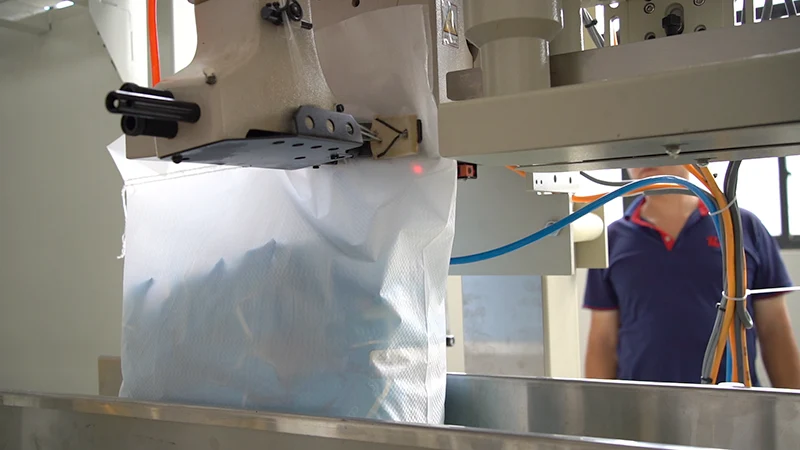
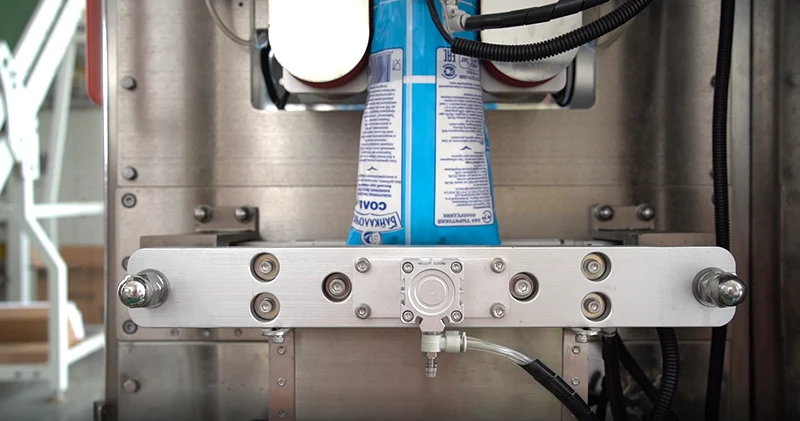
    Пневматическое выравнивание мешка перед зашивкой для стабильной вторичной упаковки

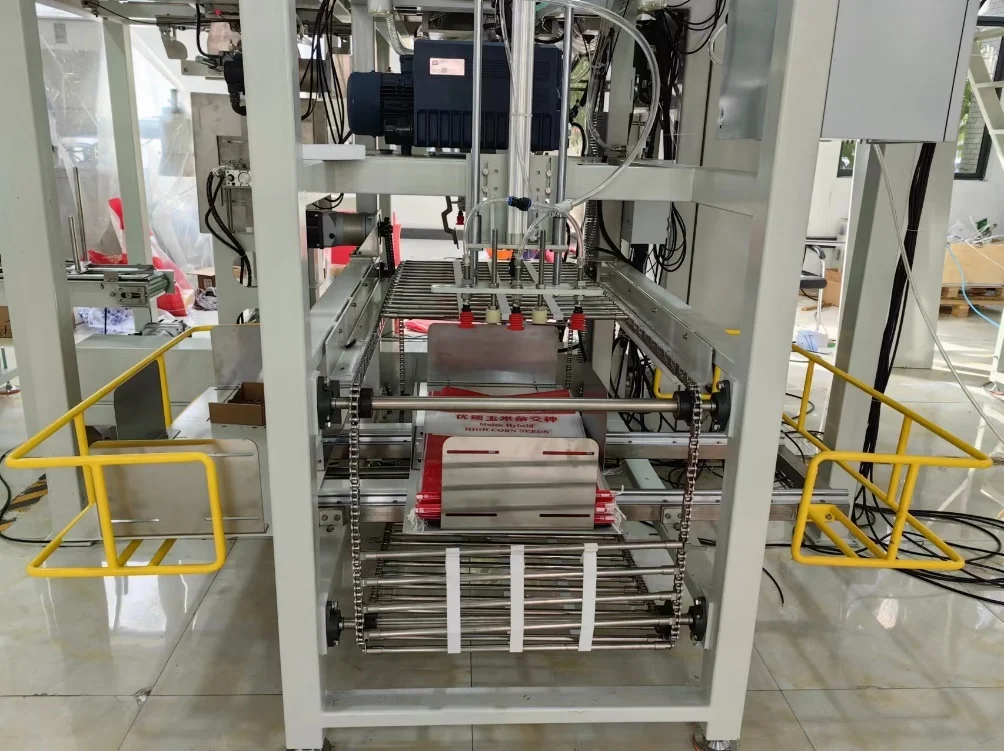
    Дальше мешок выравнивается пневматическим боковым прижимом. Здесь задача не в силе, а в равномерной деформации: убрать лишний объём, выгнать воздух и привести корпус к устойчивой форме перед подачей на зашивку. Для влажной соли это один из самых полезных узлов, потому что он напрямую уменьшает риск распухания мешка и последующего смещения штабеля.

    Финальный результат для соляного предприятия
    Промышленная зашивка мешка после вторичной упаковки на соляном предприятии

    На выходе предприятие получает не просто автоматическую вторичную упаковку, а ровный и повторяемый поток: мешок стабильно формируется, внутренняя пачка укладывается без перекоса, корпус выравнивается перед швом, а внешняя зашивка идёт без лишней ручной корректировки. Для заказчика это означает меньше брака, меньше ручного труда и более аккуратную отгрузку на паллету.

    Именно в этом и состоит смысл BIBPU для соляных линий: не обещать универсальную автоматизацию, а закрыть тот участок, где производство чаще всего теряет качество. Когда вторичная упаковка становится стабильной, вся линия работает спокойнее — от смены до смены.
  • BIBPU for Humid Salt Secondary Packaging: A Cleaner Handoff Before Sewing

    BIBPU for Humid Salt Secondary Packaging: A Cleaner Handoff Before Sewing

    BIBPU / вторичная упаковка для влажной соли

    На соляном предприятии проблема редко начинается на шве. Обычно всё сложнее: мешок уже наполнен, пакет чуть распирает, пленка тянется неравномерно, а перед прошивкой пакет нужно удержать, выровнять и спокойно довести до швейной головки. Именно на этом участке BIBPU закрывает самый дорогой разрыв — от дозирования и укладки до ровной отгрузки.

    Почему вторичная упаковка на влажной соли ломается именно на финише

    Для одного из российских соляных предприятий исходная задача была простой только на словах: нужно стабильно упаковывать солевой продукт, не теряя форму мешка и не провоцируя лишние ручные корректировки перед прошивкой. На практике старый участок упирался в три вещи: мешок после наполнения оставался неровным, излишек воздуха мешал аккуратно закрыть верх, а на переходе к швейной операции пакеты начинали “гулять” по ширине. Чем больше ручного выравнивания, тем выше риск замятия, смещения и потери темпа.

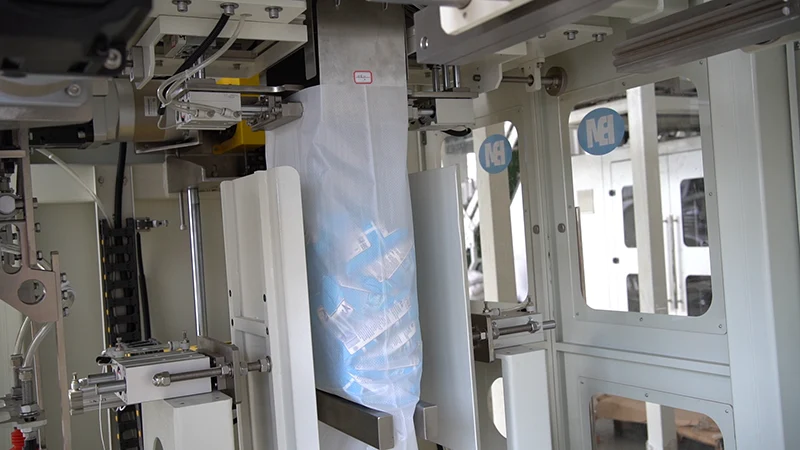
    Узел заполнения вторичного мешка с зажимами и падением солевых пакетов

    Что меняет BIBPU в сравнении с ручной доработкой мешка

    BIBPU подходит здесь не как “ещё одна машина”, а как связанный участок вторичной упаковки. На фото видно, что мешок удерживается зажимами, а солевые пакеты подаются в уже подготовленный внешний мешок без хаотичного падения. Это важный момент: когда зажимы фиксируют геометрию, а подача идет организованно, пакет не деформируется на последнем метре. Именно поэтому линия лучше работает на влажной соли и на серийной отгрузке, где нужен предсказуемый внешний вид упаковки перед прошивкой.

    Горячий поперечный шов вертикального упаковщика для солевых пакетов

    Конструктив, который помогает держать форму пакета

    Для влажной соли критична не только механика подачи, но и сам путь продукта через формирующие и направляющие узлы. Формирующее плечо со специальной рельефной обработкой снижает залипание и помогает пленке идти ровно, без лишнего сопротивления. Для солевых линий это не косметика, а реальная защита от нестабильной протяжки и неровного формирования. Когда поток материала идёт стабильно, нижестоящие узлы уже не вынуждены компенсировать ошибки предыдущего этапа.

    Формирующее плечо из нержавеющей стали с рельефной обработкой для влажной соли

    Как линия доводит мешок до прошивки без лишней ручной правки

    На участке подачи и фиксации мешка видно, как BIBPU решает задачу ровного подхвата перед швейной головкой. Пакет не должен “проваливаться” и не должен попадать в зону прошивки с перекосом. Поэтому логика линии строится вокруг мягкого, но жёсткого удержания, согласованной подачи и чистого перехода к следующей операции. Это особенно важно, если смена работает без запаса времени на ручное подравнивание каждого мешка.

    Узел подачи и фиксации мешка перед швейной головкой

    Почему швейная головка — это не финал, а контроль качества всего участка

    Прошивка в солевой линии нужна не только ради закрытия мешка. Она фиксирует итог всей предыдущей подготовки: если пакет был выровнен плохо, шов это сразу покажет. Поэтому промышленная швейная головка в такой схеме работает уже на подготовленном изделии, а не исправляет дефекты упаковки. Иначе говоря, BIBPU не пытается “спасти” плохую геометрию на последнем шаге — он выстраивает её заранее.

    Промышленная швейная головка для зашивки наполненного полипропиленового мешка

    Итог для соляного предприятия

    Для российского солерудника или соляного цеха ценность BIBPU не в абстрактной автоматизации, а в том, что линия сохраняет мешок ровным после наполнения, передает его без рывков, помогает убрать лишний воздух и подводит к прошивке в предсказуемом положении. В результате снижается доля ручной правки, растёт стабильность упаковки и становится проще удерживать одинаковый внешний вид партии на складе и при отгрузке.

    Вторичная упаковка BIBPU для солевой линии

    BIBPU для вторичной упаковки соли
    Более ровная передача мешка, устойчивее геометрия и чистый переход к прошивке на влажных солевых потоках.

    Если на вашей линии мешок после наполнения теряет форму до прошивки, узел вторичной упаковки стоит смотреть целиком — от удержания и выравнивания до подачи к швейной головке.

  • ppline for Bulk Products: A Cleaner Handoff Before Sewing

    ppline for Bulk Products: A Cleaner Handoff Before Sewing

    Bulk Products

    Why Bag Clamping Matters Before Sewing on a Bulk-Products Line

    A southern regional bulk-materials plant needed a cleaner handoff from dosing to sewing. The problem was not only speed. It was bag stability, operator correction, and the way each woven sack reached the next station. ppline fits that gap with a rigid steel frame, controlled bag handling, and a compact conveyor path that keeps the transfer point consistent.

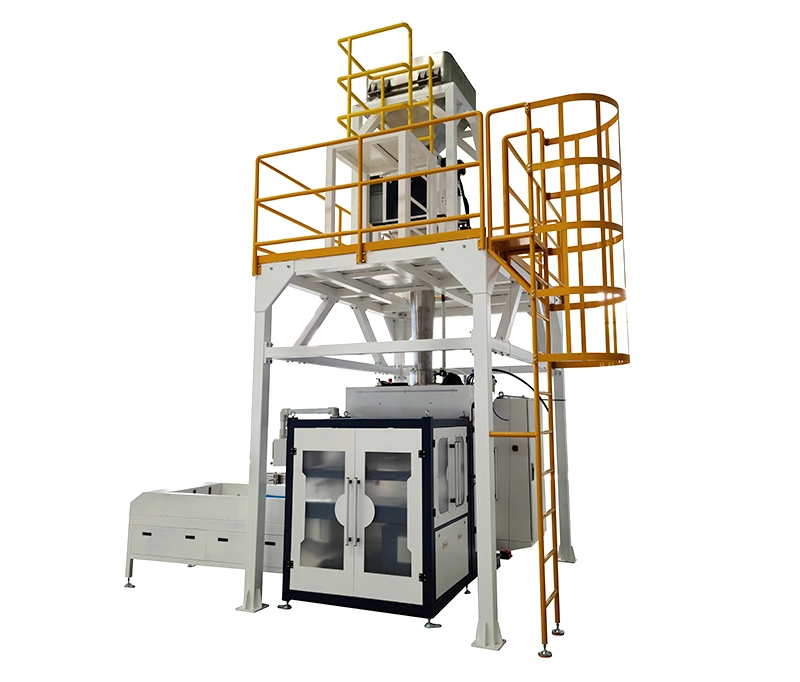
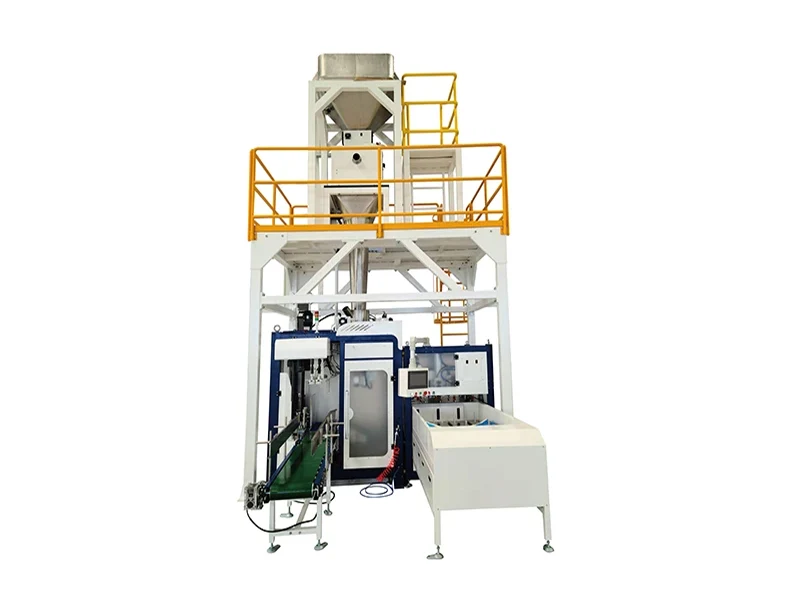
    ppline bulk products bagging line with elevated steel framework, safety cage ladder, and enclosed cabinet

    What the Plant Was Dealing With

    On the old line, bags arrived from dosing with small position errors. Operators had to square the mouth by hand, hold the sack steady, and keep the transfer moving at the same time. That kind of correction is manageable for a short run, but it becomes costly when the line is expected to run all day and the product is granular, dusty, or awkward to settle.

    ppline matches this kind of job because the machine is built around a tall steel structure, a protected access ladder, enclosed service cabinets, and a direct outfeed path. The frame is not decorative. It is what keeps the handling point stable so the bag does not wander before the seam station takes over.

    ppline bagging unit close-up with vacuum suction cups, robotic placing arm, green conveyor, and woven bag
    Real pain point

    The line was losing consistency at the handoff point. Bags needed correction after dosing, the mouth area was not always centered, and the sewing station had to compensate for upstream movement. That creates rework, operator fatigue, and uneven pallet appearance.

    Why ppline Fits the Job

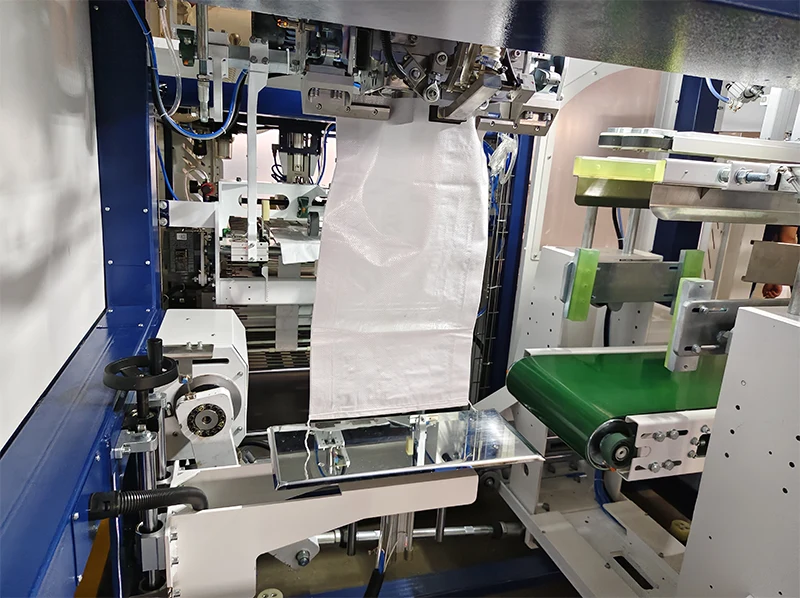
    The close-up image shows the part that matters most: vacuum suction cups, a robotic placing arm, a green conveyor, and a woven bag that is held in a controlled path instead of being pushed around by the product flow. That means the bag is guided, not guessed. The machine keeps the transfer aligned long enough for the next station to finish the job cleanly.

    The second structure visible in the machine set is the clamping and bottom support assembly. Pneumatic cylinders, servo adjustment, and a solid positioning frame do the boring work that prevents expensive errors. When the bag mouth stays where it should, sewing becomes a finishing step instead of a rescue step.

    bpmpack Engineering Insight: if the bag is unstable before sewing, the rest of the line has to absorb the mistake with labor. A rigid frame, guided clamping, and a controlled conveyor route solve the problem upstream, where it is cheaper to fix.

    Structure, Evidence, and Result

    The photos give the evidence. One image shows the full elevated machine body, safety access, and enclosed cabinet layout. The other image shows the internal handling point with suction cups, positioning hardware, and the conveyor path. Together they show why the line is suitable for bulk products that need a steadier transition from dosing to sewing.

    For the plant, the final result is simple: fewer manual corrections, a cleaner bag mouth before stitching, more even bags on the outfeed belt, and a smoother path into stacking or palletizing. That is what a good bulk-products line should deliver. Not just throughput, but a stable handoff that protects the whole downstream process.

    StageWhat the line needsWhat ppline shows in the photos
    Before sewingBag mouth must stay centered and calmVacuum suction cups and controlled placing hardware hold position
    During transferProduct flow should not force the bag off lineRigid frame, guided conveyor, and enclosed structure keep movement consistent
    After transferSeam and stack quality should improve, not recover from errorsStable handoff supports cleaner stitching and more even pallet appearance

    Need a steadier handoff on your bulk-products line?

    If your bags still need manual correction before sewing or palletizing, ppline is built for that exact gap. Use the machine structure, bag-clamp control, and conveyor alignment to keep the line stable where it matters most.

    Request a line review
  • Bulk Product Sacks Need a Cleaner Handoff Before Palletizing

    Bulk Product Sacks Need a Cleaner Handoff Before Palletizing

    Bulk Products

    Bulk Product Sacks Need a Cleaner Handoff Before Palletizing

    For a grain and bulk-products plant in Southern Russia, the real problem was not filling itself. The problem started after dosing: bags drifted, the discharge line looked uneven, and the pallet team had to keep correcting every stack by hand. A ppline line solves that weak point by keeping the workflow controlled from hopper feed to the final bag transfer.

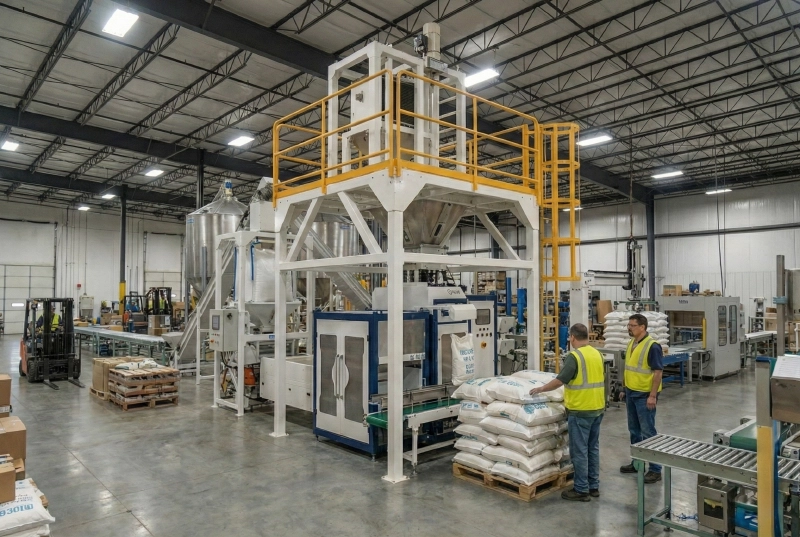
    Operational QZK-1200 bagging line with steel tower, conveyor discharge, and palletized sacks

    What the line has to fix in the real workshop

    The customer requirement was simple to say and hard to execute: fill bulk product sacks consistently, keep the bag mouth stable, and send each bag to palletizing without forcing operators to re-square the load. On paper, a standard bagging machine can promise output. In practice, many lines still leave the final transfer point exposed. Bags twist on the conveyor, the operator has to nudge them back into position, and the pallet layer becomes less uniform than it should be.

    That is why the ppline setup matters. The first image shows a steel tower with a hopper-fed bagging body, enclosed service cabinet, and discharge conveyor already integrated into one industrial frame. This is not a loose collection of separate machines. It is one aligned route for product flow, so the bag leaves the filling zone and enters the transfer zone without a lot of manual intervention.

    Operational QZK-1200 bagging line with steel tower, conveyor discharge, and palletized sacks
    Pain point: unstable transfer after dosing

    When the end-of-line bag transfer is not controlled, the operator becomes the correction system. That creates extra labor, more bag abrasion, and inconsistent pallet geometry. For bulk products, the weak spot is often not the fill accuracy itself, but the handoff after the fill is complete.

    Why ppline fits this kind of bulk-product workflow

    The line structure visible in the photos explains the fit. The elevated steel frame gives the system a clear working height and keeps the main bagging body separated from the floor traffic. The safety railings and tower layout support stable access for maintenance without turning the work area into a cluttered zone. Most importantly, the discharge conveyor is not an afterthought. It is part of the line logic, so the filled bag moves forward in a predictable direction.

    The second image makes the downstream logic even clearer. The robotic palletizer is not just a separate automation add-on; it shows that the bagging line is designed to hand off to palletizing in a controlled way. For a plant that wants fewer manual corrections, that matters more than chasing a higher nameplate speed. A line that delivers a straighter bag to the pallet station often creates more real throughput than a faster line that needs constant human rescue.

    bpmpack Engineering Insight: In bulk-product projects, the most expensive losses often happen after the product has already been filled. If the sack arrives to palletizing crooked, damaged, or badly spaced, the line pays twice: once in labor and once in rework. A rigid steel tower, integrated conveyor transfer, and palletizer-friendly discharge path reduce that hidden cost without adding complexity for the operator.

    What the structure and support images prove

    From a buyer’s point of view, the value is not just that the line can fill sacks. The value is that the machine layout supports a stable transition from dosing to transfer and then into palletizing. The visible steel structure supports the load, the enclosed body protects the working core, and the conveyor discharge keeps the bag moving in a managed path. Those are practical design decisions, not decorative ones.

    If a bulk-products plant is still relying on manual bag correction at the end of the line, it should ask a different question: can the line keep the bag stable after fill and before palletizing? That is the real test. The ppline configuration shown here answers that test with a built-in transfer route, a rigid frame, and a downstream layout that is ready for automation.

    Workflow issueWhat the ppline layout doesBusiness result
    Bag drift after fillingUses an aligned discharge path and controlled transfer heightLess manual straightening before palletizing
    Uneven pallet layersKeeps the end-of-line flow predictable for downstream handlingCleaner stacks and better pallet quality
    Operator overloadMoves the line from correction-driven work to machine-guided flowLower labor pressure and steadier output

    Need a bulk-product line that stays stable before palletizing?

    If your current workflow still depends on manual correction after filling, bpmpack can help you map a cleaner route from hopper feed to final bag handoff. The goal is not just to pack product. The goal is to keep every sack ready for the next step.

    Request a line review
  • From Hopper Feed to Pallet: A Cleaner Handoff for Bulk Products

    From Hopper Feed to Pallet: A Cleaner Handoff for Bulk Products

    Bulk products / Packaging line

    From Hopper Feed to Pallet: A Cleaner Handoff for Bulk Products

    For a southern Russian bulk-goods producer, the real problem was not filling speed. The problem was what happened after discharge: bags drifted, operators corrected them by hand, and pallet quality suffered. ppline fits this job because the line keeps feed, access, conveying, and bagging in one aligned layout.

    On-site modular bulk-product line with hopper feeder, control cabinet, and inclined conveyor

    Why the old workflow broke at the handoff point

    The customer was already using equipment for bulk products, but the line still depended on manual tail correction after discharge. Once the product left the dosing point, the bag had too much swing, the transfer path was too open, and the operators had to keep touching the package before it could move on. That meant more labor, more small mistakes, and less consistency at the palletizing stage.

    ppline solves that by keeping the geometry simple and readable: hopper above, working platform close to the operator, enclosed control cabinet, and a guided conveyor that carries the bag forward instead of letting it wander. In the first image, the line is installed as one physical chain, so the handoff looks deliberate rather than improvised.

    Industrial bagging line with elevated steel platform, hopper, inclined conveyor, and safety railings
    Problem at the line end

    A bag that leaves the dosing point without stable guidance becomes a pallet problem later. Time saved during filling is often lost during correction, stacking, and rework.

    Why ppline matched this project

    The second image shows the machine as a visible module set: hopper feed, HMI touchscreen, stitching unit, and discharge conveyor all sit in one frame. That matters for bulk products because the operator can see where the material is, where the bag is moving, and where the next adjustment should happen. There is less guessing, and that usually means fewer interruptions.

    The line is not trying to win with a single headline number. Its value is in how the structure removes unnecessary movement. A straight feed path, an accessible service platform, and clear operating controls give the team a calmer process, which is exactly what a daily production shift needs when bags must stay stable before palletizing.

    What matters: When bulk products are unstable, the right geometry matters more than a flashy feature list. A straight feed path, accessible service platform, and clear operator interface do more to protect output quality than constant manual correction.

    What the production result looked like

    After the layout was matched to the job, the transfer became cleaner, the tail correction load dropped, and pallet alignment became easier to manage. For a Russian bulk-goods customer, that is the real outcome: not a demo that looks good for five minutes, but a line that can repeat the same handoff every day.

    In practical terms, the bag arrives at the next step with fewer twists, the discharge path feels more controlled, and operators spend less time fixing what should have been guided by the machine. That is what a stable handoff means in a bulk-products line: less repair work, more forward motion, and a better final stack.

    Project issueppline answerPractical effect
    Unstable discharge after dosingHopper feed with guided conveyor and aligned frameCleaner handoff toward the next step
    Manual tail correctionHMI control, enclosed cabinet, and readable work zoneFewer operator touches and fewer mistakes
    Pallet instability downstreamElevated platform and compact transfer layoutMore consistent bag presentation before stacking

    Need a line for bulk products?

    Send us the product type, bag format, and discharge target, and we will match the layout to the handoff so the bag stays stable before palletizing.

    Request a layout review
  • How ppline Keeps Bulk Products Stable Before Palletizing

    How ppline Keeps Bulk Products Stable Before Palletizing

    Secondary bagging

    How ppline Keeps Bulk Products Stable Before Palletizing

    At a Russian bulk-products plant, the real bottleneck is often not filling itself. It is the unstable handoff between bag alignment, accumulation, discharge, and the palletizing area. This layout solves that last meter with a modular secondary bagging line, a large-bag gripper, and a controlled conveyor path.

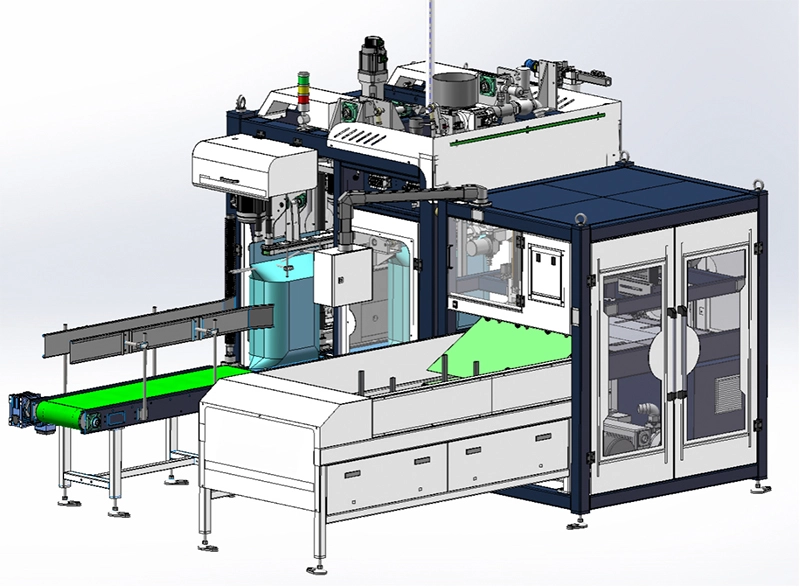
    3D CAD rendering of modular secondary bagging line with accumulation belt, large bag gripper, and discharge conveyor

    Scene: when a good fill still fails at the transfer point

    The customer scenario is simple to describe and hard to run well: bulk products leave the packing point, but the bag is not yet ready for a clean handoff to the next station. If the bag mouth drifts, the load shifts, or the conveyor rhythm changes, operators start correcting by hand. That slows the line, adds rework, and makes the palletizing area the weakest point in the system.

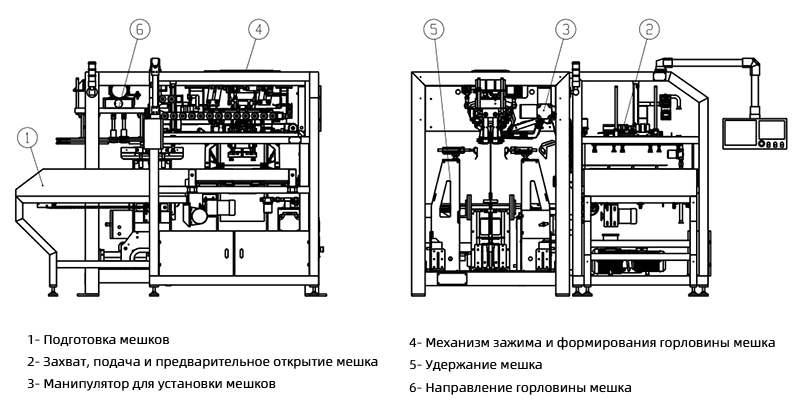
    The CAD view of the bag magazine and placing arm shows why this matters. The system is not just filling a sack; it is controlling how the bag is picked, held, aligned, and released so the next move stays predictable. For a plant running mixed bulk products, that control is what keeps the line stable when throughput rises.

    Dual-view technical CAD blueprint of automatic bagging machine showing bag magazine, robotic placing arm, and component alignment
    Manual re-alignment before palletizing

    When bags leave the packing station with uneven spacing or a drifting mouth position, staff must keep touching the load. That is where speed disappears and consistency breaks.

    Why the ppline layout fits the job

    The reason this line fits the application is structural, not cosmetic. The accumulation belt creates a buffer so upstream flow does not crash into the discharge point. The large-bag gripper keeps the sack square while the machine completes the handoff. The discharge conveyor then carries the load away with a cleaner spacing pattern, which is exactly what a palletizing area needs.

    The elevated steel frame and enclosed cabinet also matter. They separate the working zone from the transfer zone, keep the machine layout compact, and make the whole line easier to read for operators. In a bulk-products plant, that kind of physical order is what turns a busy packing area into a repeatable process.

    bpmpack Engineering Insight: The real gain is not just higher output. It is a controlled bag path: accumulate, square, release, and hand off on one frame. Once those four actions are stable, the palletizing area stops being the place where the line loses time.

    What the structure proves in practice

    The two images together show the same idea from different angles. One view highlights the modular secondary bagging structure with the accumulation belt, gripper, and discharge conveyor. The other view shows the bag magazine, placing arm, and alignment logic that keep the transfer point under control. That is the evidence a bulk-products line needs before it commits to a layout.

    For a customer moving from manual correction to a more stable workflow, the result is straightforward: fewer hand touches, fewer bag-position errors, and a cleaner path into palletizing. The line is not forced to rely on operator attention to stay straight. The machine geometry does the work.

    Observed issueStructural answerOperational result
    Bag drift at the transfer pointBag magazine and placing-arm alignmentCleaner bag position before release
    Flow congestion before palletizingAccumulation belt and discharge conveyorSmoother spacing between loaded sacks
    Frequent manual correctionElevated frame and enclosed working zoneMore repeatable line behavior

    Need a stable handoff for your bulk-products line?

    Talk to BPM if you want a layout matched to your bag size, target throughput, and palletizing rhythm. We can help you place the transfer point so the line stays steady before the last lift.

    Request a line layout review
  • Granule Packing Machine for Seed and Grain Lines: Stable Bagging Before Sewing

    Granule Packing Machine for Seed and Grain Lines: Stable Bagging Before Sewing

    Bulk Granules

    Granule Packing Machine for Seed and Grain Lines: Stable Bagging Before Sewing

    When a granule line has to move from dosing to sealing and palletizing without bag drift, the packaging structure matters as much as speed. This QZK-1200-style layout shows how a controlled frame, guarded access, and direct outfeed keep filled sacks stable through the last meter before sewing.

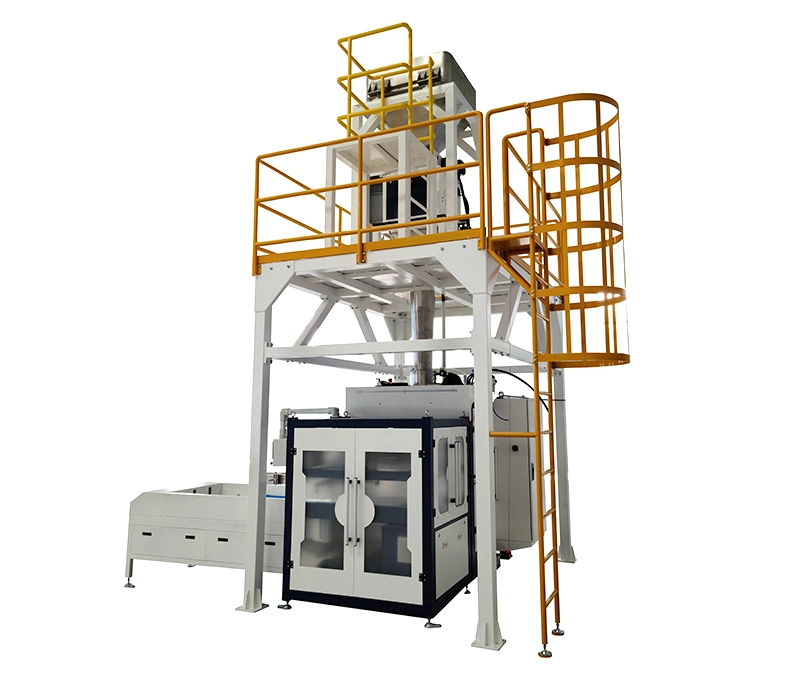
    Granule packing machine with elevated steel framework, safety cage ladder, and enclosed cabinet for stable seed bagging lines

    Why bulk granule lines lose stability at the bag transfer point

    In many seed, grain, and pellet packing rooms, the first problem is not filling accuracy. The real problem starts after the bag is full. If the transfer path is open, the sack can swing, twist, or drop unevenly before the next operator touches it. That is when seams miss alignment, product spills at the mouth, and the pallet line starts to fight the packaging line instead of following it.

    The structure in the photo solves that handoff problem by giving the bag a clear path out of the machine. The elevated steel framework holds the process at a controlled height, the enclosed cabinet protects the working zone, and the safety cage ladder shows that the line is built for repeated industrial access rather than improvised manual correction.

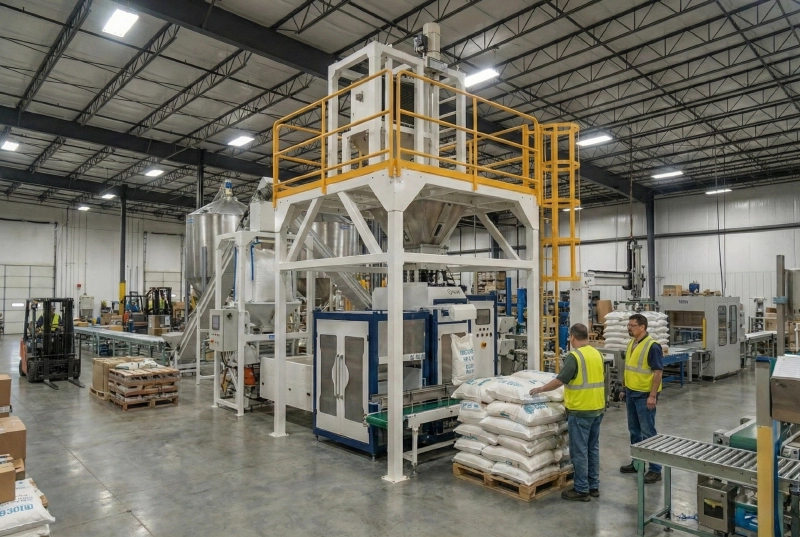
    Operating granule packing machine transferring filled sacks to pallet stacking with conveyor support and safe access platform
    The real pain point: filled bags lose shape before they reach sewing

    When the bag leaves the filling station without support, operators spend energy rescuing the process: guiding the sack, re-centering the mouth, lifting the bag by hand, or clearing product from the floor. That creates inconsistent cycle time, more manual contact, and a higher chance that the next sewing or stacking step starts from a bad position.

    Why this granule packing machine layout fits the line

    The QZK-1200-class layout is a better fit because it separates the jobs that should be mechanical from the jobs that should remain human. The machine frame keeps the filling and outfeed at a fixed elevation, while the conveyor path moves the filled sack toward the next station in a predictable direction. That means the operator is not forced to re-carry the product flow; the line itself carries the load.

    For a granule packing machine, this matters when the plant handles seed, grain, or other free-flowing material that must stay clean and intact. A guarded platform, enclosed body, and direct discharge path reduce random bag motion, keep the working zone organized, and make the line easier to supervise during long runs.

    bpmpack Engineering Insight: Stable packaging is not only about dosing accuracy. It is also about controlled handoff. The elevated frame, guarded access ladder, and direct conveyor outfeed keep the filled sack aligned until the next process step, which is what protects downstream sewing and stacking.

    What the photos prove about structure, flow, and final result

    The first photo proves the structural side: a tall steel frame, an enclosed cabinet, and a safe maintenance route all point to a machine designed for continuous industrial use rather than one-off trial packing. The second photo proves the working side: the machine is operating, the discharge conveyor is active, and operators are stacking sacks at the end of the line without losing control of the bag path.

    That combination is the practical result buyers want from a granule packing machine. The plant gets fewer manual corrections, the line stays cleaner around the transfer point, and the final pallet build becomes easier to standardize. Instead of asking operators to rescue unstable bags, the machine creates a repeatable path from fill to finish.

    Visual evidenceWhat it meansOperational result
    Elevated steel framework and enclosed cabinetThe machine keeps the packing zone organized and fixed at working heightLess random bag motion and more stable transfer before sewing
    Conveyor discharge and live operating sceneThe filled sack moves in a controlled direction after fillingCleaner handoff, fewer manual corrections, faster line rhythm
    Operators stacking sacks at the line endThe downstream work is receiving a predictable outputMore consistent palletizing and easier final workflow control

    Need a granule packing machine layout that stays stable at the sewing point?

    Share your target bag weight, material behavior, and daily output. We can map the right packaging structure, transfer path, and platform layout before the line is built, so the bag stays controlled from fill to finish.

    Request a layout review
  • Salt Filling Machine for Humid Salt Lines: Stable Workflow from Unwind to Sewing

    Salt Filling Machine for Humid Salt Lines: Stable Workflow from Unwind to Sewing

    Salt filling machine for humid salt plants

    From sticky film to clean sewing: a stable workflow for humid salt lines

    When refined salt absorbs moisture, the line does not fail at one single point. It drifts across the whole path: the film tracks badly, the collar grabs, the seal loses consistency, the bag bulges, and the sewing head inherits the problem. BIBPU is built to keep that chain controlled from unwind to final close.

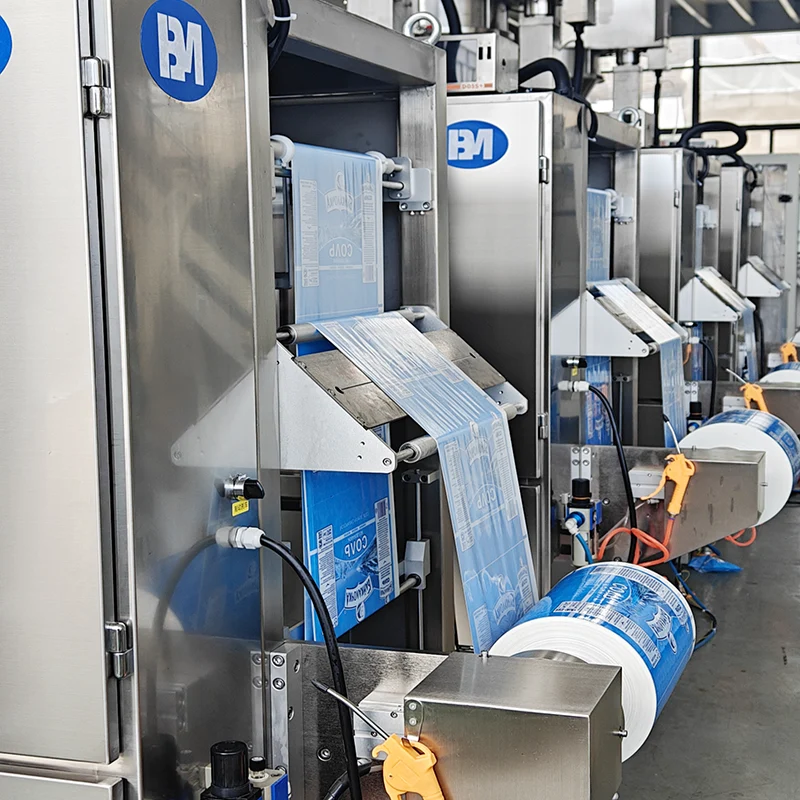
    Back unwinding section of a humid salt filling machine with blue salt film rolls and tension shafts

    The real problem on humid salt lines

    A humid salt plant usually looks stable from a distance, but the operator knows where the pressure points are. The film softens, the powder flow changes, the shoulder grabs, and the bag starts moving with more friction than the packaging recipe expected. By the time the bag reaches the sewing station, the line has already lost consistency.

    • Blue or printed film shifts because the unwind tension is not held tightly enough.
    • Moist salt increases drag at the forming shoulder and creates sticking.
    • Weak deaeration leaves trapped air, so the bag swells before closing.
    • If the sewing head receives an uneven mouth, stitching quality becomes the last visible symptom.

    Why BIBPU fits this environment

    BIBPU is not just a filling step. It is a controlled handoff system for a difficult material. The machine keeps the film path stable, guides the bag through the forming zone, seals with repeatable heat control, and prepares the mouth for a cleaner final close.

    Dimpled forming shoulder for high-friction film

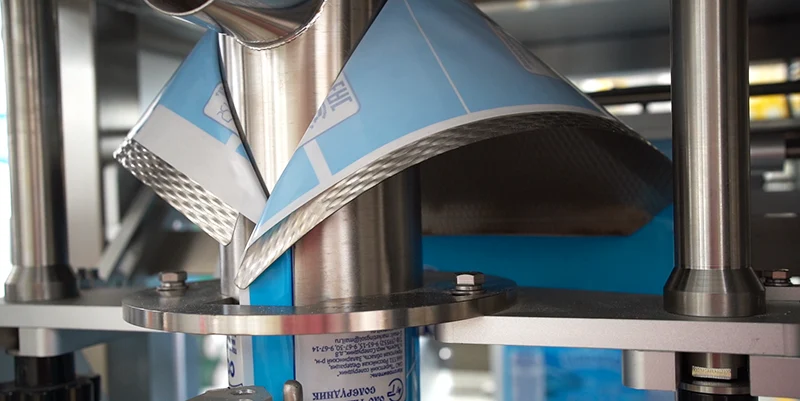
    Dimpled stainless steel forming shoulder of a humid salt filling machine to reduce film sticking

    The forming shoulder uses a dimpled stainless surface to reduce sticking. For humid salt, that matters because the film is already fighting moisture and static drag. A smoother collar can look neat in a brochure and still fail in production. The dimple plate gives the film a better release path.

    Film tracking that stays centered

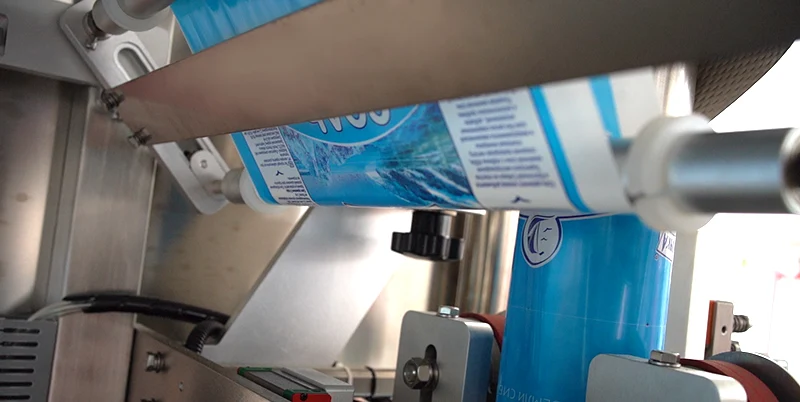
    Aluminum film guide rollers and alignment collar on a salt filling machine for stable tracking

    Guide rollers and the alignment collar keep the roll centered before the bag is formed. That prevents edge wandering, print drift, and the kind of progressive misalignment that often shows up only after several hundred bags.

    What the evidence looks like on the machine

    Horizontal sealing jaw of a salt filling machine sealing a blue printed salt pillow pouch

    The sealing jaw closes on a bag that has already been formed and stabilized. That matters because the seal is not asked to correct a bad upstream condition; it is asked to complete a controlled one.

    Pneumatic compression section on a salt filling machine before bag sewing

    The compression section removes excess air and squares the mouth before sewing. In humid salt packaging, this is one of the most practical ways to stop the bag from looking full while still being mechanically unstable.

    Industrial Newlong sewing machine head stitching the opening of a filled woven sack

    The Newlong sewing head then receives a flatter, cleaner mouth. That gives the final stitch a better chance to stay consistent, even when the product itself is not cooperative.

    Built around the line, not just the bag

    For humid salt, the product challenge is never only the powder. The line must also survive corrosion, cleaning, and long production runs. That is why the contact-side materials, the forming geometry, the unwinding control, and the discharge handoff all matter together. BIBPU is designed as a chain of small mechanical decisions that protect the final result.

    In practical terms, the outcome is simple: fewer tracking corrections, less film sticking, a cleaner mouth before closing, and a more stable sewing result. The plant gets fewer manual interventions, and the bag leaves the line looking and handling like a finished product instead of a near-miss.

    Problem-to-solution map

    Line issueWhat it causesBIBPU response
    Film drift at unwindPrint misalignment and unstable formingTension shafts and guide rollers keep the web centered
    Film sticking at the collarMaterial hang-up and uneven bag geometryDimpled forming shoulder reduces contact friction
    Trapped air in the bagBulging mouth and poor close qualityCompression before sewing flattens the bag mouth
    Uneven bag mouth at final closeWeak or inconsistent stitchingSewing head receives a more stable, prepared bag opening

    Final result

    On a humid salt line, the real win is not a dramatic machine headline. It is a bag that tracks cleanly, seals consistently, and reaches sewing in a shape the operator can trust. That is the job BIBPU is built to do.

    Request a salt line review

  • Salt Filling Machine for Humid Salt Lines: Film Tracking, Sealing, and Sewing Without Drift

    Salt Filling Machine for Humid Salt Lines: Film Tracking, Sealing, and Sewing Without Drift

    Salt Filling Machine

    Salt Filling Machine for Humid Salt Lines: Film Tracking, Sealing, and Sewing Without Drift

    Humid salt does not fail at one point only. It stresses the film path, the forming shoulder, the seal jaw, and the last sewing handoff all at once. This BIBPU line is built to keep those four steps aligned, so the bag stays stable from dosing to final closure.

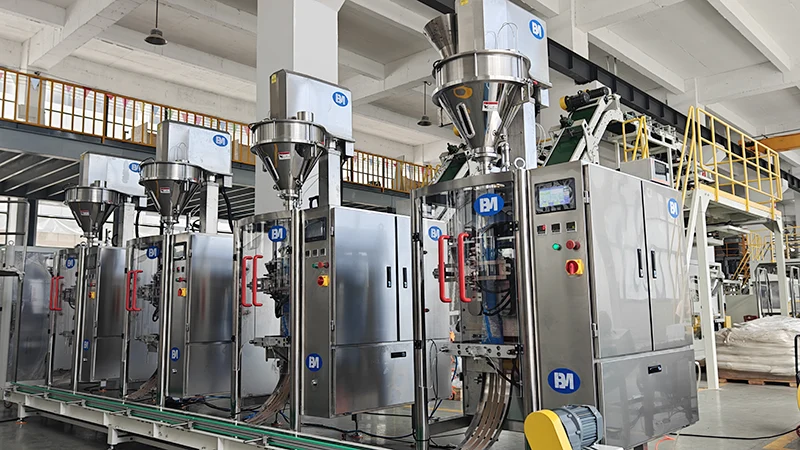
    BIBPU salt filling machine line with four vertical form fill seal machines and stainless steel hoppers

    Why humid salt lines punish ordinary film paths

    In a dry plant, many packaging lines can look acceptable during trial runs. In a humid salt environment, that same line starts to reveal weak points fast. Film can cling to the collar, tension can drift as the roll unwinds, and the bag can lose shape before the seal jaw finishes its job. Once that happens, the sewing station receives a bag that is already fighting the line.

    The first image shows the wider system logic: four vertical form fill seal machines with stainless hoppers arranged as a high-output salt line. That layout matters because salt filling machine performance is not just about one head or one hopper. It is about repeatable film feeding, stable dosing, and a clean transfer into downstream closure. The line is designed around that sequence, not around a single isolated machine frame.

    Dimpled stainless steel forming shoulder on a BIBPU salt filling machine to reduce film sticking
    Typical failure point

    When moisture rises, the film grabs the forming shoulder, the bag mouth loses alignment, and the operator starts compensating by hand. That kind of correction may save a few bags, but it does not solve the real problem: the line is no longer self-stable.

    Why BIBPU matches the problem

    The dimpled stainless steel forming shoulder is the right answer for sticky film behavior because it reduces contact drag where the film must travel cleanly. The tension-controlled unwind section supports that same goal from the back end, keeping the roll feed consistent instead of letting the film surge or flutter. Together, those two structural details keep the bag path predictable.

    From there, the heated cross-sealing jaw with PID temperature control finishes the seal at a controlled heat level rather than chasing an unstable bag shape. That is especially important for salt, because a weak seal or a bag with trapped air will only create more handling trouble downstream. The process stays under control when the film, seal, and bag compression all work as one system.

    bpmpack Engineering Insight: Humid salt packaging is a chain problem. If the shoulder sticks, the seal drifts. If the seal drifts, the sewing station inherits a deformed bag. BIBPU addresses the chain from the top film roll to the final woven-sack closure, so each stage supports the next one instead of creating a new defect.

    What the line proves in the pictures

    The selected images are not decorative. They show the structure behind the result. The film roll and tension shafts explain why the line keeps tracking straight. The heated seal jaw shows how the bag closes without losing control of temperature. The bag sewing head then completes the handoff into secondary packaging without forcing the operator to rescue the bag by hand.

    That is the real value of this salt filling machine setup for humid salt lines: fewer corrections, cleaner handoff, and a more repeatable finish. The line is built to keep the product moving, the bag shape stable, and the closure sequence orderly from the first feed to the last stitch.

    StageWhat can go wrongBIBPU structure shown in the imagesResult
    Film feedFilm drifts or sticks in humidityBlue salt film roll with tension shaftsStable unwind and cleaner tracking
    Forming and sealingBag mouth loses shape before closureDimpled forming shoulder plus PID seal jawLower drag and more consistent sealing
    Secondary closureBag arrives deformed at the sewing stationIndustrial bag sewing head on the lineCleaner handoff and fewer manual corrections

    Need a stable salt line?

    If your plant is dealing with humidity, film sticking, unstable bag shape, or a messy handoff before sewing, we can configure the salt filling machine around the real bottleneck instead of forcing the operator to manage it by hand.

    Request a line review
  • Salt Filling Machine BIBPU for Humid Salt Lines: Stable Handoff Before Sewing

    Salt Filling Machine BIBPU for Humid Salt Lines: Stable Handoff Before Sewing


    BIBPU / соль / вторичная упаковка

    Salt filling machine BIBPU: как удержать соль сухой и ровной перед прошивкой

    Если соль идёт по влажной линии, проблемы обычно появляются не в начале, а на последнем участке. Плёнка уходит, мешок раздувается, шов требует переделки, а прошивка получает неровную кромку. BIBPU закрывает именно этот участок — от дозирования до стабильной передачи мешка на прошивку.

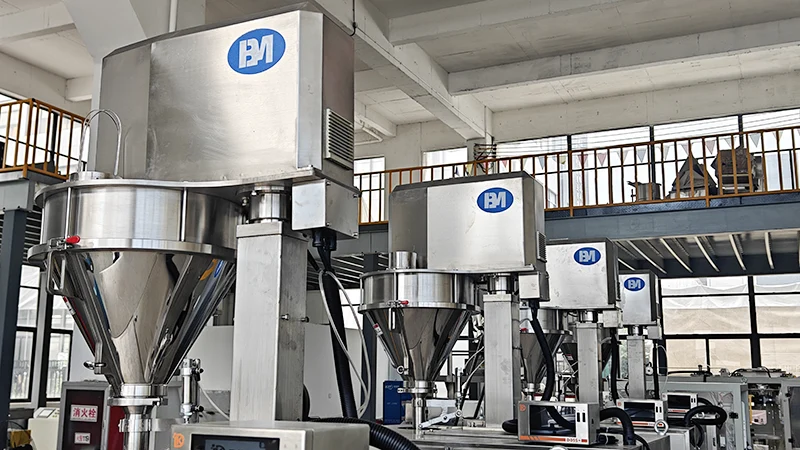
    316L узел дозирования для солевой линии: коррозионностойкий шнековый бункер и стойки

    Где обычно ломается солевая линия

    Для соли типовая проблема повторяется одинаково: материал тянет влагу, слёживается, пылит и плохо держит стабильный поток. После фасовки мешок ещё нужно спокойно довести до закрытия. Если дозирование нестабильно, шов идёт с перекосом. Если плёнка теряет позицию, мешок приходится подравнивать вручную. Если продукт не успевает осесть, перед прошивкой остаётся лишний воздух, и упаковка уходит в брак.

    Поэтому BIBPU стоит смотреть не как отдельную машину, а как короткую технологическую цепочку: стабильная подача, контролируемое формирование, аккуратный термошов, выравнивание мешка и только потом прошивка.

    Бункер дозирования из UNS S31603 с быстрозажимным соединением для salt filling machine
    Контактные узлы на солевой линии выполнены из коррозионностойкой нержавеющей стали, чтобы снизить риск износа в сырой среде.

    Почему эта конфигурация подходит именно для соли

    В узле дозирования BIBPU используются материалы, рассчитанные на агрессивную и влажную среду: контактные поверхности из UNS S31603 (316L), жёсткая рама, быстрые соединения и закрытая логика подачи. Для соли это напрямую влияет на чистоту дозы, повторяемость веса и отсутствие налипания в зоне выгрузки.

    Дальше в работу включаются узлы, которые держат форму упаковки. Формирующее плечо с антиадгезионной обработкой снижает прилипание плёнки. Ролики направления плёнки удерживают подачу без рывков. Термозапаивающие губки с покрытием помогают получить ровный шов без перегрева кромки. А узел поджима и выравнивания мешка перед прошивкой убирает лишний воздух и делает пакет геометрически стабильным.

    Ролики направления плёнки и узел выравнивания для стабильной подачи на salt filling machine
    Стабильная подача плёнки нужна не меньше, чем точное дозирование: без неё мешок уводит до зоны шва.
    Открытые термозапаивающие губки VFFS для salt filling machine с Тефлоновым покрытием
    Тефлоновое покрытие помогает получить чистый термошов на солевой упаковке при высокой повторяемости цикла.

    Что показывают фото линии

    На снимке дозирующего узла видно, что конструкция рассчитана на непрерывную промышленную работу, а не на короткий тестовый прогон. На фото направляющих роликов хорошо читается узел выравнивания плёнки. На фото термозапаивающих губок видно, что зона шва защищена от лишнего прилипания и перегрева. На фото поджима мешка перед прошивкой заметно, как линия готовит упаковку к следующей операции без ручной подрезки и без «мягкого» мешка, который потом плохо держит форму на складе.

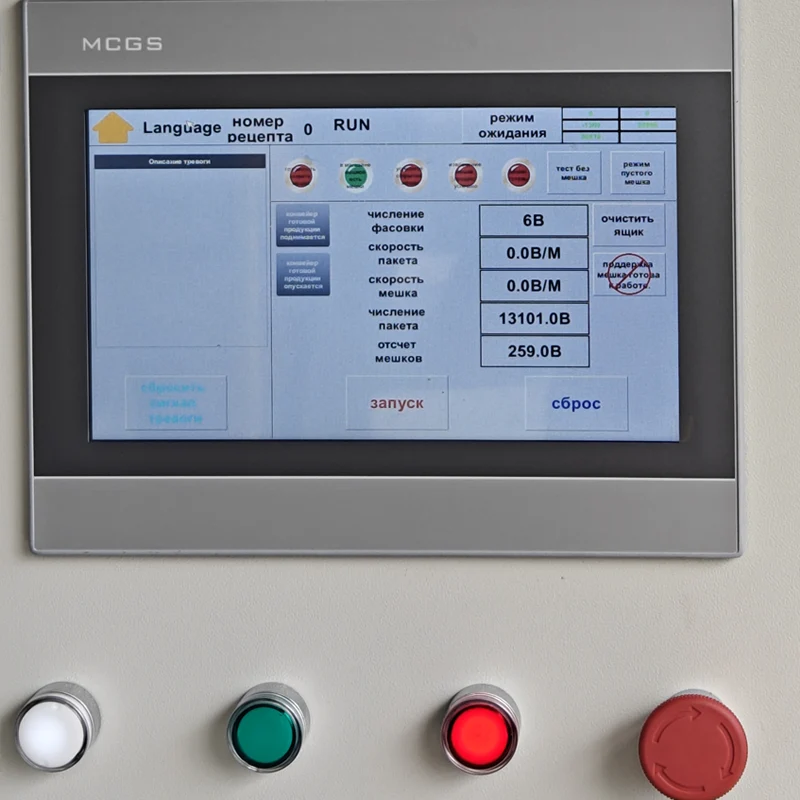
    Отдельно полезен экран управления. Он показывает, что оператору не нужно угадывать режимы на слух: параметры цикла задаются и контролируются через русифицированный HMI. Это снижает зависимость от человеческого фактора и делает смену партии более предсказуемой.

    Поджатие и выравнивание наполненного мешка перед прошивкой на линии salt filling machine
    Перед прошивкой мешок должен быть выровнен и уплотнён, иначе кромка уходит и строчка идёт с напряжением.
    Русский HMI интерфейс для управления salt filling machine и контроля параметров упаковки
    Русскоязычный интерфейс помогает быстрее удерживать стабильный режим без лишних остановок и переделок.

    Финальный результат на выходе линии

    Когда дозирование, подача плёнки, термосварка и выравнивание мешка собраны в одну технологическую цепочку, линия перестаёт терять время на ручные исправления. Соль идёт ровно, пакет получает чистую геометрию, шов закрывается стабильно, а прошивка получает уже подготовленный мешок без избытка воздуха и перекоса.

    Для производителя это означает меньше брака, меньше возвратов на ручную доработку и более спокойную работу в сезон пиковых отгрузок. Для склада — более плотную и предсказуемую укладку. Для производства — меньше простоев на подстройку и больше повторяемости от смены к смене.

    Смотрите также по этой линии

    Открытые термозапаивающие губки VFFS для salt filling machine с Тефлоновым покрытием

    Стабильный термошов для солевой упаковки

    Как узел запайки удерживает шов чистым, когда соль идёт в сырых условиях и мешок нельзя перегревать.

    Ролики направления плёнки и узел выравнивания для стабильной подачи на salt filling machine

    Как держать плёнку в линии без уводов

    Почему стабильная подача плёнки важна для веса, геометрии мешка и чистой работы следующей операции.

    Поджатие и выравнивание наполненного мешка перед прошивкой на линии salt filling machine

    Подготовка мешка перед прошивкой

    Что делает BIBPU, чтобы убрать воздух, выровнять пакет и передать его на прошивку без ручной подгонки.