Automatic Bagging Machine & Palletizing Systems Manufacturer

Category: English

  • Bulk Packaging Line for Cleaner Sack Handoff Before Sewing

    Bulk Packaging Line for Cleaner Sack Handoff Before Sewing

    Bulk packaging

    How a Southern Russian Bulk-Product Plant Keeps Woven Sacks Straight Before Sewing

    A practical look at how a steel-frame bagging line reduces sack skew, bounce, and rework by holding the transfer path steady from filling to sewing and palletizing.
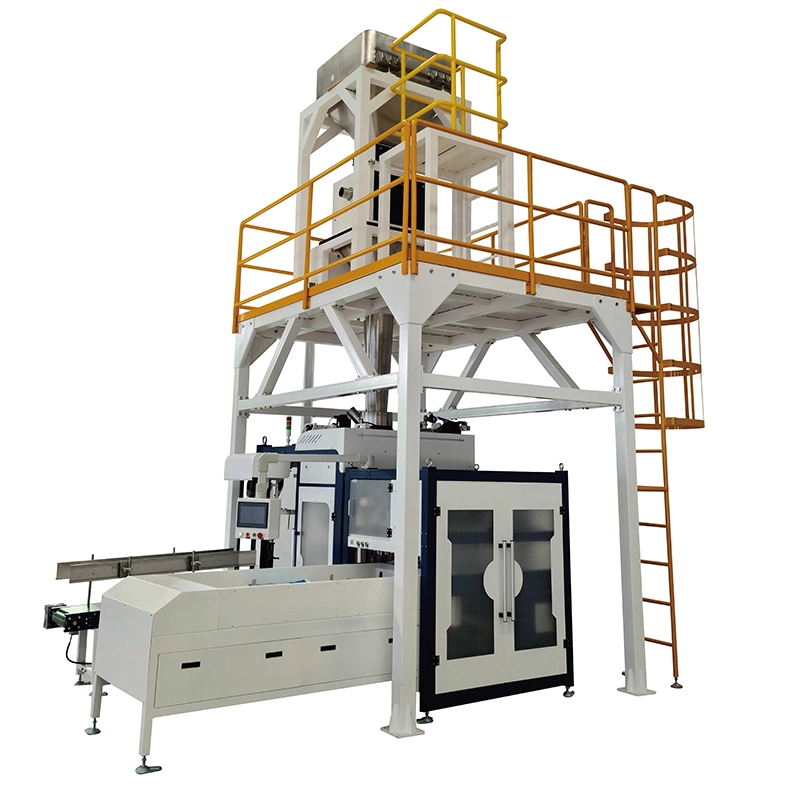
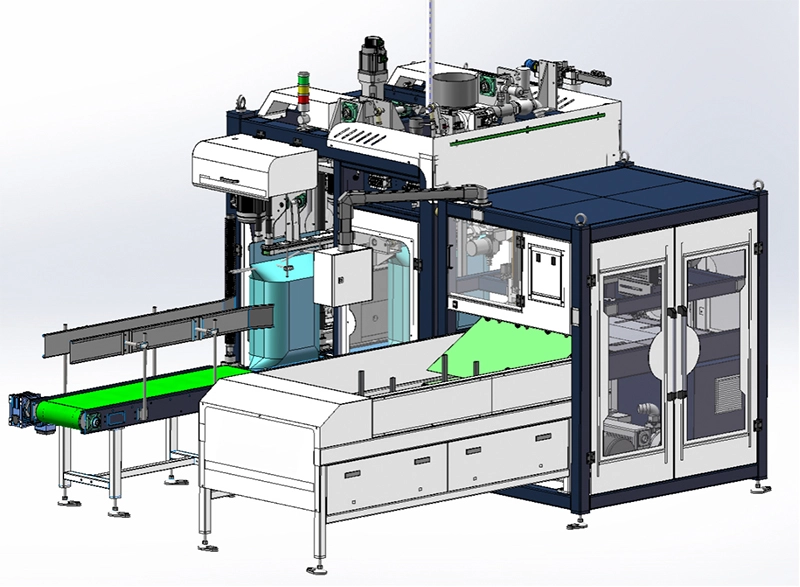
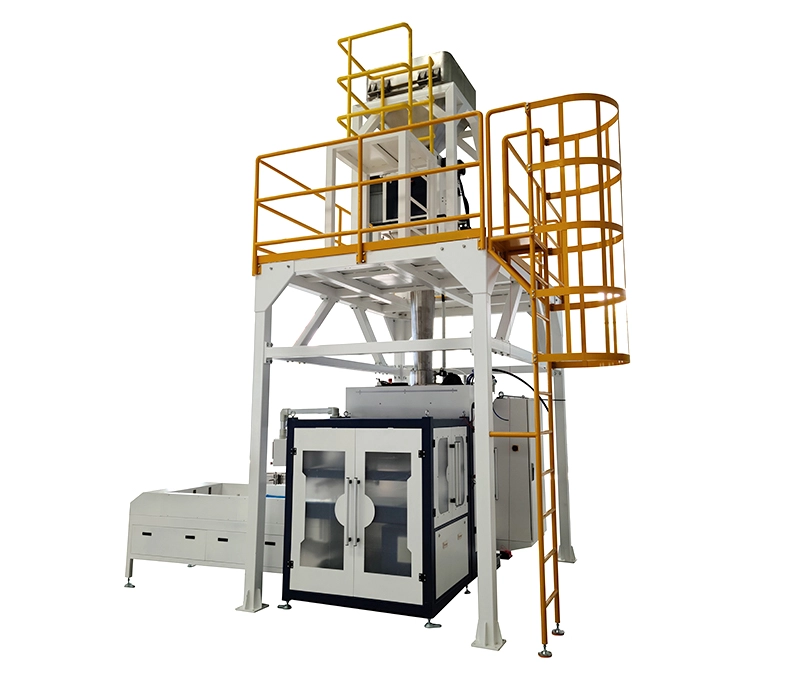
    Isometric product photo of QZK-1200 bagging machine showing swing-arm HMI touchscreen panel, outfeed belt conveyor, and platform.

    Why the plant needed a steadier sack handoff

    The plant was handling bulk-product bags that arrived at the sewing point with small rotations, soft corners, and inconsistent mouth position. Every time the sack shifted after discharge, the operator had to correct alignment by hand, and that extra motion slowed the station down.

    bpmpack matched the line to that problem with a rigid steel frame, a controlled outfeed path, a swing-arm HMI for fast adjustment, and a guided transfer layout that keeps the woven sack square as it moves to the next step.
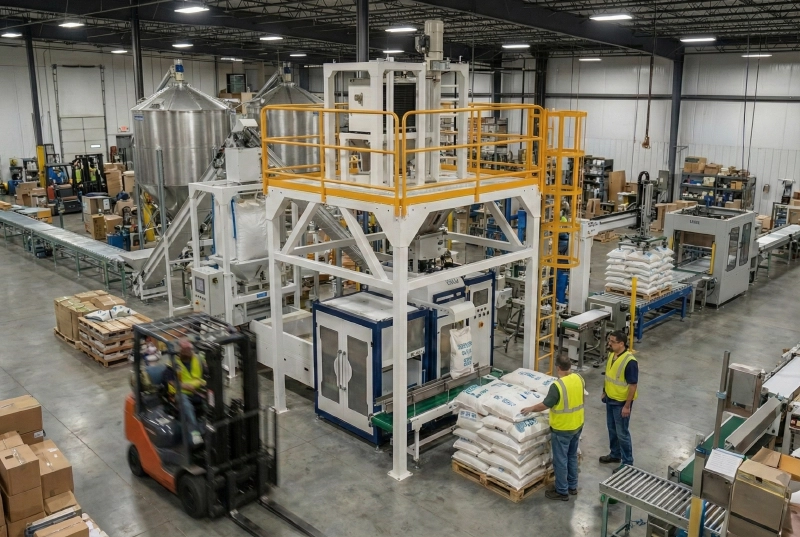
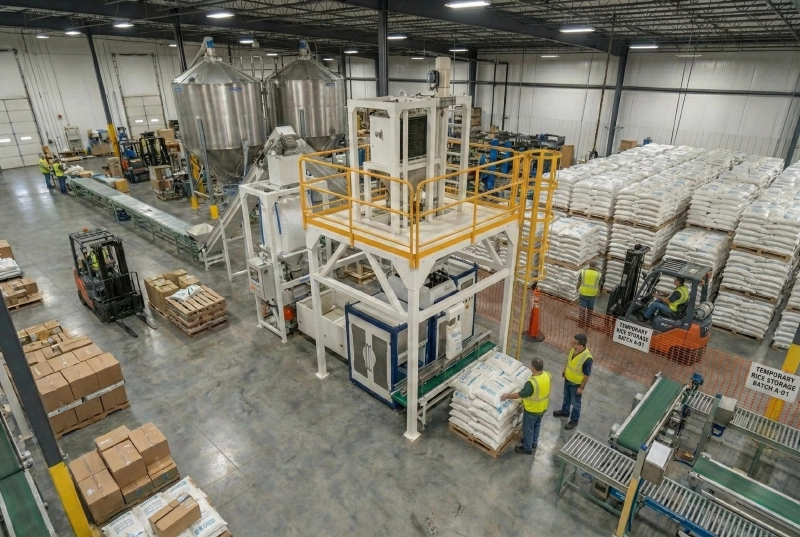
    High-angle perspective photo of running QZK-1200 packaging line with active forklift logistics and high-visibility operators.
    Old-line pain points

    Bag mouth drift before sewing, sack bounce at discharge, uneven pallet faces, more manual straightening, and extra wear on woven bag corners during floor handling.

    Why this ppline setup fits bulk-product bags

    The structure shown in the product photo is built around the kind of transfer control bulk-product bags need. The elevated steel framework supports the machine body, the enclosed cabinet protects the working section, and the outfeed conveyor keeps the sack moving in one clean direction instead of dropping it into a loose handoff.

    The line layout also leaves room for operators and forklifts to work without crowding the discharge area. That matters when the plant wants fewer touches between filling, sewing, and palletizing, because every avoided touch lowers the chance of a twisted sack face or a damaged seam line.

    bpmpack Engineering Insight: when a woven sack must stay square between filling and sewing, the key variable is transfer geometry. A rigid frame, controlled discharge, and clear operator access reduce the small rotations that usually create seam drift and uneven pallet stacking.

    Structure, parameters, and the outcome

    From the selected images, the core physical cues are easy to read: a QZK-1200 bagging platform, a CY-CJD50K double-station servo scale, a swing-arm HMI touchscreen, an elevated steel tower, safety cage laddering, yellow guard rails, and a guided outfeed belt. Those are not decorative details. They are the parts that keep the sack path stable and the station easy to control.

    For a southern Russian bulk-products plant, the result is a cleaner changeover from filling to sewing, fewer corrections at the machine head, and a more consistent pallet face at the end of the line. That means less rework at the station and less damage during the last meter of internal logistics.

    IssueLine elementResult
    Bag skew before sewingSwing-arm HMI, rigid tower, guided outfeedSteadier transfer angle
    Manual correction at dischargeEnclosed machine cabinet and controlled conveyorFewer touchpoints
    Uneven pallet facesClear operator space and forklift-friendly layoutCleaner stack presentation

    Need a bulk-product line that keeps woven sacks square before sewing?

    We can match the platform height, discharge path, control package, and transfer layout to your bag type and throughput so the line works with less manual correction and cleaner downstream handling.

    Request a layout review
  • Dry-Bulk Bagging Line for Cleaner Sack Handoff Before Palletizing

    Dry-Bulk Bagging Line for Cleaner Sack Handoff Before Palletizing

    Dry Bulk Packaging

    How a Dry-Bulk Bagging Line Simplifies Sack Handoff Before Palletizing

    A Russian dry-bulk plant does not usually lose time at the filler. It loses time when a woven sack leaves the machine crooked, needs to be corrected by hand, and then has to be pushed again into the sewing or palletizing flow. This page shows why a compact bagging line built around a QZK-1200-style station fits that problem better than a loose, floor-level setup.

    Front view of QZK-1200 automatic bagging machine with elevated steel framework, safety cage ladder, and enclosed cabinet

    The real bottleneck was the transfer point, not the filling point

    For dry-bulk products such as salt, grain, feed, or similar free-flowing materials, the machine can fill correctly and still leave the plant with a handling problem. The sack may land off-center, the discharge area may feel cramped, and operators often end up straightening the bag by hand before the next step. That is where throughput disappears.

    This project needed a line that kept the bag path visible, protected, and easy to manage. The answer was not a more complicated filler. It was a cleaner machine layout: elevated steel structure, enclosed cabinet, safe access ladder, and a controlled outfeed route that helps the plant move from filling to stacking with less correction.

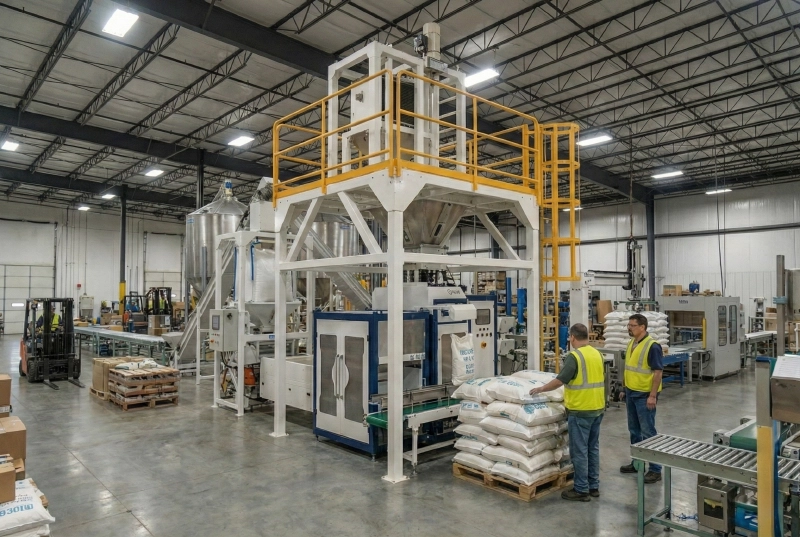
    Eye-level photo of operating QZK-1200 bagging station with steel safety cage ladder, conveyor, and operators stacking sacks
    Common pain point

    When the discharge end is too open or too low, sacks wander, operators intervene too often, and the line starts depending on manual correction instead of mechanical control.

    Why this layout fits a Russian dry-bulk plant

    The front view shows the hardware logic clearly: a raised steel frame, a compact enclosed body, and a safety cage ladder that keeps the working zone organized. That is useful on a site where floor space is shared with forklifts, pallet movement, and bag staging. The structure gives the plant a defined bagging center instead of an improvised transfer area.

    The running photo matters just as much. It shows sacks leaving the station into a real operating workflow, with operators working at the edge of the line rather than inside it. That is the practical advantage of a dry-bulk bagging line designed as a controlled transfer point: the machine does the alignment work first, and the people handle the downstream flow second.

    bpmpack Engineering Insight: If the sack is unstable at the bagging station, the palletizing area only inherits the same problem at a larger scale. The right fix is to tighten the machine-side handoff with a clearer frame, a protected cabinet, and a disciplined conveyor exit.

    What the photos prove about the line structure

    The hero image proves the structure: elevated steel framework, safety cage ladder, and an enclosed cabinet are not decoration. They create a stable working envelope around the machine, which is exactly what a bulk plant needs when it runs long shifts and depends on repeatable bag handling.

    The second image proves the process: the line is not just a static frame. It is an operating station with a conveyor-based handoff and visible operator interaction at the correct point in the flow. That makes the line easier to integrate with sewing, stacking, or palletizing without turning the floor into a correction zone.

    Plant needWhat the line providesPhoto evidence
    Cleaner sack handoffControlled discharge path and visible working zoneFront view of the elevated station
    Safer maintenance accessSteel frame, ladder access, enclosed cabinetHero image structural details
    Smoother downstream stackingConveyor-based outfeed with operator supportRunning station and sack stacking scene

    Need a dry-bulk bagging line that matches your product flow?

    Send us your material type, bag size, target output, and the next step after filling. bpmpack can map the machine layout to your sewing, stacking, or palletizing process and keep the sack handoff under control from the start.

    Request a layout review
  • Dry-Bulk Bagging Line for Cleaner Handoff Before Palletizing

    Dry-Bulk Bagging Line for Cleaner Handoff Before Palletizing

    Bulk packaging line

    How a Russian Dry-Bulk Plant Kept Woven Bags Stable Before Palletizing

    A mid-size dry-bulk processor needed a cleaner handoff from filling to transport. Bags were arriving at the pallet area skewed, loose, and harder to stack than the logistics team wanted. The new line focuses on controlled bag capture, stable discharge, and a layout that lets the plant move sacks from the filling head to pallet staging with less manual correction.

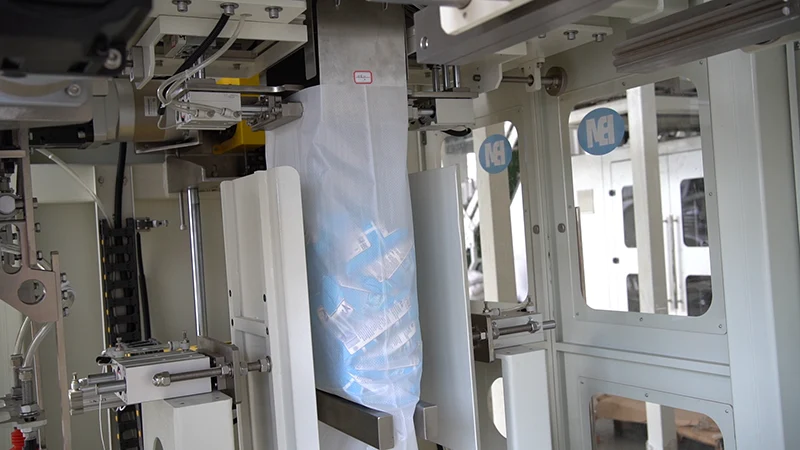
    Close-up internal photo of bagging unit with vacuum suction cups, robotic placing arm, green conveyor, and white woven bag

    What the old setup was struggling with

    The plant’s earlier discharge path worked, but it did not protect bag shape well enough. Once a woven bag left the filling point, the next transfer relied too much on operator timing and on how straight the bag landed on the conveyor. That created a familiar pattern: bags twisted slightly, edges caught during transfer, and the pallet crew had to re-square the load before stacking.

    This is exactly where bulk-material lines lose efficiency. The issue is rarely the fill itself; it is the handoff. If the bag mouth, bag body, and outfeed line are not coordinated, the downstream team pays for it in extra touch labor, slower pallet building, and a higher risk of damaged sacks.

    High-angle operational photo of QZK-1200 bagging plant featuring twin stainless steel storage silos, conveyors, and active forklifts
    Pain point:

    When woven sacks come out unstable, the plant loses control over stack quality, forklift rhythm, and floor space. The problem becomes visible only after the line is already running, which makes it expensive to fix with labor alone.

    Why this ppline layout fits the job

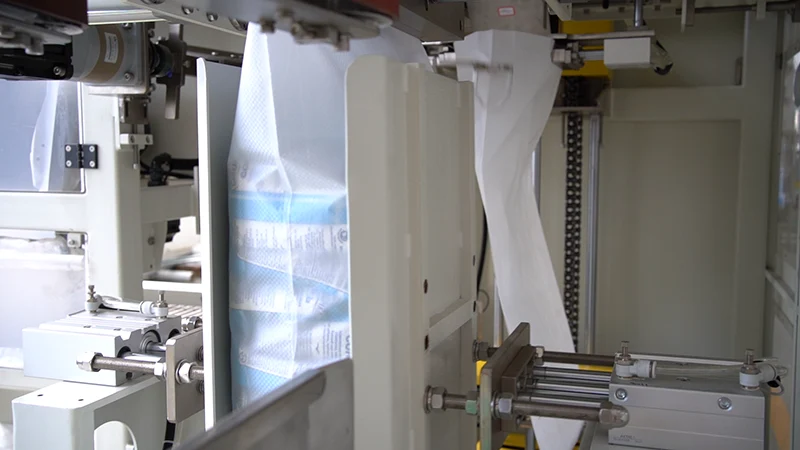
    The ppline bagging line is a better match because it treats transfer stability as a mechanical problem, not a manual one. The close-up view shows the internal bagging unit using vacuum suction cups and a robotic placing arm to hold the bag at the correct position while the green conveyor carries it forward. That kind of guided motion matters when the goal is a straighter bag body and a more predictable discharge path.

    The second image confirms the broader plant logic: twin stainless steel storage silos, conveyors, and active forklift logistics. In other words, the line is not only filling product; it is supporting the whole material flow from storage to pallet area. That is the right structure for a dry-bulk site that needs to keep sacks aligned before stacking and shipping.

    bpmpack Engineering Insight: For dry-bulk packaging, the best results usually come from controlling the transfer geometry, not from asking operators to correct every sack by hand. A stable filling head, guided bag handling, and a clean outfeed path reduce deformation before the bag ever reaches the pallet.

    What the evidence on the machine tells you

    The hero photo is useful because it shows the important internal parts instead of only the outside frame. The vacuum suction cups, the robotic placing arm, and the green conveyor are all visible, which means the line is built to hold and move bags in a controlled way. That is the first requirement for better stack quality.

    The overhead plant photo adds the second layer of evidence. The twin silos support a steady supply of product, while the conveyors and forklift lanes show that the line is designed for real warehouse movement, not just a laboratory demonstration. For a Russian dry-bulk plant, that combination matters: stable discharge, predictable logistics, and enough physical structure to keep the flow organized during busy shifts.

    Observed issueLine featureOperational result
    Bag twist during transferVacuum suction cups and robotic placing armStraighter bag handoff
    Weak pallet staging rhythmGreen conveyor and organized outfeed pathFewer manual corrections
    Inconsistent plant flowTwin silos and conveyor-connected layoutSmoother material movement
    Forklift congestion near loadingDefined warehouse lanesCleaner pallet logistics

    Need a bagging line that keeps sacks square before palletizing?

    If your bulk-material plant is fighting bag deformation, unstable discharge, or slow pallet building, we can help you map the transfer path, compare line structures, and build a packaging layout around the real warehouse workflow.

    Request a line review
  • BibPU Secondary Packaging for a Salt Plant That Stabilizes Woven Sacks Before Sewing

    BibPU Secondary Packaging for a Salt Plant That Stabilizes Woven Sacks Before Sewing

    Secondary packaging

    BibPU Secondary Packaging for a Salt Plant That Stabilizes Woven Sacks Before Sewing

    A Russian salt producer needed a cleaner way to move filled woven sacks from loose, bulging bags to a tight, sew-ready package. BibPU solves that transition with pneumatic holding, controlled compression, and corrosion-resistant contact parts built for harsh packaging floors.

    Refined salt packets falling into secondary woven PP bag held by pneumatic clamps

    From loose filled bags to a controlled sewing station

    The application here is straightforward: a salt plant fills secondary woven PP sacks with small salt packs, but the bag does not arrive at the sewing head in a stable shape. The top opening shifts, the body expands unevenly, and the seam line becomes harder to control. In a busy line, that means more manual correction and less consistent output.

    BibPU addresses that handoff at the exact point where the bag needs to become a transportable unit. The line holds the sack open during filling, keeps the stack aligned, and then prepares the loaded bag for sewing by flattening the bulged body before closure. The result is a bag that is easier to stitch, easier to stack, and easier to move downstream.

    Loaded secondary woven PP sack compressed by pneumatic side clamping plates
    Why the old method fails

    When a filled sack is left to settle on its own, it keeps the air trapped inside the woven body. The opening is harder to align, the bag profile changes from piece to piece, and the sewing operator has to compensate for the shape instead of running a stable process. That creates a real bottleneck at the end of the packaging line.

    Why BibPU fits salt packaging work

    BibPU is not just a conveyor transfer point. It is a controlled secondary packaging stage designed around the physical behavior of filled woven sacks. The clamping mechanism keeps the bag positioned while product is being loaded, and the side compression section tightens the sack body before sewing so the final bag shape is more uniform.

    For salt production, material contact reliability matters as much as movement control. The line uses UNS S31603 (316L) corrosion-resistant stainless steel on contact parts, which is important in chloride-heavy environments where ordinary steel surfaces can suffer. That makes the system more suitable for salt plants that want long-term uptime without frequent surface degradation.

    bpmpack Engineering Insight: The key improvement is not only speed. By combining pneumatic holding with post-fill compression, BibPU reduces shape inconsistency before the sewing head sees the bag. That means fewer adjustments, better seam alignment, and a cleaner handoff from filling to final closure.

    What the structure proves on the floor

    The support image shows the loaded woven sack being compressed by side clamping plates. That detail matters because it proves the unit is built to manage bag volume, not just move bags from point A to point B. The compression step turns an inflated, hard-to-handle sack into a flatter unit that can be presented to the sewing station more consistently.

    The first image shows the fill stage: small salt packs drop into the open secondary bag while pneumatic clamps keep the bag mouth controlled. Together, the two images document the process logic of the line: stabilize the bag, fill it, compress it, and then sew it. That sequence is what makes the system practical for a salt plant that wants a repeatable end-of-line workflow.

    Line elementWhat it doesWhy it matters for the salt plant
    Pneumatic bag clampsHold the woven PP sack open during fillReduces mouth shift and improves loading control
    Side compression platesFlatten the loaded sack before sewingMakes the bag shape more uniform for the sewing head
    316L contact surfacesProtect the line against chloride corrosionBetter durability in salt packaging environments
    Controlled secondary packaging flowMoves the bag from fill to sew with less manual correctionImproves consistency and lowers end-of-line handling loss

    Need a secondary packaging line that keeps sacks ready for sewing?

    For salt, resin, and other bulk products that arrive in woven bags, BibPU is built to control bag shape, protect contact surfaces, and make the sewing stage more predictable. If the main problem is bulging sacks and unstable handoff, this is the part of the line that fixes it.

    Talk to bpmpack
  • BibPU Secondary Packaging for a Salt Plant That Keeps Woven Sacks Flat Before Sewing

    BibPU Secondary Packaging for a Salt Plant That Keeps Woven Sacks Flat Before Sewing

    Secondary packaging

    How BibPU Keeps Salt Bags Flat Before Sewing on a Secondary Packaging Line

    At a Russian salt plant, the trouble was not filling alone. The real failure point came after small bags were collected into woven sacks: trapped air, bulging sack faces, poor sewing alignment, and unstable stacks at the end of the line. BibPU addresses that handoff with controlled grouping, side compression, and a sewing-ready discharge path built for salt packaging.

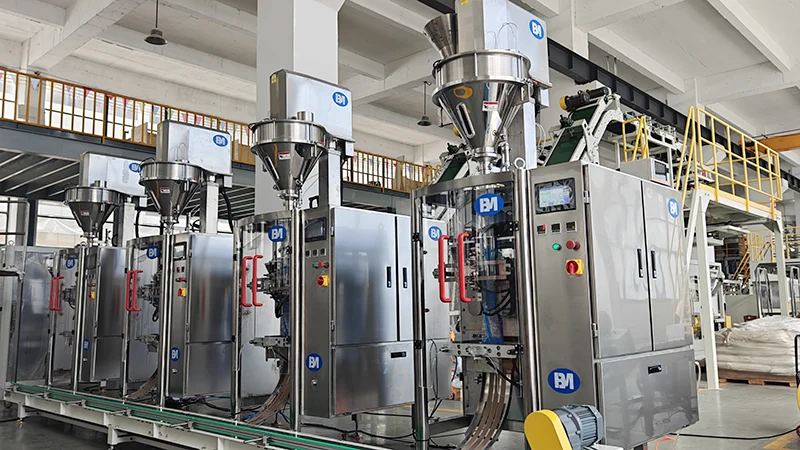
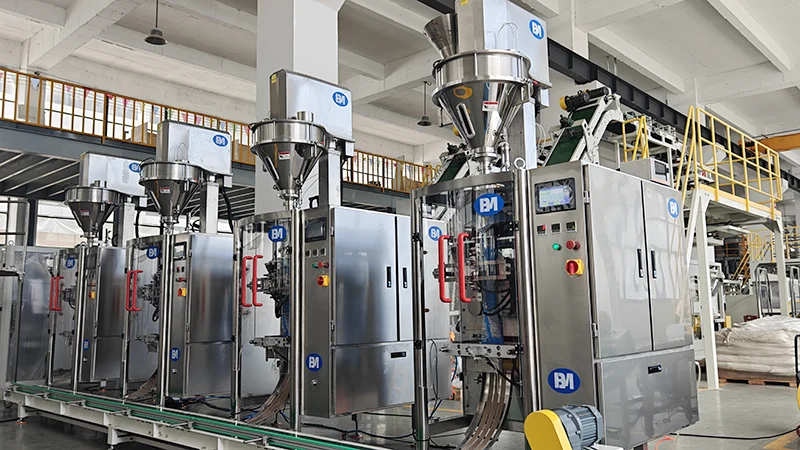
    Row of four BPM vertical form fill seal machines with stainless steel hoppers

    Why the old handoff failed before sewing

    The plant needed a cleaner way to move salt pouches from primary packing into the secondary bag. Manual collection and loose transfer left too much air inside the woven sack, so the load arrived at the sewing head uneven, springy, and hard to square up. Once the sack face ballooned, the operator had to fight the bag instead of stitching it.

    BibPU was a fit because the line is built around controlled collection, guided transfer, and compression before closure. The process is not just “move bags into a sack.” It is designed to keep the sack shape stable from the moment the pouches drop in until the bag reaches the stitch head.

    Loaded secondary woven PP sack compressed by pneumatic side clamping plates
    Old line pain point

    Bulging woven sacks create bad sewing angle, unstable stacking, and more rework at the end of the line. In salt packaging, that also means more risk of product dusting, bag slippage, and poor pallet shape.

    Why BibPU fits salt secondary packaging

    BibPU matches this job because its design supports both the product and the handling pattern. The product pool uses stainless steel and corrosion-resistant contact parts, which matters when salt exposure and humidity are part of the daily environment. The machine group is arranged to keep the flow compact, controlled, and easy to align before the sack is closed.

    The line also shows the right type of operator-facing control. The indexed control console includes a HMI and clear parameter display, which helps the crew keep transfer, sealing, and line rhythm consistent without overcorrecting by hand. For a salt plant, that consistency matters more than raw speed alone.

    bpmpack Engineering Insight: the key advantage is not only in packing the pouches, but in removing air and shaping the sack before sewing. Side compression, guided feeding, and a stable discharge path reduce the load’s spring-back effect, so the bag enters the stitch station flatter and more predictable.

    Structure and process evidence from the machine set

    The visual evidence behind the line is straightforward. The VFFS section uses stainless steel hoppers for stable filling. The transfer and grouping sections use guided conveyors and controlled spacing. The secondary bag section then compresses the woven sack so the load does not arrive puffed up at the sewing station. That sequence is what turns a messy handoff into a repeatable packaging step.

    We also see the details that support the result: corrosion-resistant contact surfaces for salt duty, anti-static and moisture-aware film handling, stable guide rollers, and a sewing head built to close the bag after the sack body has been flattened. The process is designed around the real failure mode, not around a generic packaging checklist.

    Line stepWhat it solvesEvidence in the BibPU set
    Primary fillingKeeps salt pouches consistent before secondary packingStainless hopper VFFS row
    Grouped transferControls spacing and reduces random pile-upGuided conveyor and compact transfer layout
    Secondary sack compressionRemoves air and flattens the woven sack before sewingPneumatic side clamping plates
    Final closureImproves sewing angle and stack stabilityIndustrial sewing head and aligned sack mouth

    Need a salt line that stays flat before sewing?

    BibPU is a strong fit when the problem is not filling speed alone, but what happens after the pouches enter the woven sack. If you need flatter bags, cleaner sewing, and a more stable pallet shape, this is the line logic to look at.

    Talk to BPM
  • BibPU Secondary Packaging for a Salt Plant That Keeps Woven Sacks Flat Before Sewing

    BibPU Secondary Packaging for a Salt Plant That Keeps Woven Sacks Flat Before Sewing

    Secondary packaging

    How a Russian Salt Line Keeps Secondary Woven Sacks Square Before Sewing with BibPU

    At the end of a salt packing line, the bag is already full. The real job starts after filling: remove the bulge, keep the sack mouth aligned, and deliver a steady load to the sewing head without tearing, mis-stitching, or slowing the line.

    Loaded secondary woven PP sack compressed by pneumatic side clamping plates

    Why the old handoff breaks down

    For a salt plant, the upstream filling step is only half the story. Once the product is inside the woven sack, the bag can swell, lose its shape, and drift out of line during transfer. If the plant depends on manual straightening or a loose conveyor handoff, the stitching station ends up fighting the package instead of closing it.

    That is where defects start to multiply. A bulging sack can drag across guides, arrive at the sewing head with an uneven top edge, or trap air that keeps the body too round to feed cleanly. The result is slower takt time, poorer seam consistency, and more operator intervention at the exact point where the line should be stable.

    Industrial Newlong sewing machine head stitching the opening of filled woven sack
    Bulging sacks hurt stitch quality

    When the bag mouth is not flattened before sewing, the closure station has to compensate for shape, air, and misalignment at the same time. That creates a poor starting point for a heavy-duty stitch head, especially in a salt environment where clean seam formation and reliable bag control matter more than speed alone.

    Why BibPU fits this job

    BibPU matches this secondary packaging problem because it is built around controlled bag transfer, compression, and final closure. The support image shows the line using a 150 mm center cylinder to push twin Q235B sprayed side plates inward. That is not decorative structure; it is the mechanism that flattens the filled sack before the mouth reaches the sewing station.

    The second image shows the closure stage itself: a Newlong DS-9C industrial sewing head working on the filled woven bag opening. Together, the compression station and the stitching station form a practical pair. One prepares the package shape, the other closes it with a stable feed path. That is the difference between simply moving bags and actually finishing them in a repeatable way.

    bpmpack Engineering Insight: The line is not asking the stitcher to solve a shape problem. It solves the shape problem first. The bag is compressed, squared, and centered before sewing, so the closure head receives a calmer mouth, less trapped air, and a more predictable edge to stitch.

    Structure and sequence that deliver the result

    The visible structure matters because it explains how the line stays controlled in a real plant. The side compression station uses a 150 mm stroke center cylinder to drive the clamping plates. The plates are Q235B with sprayed corrosion protection, which is suitable for an industrial salt environment where the line must remain serviceable and rigid.

    After compression, the filled sack is ready for the top transfer and sewing zone. The image evidence shows a dedicated heavy-duty sewing head, which tells us the line is designed for a true secondary packaging finishing step, not a temporary hand-tie or an improvised closure. The result is a cleaner bag body, better seam presentation, and a more consistent final package for palletizing and shipment.

    Line detailObserved functionProduction effect
    Side compression station150 mm center cylinder pushes the side plates inwardFlattens the sack body before it reaches sewing
    Q235B sprayed clamping platesRigid mechanical contact keeps the bag under controlReduces bounce, drift, and shape loss during transfer
    Newlong DS-9C sewing headHeavy-duty stitch closure for the filled woven sackDelivers a more reliable top closure for shipping
    BibPU line sequenceCompression first, stitching secondImproves stability where secondary packaging usually fails

    Need the same stable pre-sewing control?

    BibPU is a strong fit when the bag is already filled but still needs shape control before closure. For a salt plant, that means fewer bulged sacks, cleaner stitching, and a smoother path from filling to shipment.

    Talk to bpmpack
  • BibPU Secondary Packaging for a Russian Salt Plant Before Sewing

    BibPU Secondary Packaging for a Russian Salt Plant Before Sewing

    Secondary packaging

    How a Russian Salt Plant Improved Secondary Packaging Before Sewing with BibPU

    For a salt plant that needed a cleaner handoff from filled pouches to woven sack closing, the main issue was not filling alone. The real bottleneck sat at the transfer, compression, and sewing step, where air, loose mouths, and unstable stack geometry made the downstream pack-out inconsistent. BibPU fits that stage by combining controlled bag handling, corrosion-resistant contact parts, and a sewing-ready discharge path.

    Automated packaging workshop with inclined belt conveyors, steel platform, and multi-station control cabinets

    Why the old handoff created trouble before sewing

    The plant was working with a secondary packaging flow that had too many loose transitions: product came off the primary packing stage, then had to be gathered, aligned, compressed, and moved into a reliable sewing zone. On salt, that is where problems show up fast. Bags trap air, stack edges drift, and the sack mouth can arrive at the stitch head in an uneven condition. Once that happens, sewing quality becomes a moving target.

    BibPU addresses the problem at the physical level. The line is built around guided transfer, controlled clamping, and compression before closing. That means the bag is not only moved forward; it is shaped into a stitchable form first. The result is a more square mouth, less bulging, and a cleaner closing step for the sewing head.

    Refined salt packets falling into secondary woven PP bag held by pneumatic clamps
    Old scheme pain

    Loose pouches, trapped air, and uneven sack mouths made the sewing station work harder than it should. The plant needed a way to keep the bag body square and the top edge aligned before the stitch head touched it.

    Why BibPU is a better fit for a salt environment

    Salt is unforgiving on metal surfaces, so the mechanical layout has to do two jobs at once: maintain packaging quality and resist corrosion. BibPU uses UNS S31603 316L corrosion-resistant stainless steel on all product-contact surfaces, which is a practical match for chloride-heavy material handling. That matters in a salt plant because the contact points around hoppers, guides, and discharge transitions see continuous exposure.

    Beyond the material choice, the line architecture is made for stability. The bag flow is guided through conveyor sections, grouping points, and compression zones before it reaches the sewing head. In the selected factory image, the clamped woven sack shows exactly the kind of controlled hold-down the plant needed: the sack is positioned, not just carried. That is the difference between a line that moves product and a line that prepares product for a clean close.

    bpmpack Engineering Insight: secondary packaging quality improves when the system solves shape first and stitching second. By combining guided transfer, pneumatic clamping, and pre-sewing compression, BibPU keeps the sack mouth flatter and the bag body more stable, which directly reduces stitch misalignment and bulging at the closing point.

    Structure and operating logic behind the result

    The line logic is straightforward. Filled primary packs are gathered, controlled, and transferred into a secondary woven sack station. From there, the bag is held by pneumatic clamps, compressed to remove excess air, and presented to the sewing head in a stable orientation. That workflow is important because the stitch quality depends on the mouth geometry being consistent at the moment of closure.

    The photos from the project support that logic. The workshop overview shows the broader automated packaging setup, while the clamped-sack image shows the actual transfer condition that prevents sack distortion. Together, they point to a line designed for dependable handling rather than manual correction after the fact. For a salt plant, that is what makes the system practical: less rework, cleaner closing, and a more regular finished pack.

    StageWhat BibPU changesResult for the plant
    TransferGuided movement into the secondary bagging zoneLess bag drift and fewer awkward handoffs
    CompressionPneumatic holding and pre-sewing squeezeFlatter sack mouth and lower trapped air
    ClosingStable presentation to the sewing headCleaner stitch line and more consistent pack-out

    For operations that pack salt or other free-flowing materials, this matters because every unstable transition adds risk. BibPU reduces that risk by making the secondary packaging stage predictable. The line is not trying to overcomplicate the process; it is removing the points where the pack would otherwise deform.

    Need a cleaner secondary packaging handoff before sewing?

    If your plant is fighting loose bags, air trapped in the sack, or inconsistent sewing quality, BibPU can be configured around the actual transfer and closing problem. Share your bag format, output target, and material characteristics, and we will map the line around the real bottleneck.

    Talk to bpmpack
  • BibPU Secondary Packaging for a Salt Plant Before Sewing

    BibPU Secondary Packaging for a Salt Plant Before Sewing

    Secondary Packaging

    How a Salt Plant Stabilized Secondary Packaging Before Sewing With a BibPU Line

    A Russian salt operation needed cleaner sack handoff, tighter alignment, and less rework before sewing. The answer was not a single machine tweak. It was a secondary packaging line built to keep woven bags controlled from filling to stitching, with stainless contact parts, guided compression, and a layout that matches the plant’s daily throughput.

    Row of four BPM vertical form fill seal machines with stainless steel hoppers

    Why the plant needed a different secondary packaging setup

    The customer scenario was straightforward: a salt producer had to move from filled product to a stable secondary pack without letting the bag body wander, bulge, or arrive at sewing in an inconsistent shape. In salt packaging, small defects become expensive quickly. If the sack is not squared up before closing, operators compensate by hand, sewing quality drifts, and the line loses rhythm.

    That is where bibpu fits. The line is designed around controlled handoff, compression, and final sealing discipline. The image evidence matters: the machine set is built as a row of vertical form fill seal units with stainless steel hoppers, and the downstream secondary packing stage uses pneumatic clamping and alignment before sewing. This is not decorative automation. It is a process chain meant to keep the package geometry predictable.

    Pneumatic compression and alignment stage for loaded woven PP sacks before sewing
    Pain point: bag shape drift before sewing

    When woven sacks arrive uneven, the sewing head has to handle a moving target. That creates inconsistent top edges, more operator correction, and a higher chance of poor closure quality.

    How bibpu addresses the real process problem

    The practical reason this line works for a salt plant is control. The line combines stainless steel contact surfaces, guided transfer, and a secondary compression stage so the package is physically prepared before it reaches the sewing point. The image set shows the system from two important angles: the upstream VFFS group with four machines and stainless hoppers, and the downstream pneumatic alignment stage that compresses loaded woven PP sacks before sewing.

    For a plant handling refined salt, the value is not just speed. Salt is abrasive, moisture-sensitive, and unforgiving when a bag is misaligned. A line that keeps the product path constrained helps reduce rework, keeps the sack face flatter, and gives the sewing station a repeatable input. That is the difference between simply moving bags and running a dependable secondary packaging process.

    bpmpack Engineering Insight: Secondary packaging problems usually appear at the handoff stage, not at the filling stage. If the sack body is not stabilized before sewing, every downstream adjustment becomes a human workaround. BibPU is built to remove that instability by combining controlled discharge, compression, and final closure into one repeatable sequence.

    What the structure and evidence point to

    The visual evidence supports a simple conclusion. First, the line is organized as a multi-machine packaging system rather than a loose collection of stations. Second, the stainless hopper construction supports a cleaner material path. Third, the secondary sack compression stage shows that the process is designed to prepare the bag for sewing, not just to move it along.

    For the salt plant, that structure translates into a better final result: cleaner handoff, steadier bag shape, and a more consistent closure sequence. The line is especially relevant when the plant wants to reduce manual correction at the end of the run and keep secondary packaging stable over long shifts.

    StageObserved structureOperational result
    Upstream packagingFour VFFS machines with stainless steel hoppersStable filling and a cleaner start point
    Secondary handlingPneumatic compression and alignment before sewingFlatter bag body and more repeatable closure
    End resultControlled handoff into the sewing stationLess correction, steadier output, better line rhythm

    Need a secondary packaging line built for salt bags?

    If your plant has the same issue, bibpu is the kind of setup worth reviewing: controlled handoff, compression before sewing, and a structure built for repeatable packaging work in a real production environment.

    Talk to bpmpack
  • Mipline Powder Packaging Line for Cleaner Bag Clamp Alignment Before Sewing in a Belarus Dairy Plant

    Mipline Powder Packaging Line for Cleaner Bag Clamp Alignment Before Sewing in a Belarus Dairy Plant

    Powder Packaging Line

    Mipline Powder Packaging Line for Cleaner Bag Clamp Alignment Before Sewing in a Belarus Dairy Plant

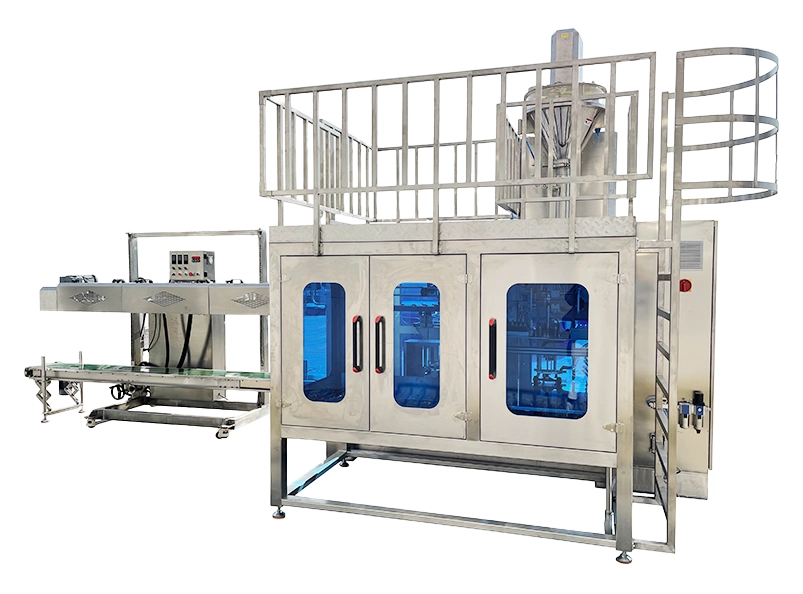
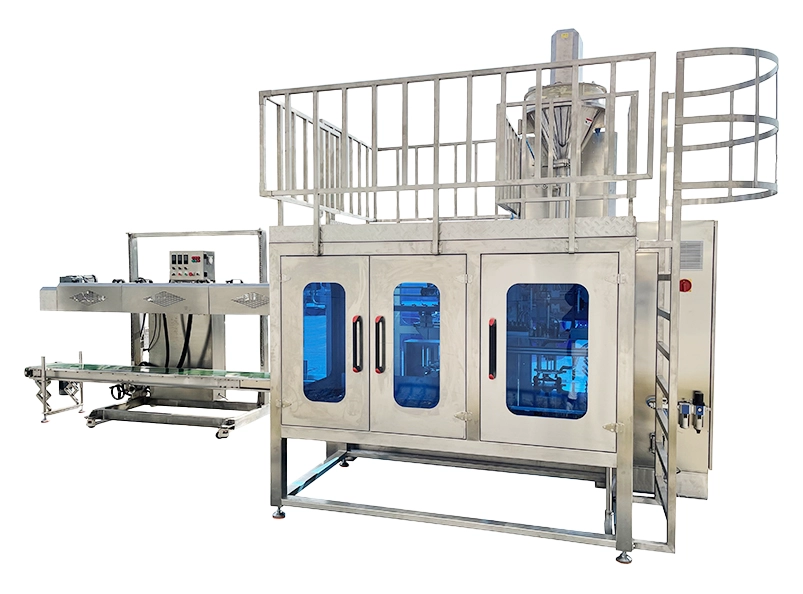
    For a Belarus dairy powder producer, the real problem was not filling alone. The weak point was the last meter before sewing: 25 kg bags arriving twisted, mouth edges drifting off center, and operators wasting time straightening each sack by hand. Mipline solves that handoff with an enclosed stainless steel bagging station, bag magazine conveyor, guided transfer, and roller sections that keep the bag square all the way to the sewing head.

    Stainless steel automatic bagging machine with blue inspection windows, bag magazine conveyor, and top access platform

    Why the last transfer point matters more than the filling point

    In dry powder lines, the bag often looks fine at discharge and still becomes unstable before sewing. A kraft paper or woven sack can tilt as it leaves the bagging station, lose its square shape on the conveyor, or arrive at the stitcher with a skewed mouth. That is where rework starts. Operators touch the bag again, correct alignment by hand, and slow the line down just to protect the seam.

    Mipline is built around that specific failure mode. The line uses a stainless steel enclosed bagging station with blue inspection windows for visibility, a bag magazine conveyor for controlled feeding, and transfer sections that hold the bag in a predictable orientation. The goal is simple: reduce manual bag straightening and keep 25 kg bags square before sewing.

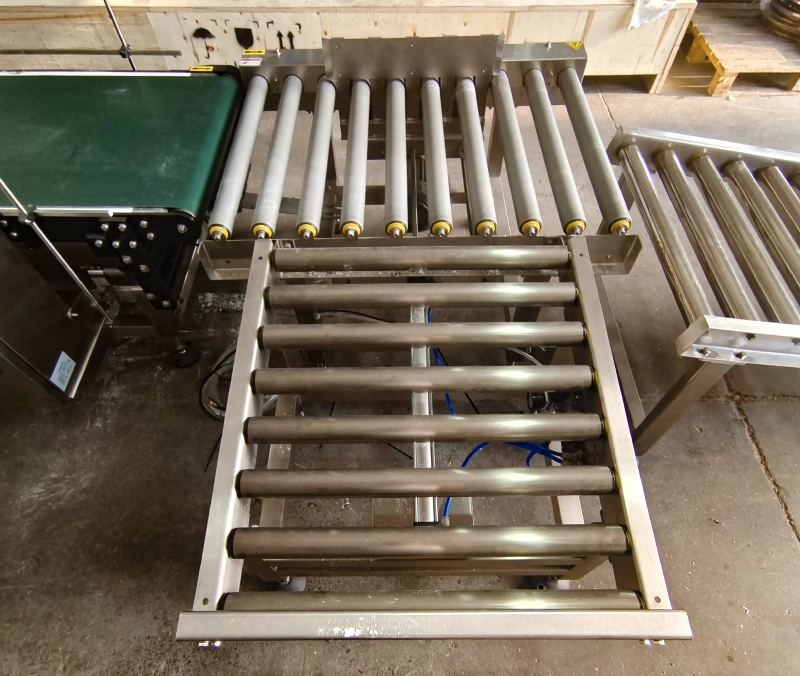
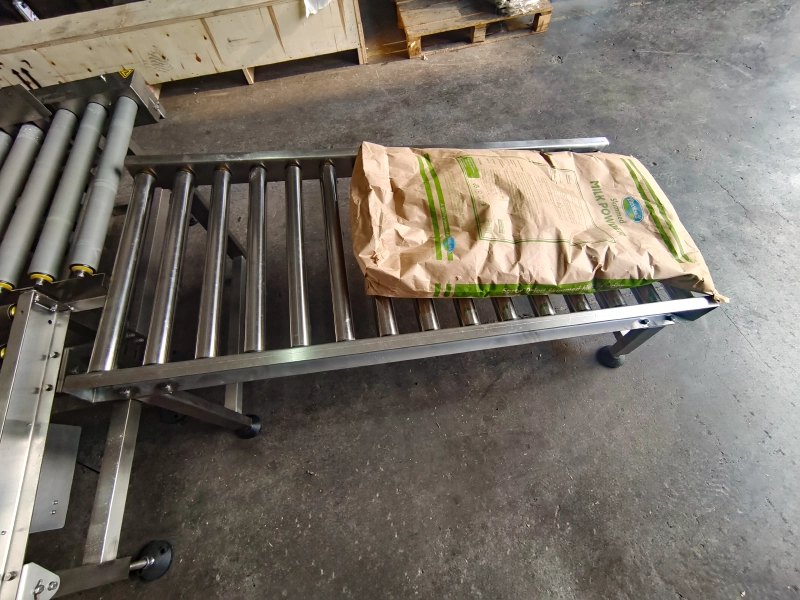
    Stainless steel roller conveyor with kraft paper bag, used for bag transfer in packaging line
    Floor pain point

    The filled bag twists or collapses before sewing, so the operator must intervene at the last meter and reset the bag by hand. That creates slowdowns, uneven seam quality, and unnecessary touch labor.

    How Mipline matches the bag transfer job

    The line is not just a filler. It is a controlled transfer system for powder bags. The bag clamp alignment keeps the sack centered, the guided conveyor handoff reduces side drift, and the roller conveyor sections support a stable path before the sewing or sealing station. That mechanical discipline matters when the product is a food powder, dairy powder, flour, or starch that must stay clean and orderly through the final handoff.

    The visible structure also tells the story: enclosed stainless steel guarding, inspection windows, green transfer conveyors, and a compact bagging station designed for maintenance access. For a plant that wants cleaner transfer between filling, conveying, and sewing, the machine layout is part of the solution, not just the enclosure.

    bpmpack Engineering Insight: When the bag mouth arrives squared and the transfer path stays guided, the sewing head works with less correction force. That lowers operator dependence, improves seam consistency, and makes the whole 25 kg powder bagging line easier to run on a daily shift.

    What the structure proves on the production floor

    The first image shows the enclosed bagging station and the bag magazine conveyor. That evidence supports the upstream control of the sack before it reaches the transfer zone. The second image shows a roller conveyor transfer section with a kraft paper bag in motion, which is the exact place where bag squareness is won or lost.

    For buyers comparing powder packaging equipment, that is the right question to ask: not only how the bag is filled, but how it is handed off before sewing. Mipline answers that question with a line architecture that keeps the bag supported, aligned, and visible from discharge to stitch.

    Floor issueVisible line evidenceResult
    Bag twists before sewingEnclosed bagging station with controlled feed and transferBag stays square longer and reaches the stitcher aligned
    Manual straightening at the last meterRoller conveyor transfer section and guided bag pathLess hand correction and smoother line flow
    Unstable sewing head entryBag clamp alignment and predictable handoff geometryMore stable mouth presentation for sewing
    Need for cleaner powder line hygieneStainless steel guarding with inspection windowsCleaner visibility, easier access, and better line discipline

    Need a powder bagging line that stays aligned before sewing?

    If your plant packs milk powder, flour, starch, or another dry powder into 25 kg bags, Mipline is designed for the transfer problem that comes after filling. It helps keep the sack straight, the mouth controlled, and the final sewing step more stable.

    Talk to bpmpack about your powder line
  • Mipline Powder Packaging Line for Cleaner 25 kg Bag Handoff Before Sewing in Belarus

    Mipline Powder Packaging Line for Cleaner 25 kg Bag Handoff Before Sewing in Belarus

    Powder packaging line

    How Mipline Stabilizes 25 kg Powder Bag Handoff Before Sewing in a Belarus Dairy Plant

    For a dairy powder producer, the last meter of the line is often where quality gets lost. Mipline is built to keep 25 kg bags square, guided, and steady from transfer to sewing, so the bag mouth reaches the seam station with less twisting, less manual straightening, and fewer last-step defects.

    Stainless steel automatic bagging machine with blue inspection windows, bag magazine conveyor, and top access platform

    Cleaner bag handoff matters when the bag is already filled

    In a Belarus dairy powder plant, the customer problem is rarely the first fill. The issue appears after filling, when a 25 kg kraft paper bag or woven bag has to travel cleanly into the final sewing area. If the bag twists, collapses, or arrives skewed, operators end up correcting it by hand. That creates inconsistent throughput, uneven seam quality, and avoidable wear on the sewing head.

    Mipline addresses that handoff point directly. The line is not presented as a generic filler; it is an automatic powder bagging line built around enclosed bagging, guided transfer, bag clamp alignment, and a controlled conveyor path before sewing. That is the part of the workflow the plant actually needs to stabilize.

    Stainless steel roller conveyor transfer section with angled rollers for industrial bag handling and line integration
    Bag misalignment at the last meter

    The core pain is simple: a filled powder bag arrives at the sewing point uneven, and operators must straighten it manually. That extra handling slows output and makes stable stitching harder to maintain shift after shift.

    Why this Mipline layout fits dairy powder, flour, and starch bags

    The visible equipment evidence shows why the line is suited to dusty dry powders. The enclosed stainless steel bagging station improves guarding and access control, while the blue inspection windows help operators monitor the flow without opening the whole machine. A bag magazine conveyor feeds the bags in an orderly sequence, and the green transfer conveyors and roller sections create a more predictable path to the sewing point.

    That structure is important for powder lines because bag stability depends on the transition, not only on the fill. By keeping the bag square as it moves through the transfer section, Mipline reduces the chance that the sewing head receives a skewed mouth. For a dairy powder producer, that means cleaner transfer, less corrective labor, and a more repeatable end-of-line result.

    bpmpack Engineering Insight: The engineering value is in the controlled handoff. When the line combines a stainless steel enclosure, clamp alignment, guided conveyor movement, and visible inspection points, the bag reaches the sewing station in a more repeatable posture. That is what improves end-of-line consistency for 25 kg powder bags.

    What the machine evidence shows on the floor

    The image set supports the product story with concrete structure, not marketing language. One frame shows the enclosed automatic bagging machine with blue inspection windows and a bag magazine conveyor. Another frame shows the roller conveyor transfer section, which is the kind of module that helps keep powder bags aligned before sewing. Together, they show a line designed for stable bag transfer rather than loose, manual final positioning.

    For the buyer, the takeaway is practical. If the plant is handling milk powder, flour, starch, or other dry powders, the line needs to protect the bag shape, support the transfer path, and make the last process predictable. Mipline is a fit because the structure matches the problem: guided movement, controlled bag handling, and a clean path into the sewing or sealing stage.

    Visible evidenceOperational meaning
    Enclosed stainless steel bagging stationImproves guarding and keeps the powder line easier to maintain
    Bag magazine conveyor and transfer rollersHelps keep bags square and aligned before the sewing head
    Blue inspection windowsLets operators monitor the process without opening the full enclosure
    Guided conveyor handoffReduces manual straightening at the last meter of the line

    Need a more stable powder bag handoff before sewing?

    If your plant is losing time to twisted bags, manual straightening, or unstable sewing at the end of the line, Mipline is designed around that exact problem. We can help you match the transfer section, bag clamp, and conveyor path to your powder type and target bag size.

    Request a powder line proposal