Automatic Bagging Machine & Palletizing Systems Manufacturer

Category: English

  • Granular Packaging Line: 25 kg Fertilizer Bags

    Granular Packaging Line: 25 kg Fertilizer Bags

    FFSline application note

    Granular Packaging Line: 25 kg Fertilizer Bags

    For fertilizer, polymer granules, and other free-flowing bulk materials, an FFSline granular packaging line turns PE or PP roll film into filled, sealed bags and connects inspection with pallet-ready handling.
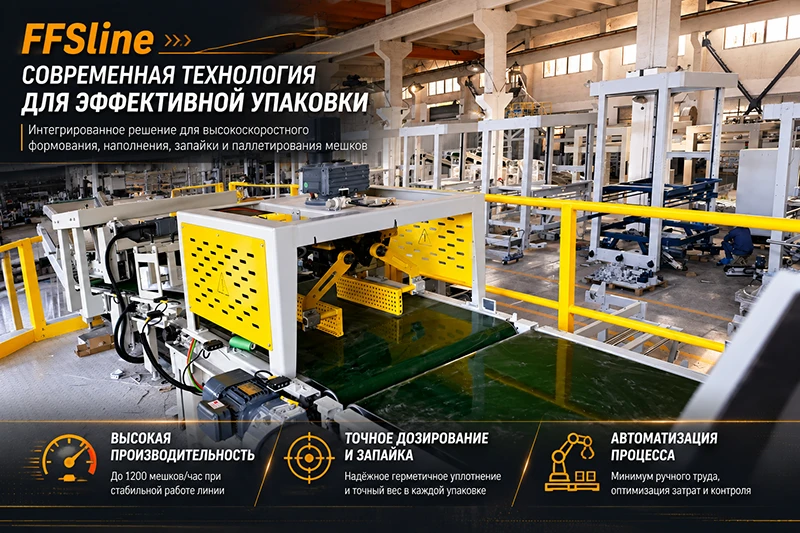
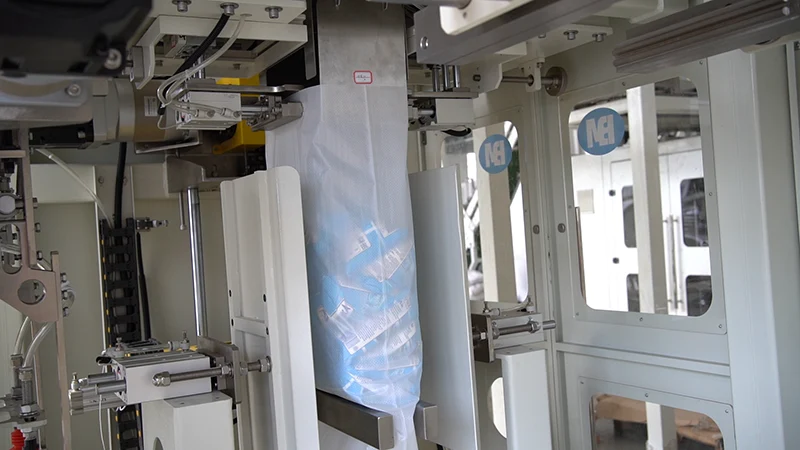
    Granular packaging line modules for stable fertilizer bag output, with enclosed forming, filling, sealing, and palletizing sections

    Why fertilizer plants connect the whole bagging route

    A fertilizer producer shipping 25 kg bags needs more than a weighing machine. The production route normally starts with a continuous supply of granules, then requires bag forming, controlled filling, closure, weight verification, coding, palletizing, and stretch-hood or other load protection before a forklift can move the finished unit. The same logic applies to PE and PP pellets, resin, color masterbatch, feed granules, and other free-flowing bulk materials that leave the plant in heavy bags.

    In an older workflow, operators open pre-made woven or paper bags, hold each bag under a separate scale, sew or close the mouth, straighten the bag by hand, and carry it to a pallet. That arrangement can work at low volume, but it creates several handoff points. Bag weight can drift between fills, a newly sealed bottom can be shocked during transfer, and the final pallet may need a second team to square, label, and wrap it. A granular packaging line is selected when the customer wants those operations designed as one controlled sequence rather than several disconnected stations.
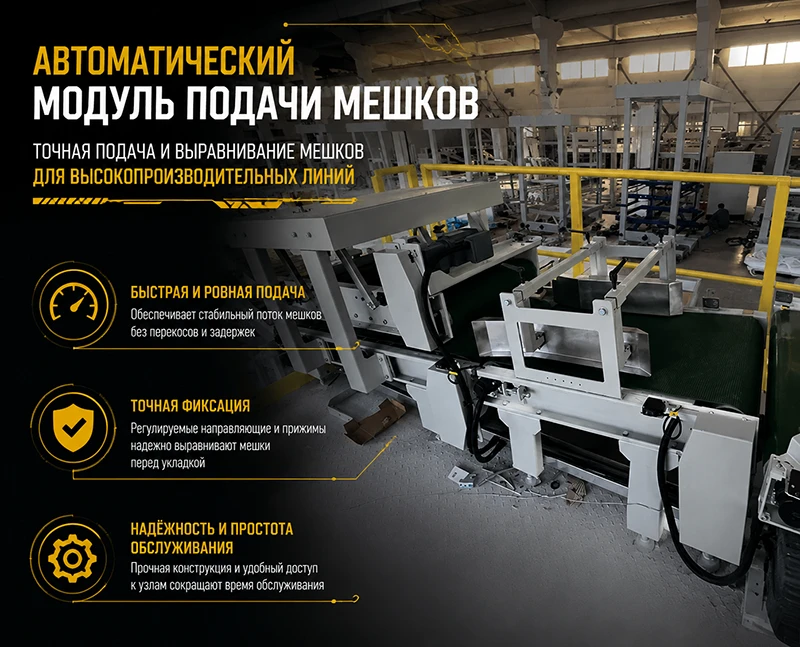
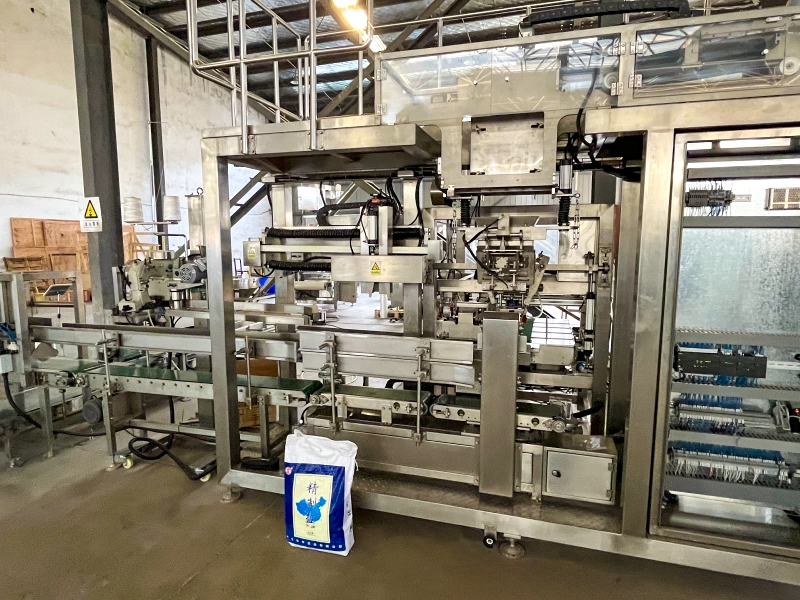
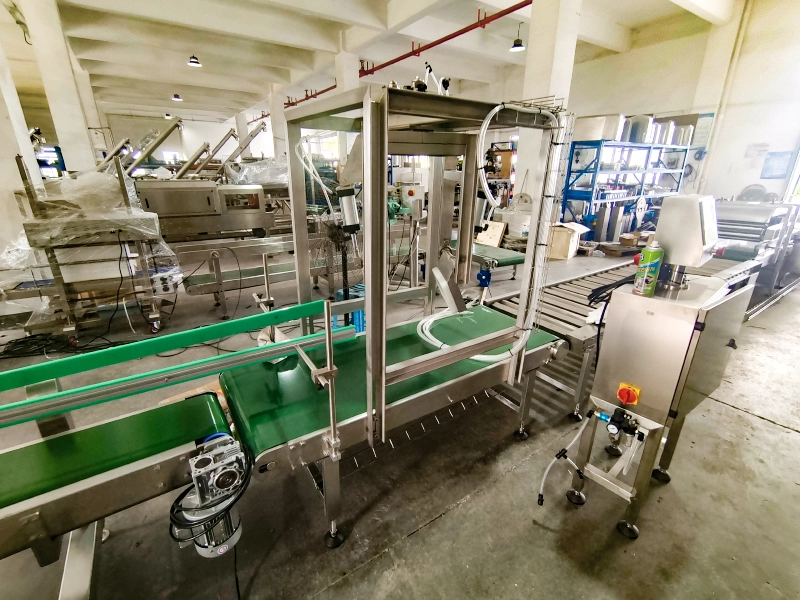
    Granular packaging line bag-feeding module with guide rails and clamping alignment for stable fertilizer bag transfer
    The old bagging route loses control at every manual handoff

    Manual bag opening, weighing, sewing, carrying, and pallet building make the result depend on operator timing. Bridging or intermittent feed at the hopper interrupts the cycle; free fall and rough transfer can damage a fresh seal; and an unchecked underweight bag can travel all the way to dispatch. These are process-control problems, not simply labor problems.

    How the FFSline fits granular products

    The FFSline granular packaging line uses PE or PP roll film rather than a pre-made woven, kraft, or composite bag. The film is formed online, filled, heat sealed, and cooled in the same primary packaging route. For a typical 25 kg ammonium phosphate or compound-fertilizer project, a transition hopper of about 3 m³ can provide a buffer between upstream production and the dosing cycle. Where the material tends to bridge, the project can be reviewed for vibration, anti-bridging, or sampling features instead of assuming that one feeder suits every product.

    The filling and handling sequence is then matched to the material’s flowability, particle size, moisture, density, bag format, and required dispatch rhythm. A project may target a 500 bags/h design level, while product references also discuss 1,000–1,200 bags/h class equipment. Those figures are design or reference levels, not universal guarantees: the accepted value must be confirmed by material trials, continuous feeding, film, bag geometry, and the agreed acceptance test. The same qualification applies to dosing accuracy, film thickness, air consumption, and total line power.

    Engineering note: A granular packaging line should be specified from the material and bag outward. Confirm whether the project is 20 kg, 25 kg, or 50 kg; the target bag shape; PE or PP film grade; particle distribution; moisture; and the downstream pallet pattern before fixing the dosing and sealing configuration.
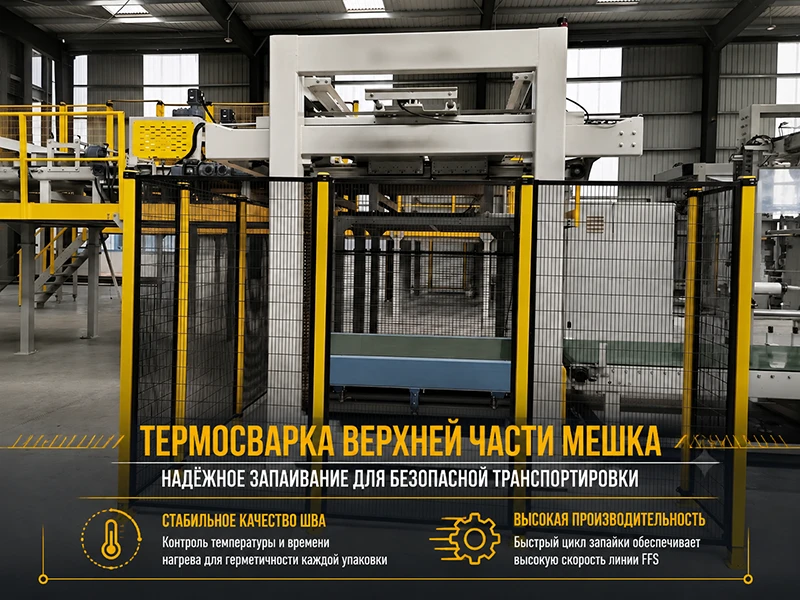
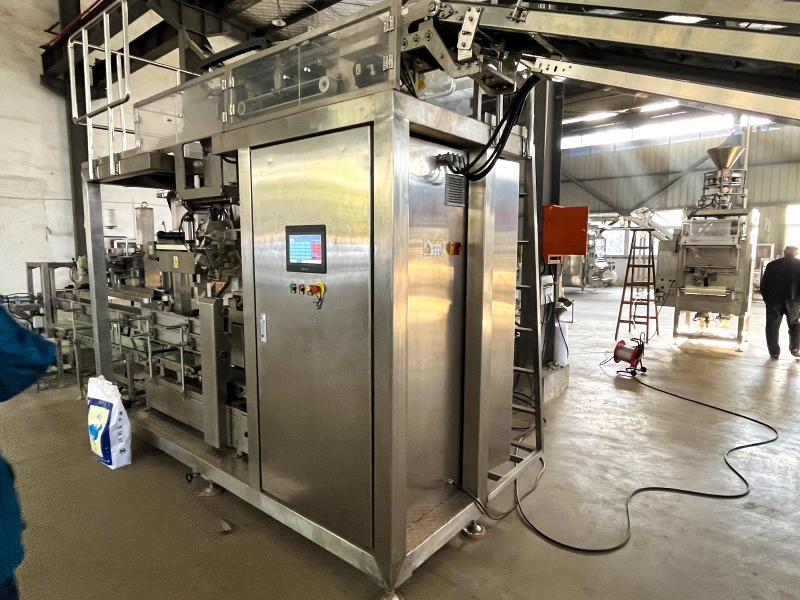
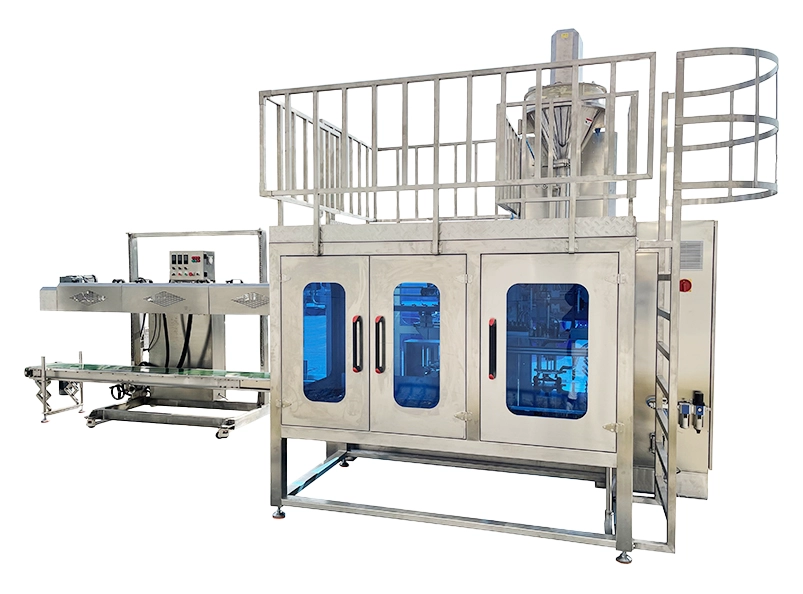
    Granular packaging line heat-sealing unit for controlled fertilizer bag closure and reduced dust exposure

    Structure, parameters, and evidence to check before ordering

    The sealing station is not an ornamental add-on. Heat sealing with post-seal cooling helps protect the bag bottom and mouth while the filled bag enters the transfer route. Downstream options can include a checkweigher and reject device, metal detection, bag shaping, date or batch coding, bag-face labeling, pallet labeling, an automatic pallet magazine, high-level or robotic palletizing, and cold stretch-hood wrapping. The correct package depends on whether the customer needs a finished retail-ready bag or a stable export pallet.

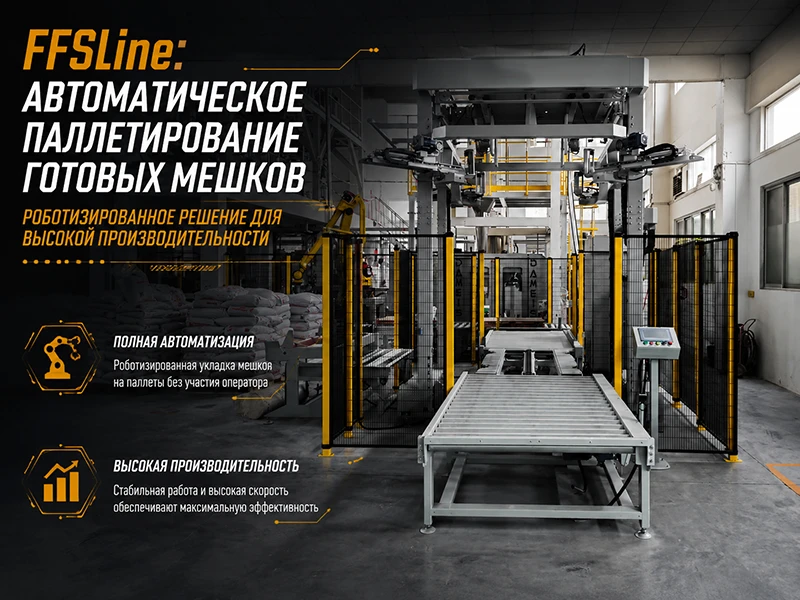
    The images show why the line is specified as a system. The bag-feeding module uses guides and clamping alignment to keep the bag path repeatable. The heat-sealing unit provides a defined closure zone with guarding and conveyor integration. At the end of the route, the robotic palletizing cell removes repetitive lifting and builds a consistent pallet pattern. A granular packaging line therefore addresses the old route in sequence: continuous supply limits stoppages, controlled filling limits giveaway, cooling protects the seal, inspection catches nonconforming bags, and palletizing reduces manual handling.

    ItemFFSline referenceProject confirmation
    Typical materialFertilizer, polymer granules, resin, feed granulesConfirm flowability, moisture, density, and particle size
    Bag and film20–50 kg range; PE or PP roll film, commonly M-type heavy filmConfirm film grade, bag geometry, and seal trial
    Film envelopeTypical film width about 350–450 mm; outer roll diameter about 1,500 mm; 150 mm coreConfirm supplier film and actual bag dimensions
    Reference dosing routeAbout 3 m³ transition hopper and 25 kg weighing range in a fertilizer exampleSize buffer and dosing system from the upstream feed
    Output and utilities500 bags/h design example; higher-speed references available; main machine about 25–30 kW and 3,000–3,500 L/min air in common documentsValidate speed, accuracy, power, and air against the signed specification
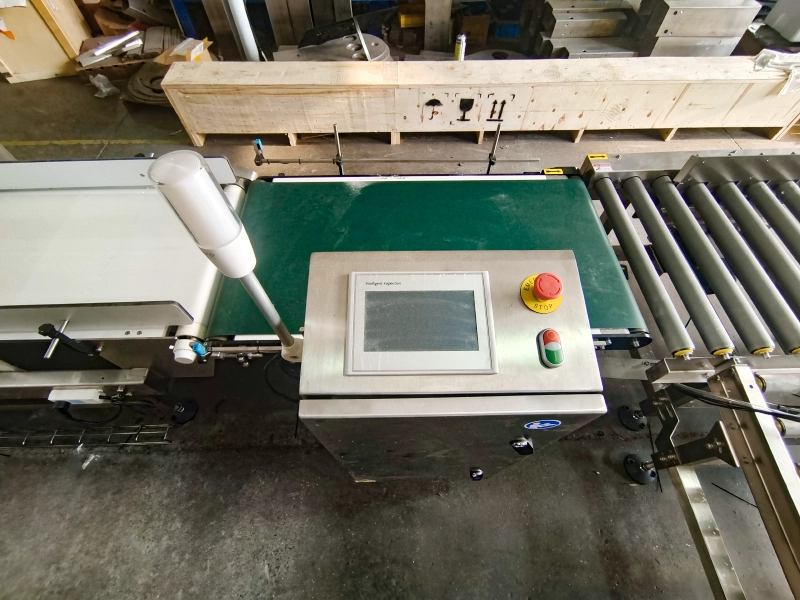
    Granular packaging line robotic palletizing cell for stable, low-labor handling of fertilizer bags

    For customers comparing a granular packaging line with a pre-made-bag machine, the difference is the packaging material route: FFS makes the primary bag from roll film online, while a traditional open-mouth or valve-bag route starts with purchased bags and may require sewing or separate closure equipment. Neither route should be selected from speed alone. The material, required barrier, bag appearance, available height, pallet pattern, and maintenance plan determine the practical fit. For downstream logistics, see how secondary packaging can be connected to bag handling; for a related controlled-transfer example, review the guided bag handoff before sewing.

    Specify the granular packaging line around your material

    Send the material name, bulk density, moisture range, particle size, bag weight, film data, target bags per hour, pallet pattern, and available installation space. BPM can then review the dosing, sealing, inspection, labeling, palletizing, and wrapping sequence as one FFSline project, with final performance confirmed against trials and the technical acceptance plan.

    Request an FFSline project review
  • Automatic Secondary Packaging Machine: Bag-in-Bag Flow

    Automatic Secondary Packaging Machine: Bag-in-Bag Flow

    BIBPU • Secondary packaging for small pouches

    Automatic Secondary Packaging Machine: Bag-in-Bag Flow

    An automatic secondary packaging machine connects sealed salt, flour, seed, detergent, or milk-powder pouches to a controlled woven-bag logistics unit. BIBPU groups small packs, loads the outer bag, shapes the filled sack, and prepares it for sewing, checkweighing, conveying, and palletizing.

    Automatic secondary packaging line for salt pouches with inclined conveyors, steel platform, and control cabinets

    When primary packs become a secondary-packaging bottleneck

    A salt or dry-powder plant may already have several VFFS machines producing 200 g to 1 kg sealed pouches. The difficult step starts after the pouch leaves the primary packaging machine: packs accumulate, operators count them into groups, and the group must enter a 20–50 kg woven or coated outer bag without losing the intended arrangement. This is the working context for an automatic secondary packaging machine, not a replacement for the upstream filling and sealing equipment.

    The old manual route creates several linked problems. Pouches overlap on a belt, counts are corrected by hand, and an incorrectly filled outer bag is discovered only after labor has been spent on loading and sewing. Residual air and uneven placement can make the finished sack bulge, weaken pallet stability, and increase the chance of rework during transport. A practical line therefore needs controlled merging, counting, bag opening, holding, compression, closure, and a clear reject path before the bag reaches the logistics area.

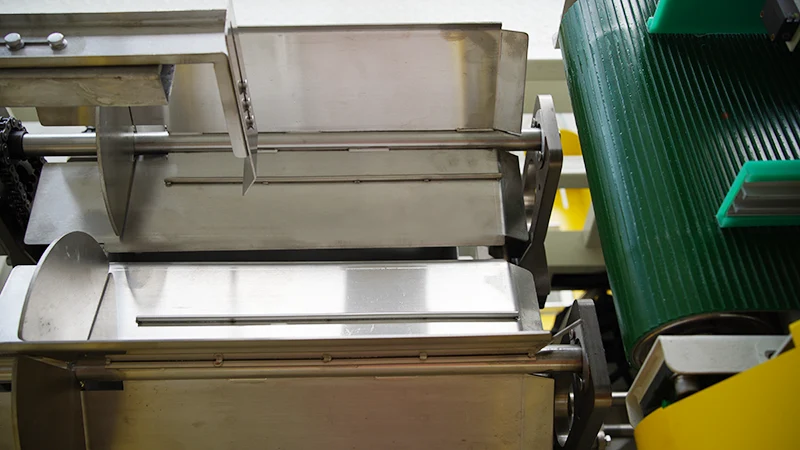
    Bag-in-bag packaging machine grouping module with stainless rotary pockets beside a cleated conveyor

    For a plant considering a salt bag-in-bag line, the grouping station is the first visible control point. It turns an unstructured pouch stream into a repeatable handoff to the outer-bag section, while the project team can still define the number of pouches per group, single- or double-row arrangement, and downstream inspection requirements.

    The cost is not only labor

    Manual bagging adds counting errors, inconsistent sack shape, lifting work, and stop-start flow between floors. If an underweight pouch or damaged seal enters the group, the whole outer bag may need to be opened and rebuilt. The result is lost line availability as well as extra packaging material and handling.

    Why BIBPU fits the bag-in-bag job

    BIBPU is an automatic secondary packaging machine built around the actual post-pouch sequence: receive finished pouches, merge and arrange them, count the group, open and hold the outer bag, drop the pouches into it, compress or shape the filled sack, then transfer it to sewing or another closure station. This continuous chain removes repeated manual transfers while keeping the primary VFFS machines and their dosing format unchanged.

    The equipment can be arranged around a food, chemical, or pharmaceutical packaging floor. Inclined conveyors, high-speed transfer sections, temporary storage, bag magazines, pneumatic grippers, and a sewing interface can be selected according to the pouch dimensions, outer-bag material, target rate, and floor-to-floor route. PLC, photoelectric sensors, pneumatic devices, and a touch HMI support sequence control, alarms, interlocks, and recipe changes; final component brands remain project-specific.

    Internal secondary packaging machine mechanisms with pneumatic guides, POM chute, and transparent safety doors

    Engineering checkpoint: do not specify an automatic secondary packaging machine from outer-bag weight alone. Confirm the small-pouch dimensions, pouch count per group, pouch seal condition, outer-bag width and height, material flow, air supply, closure method, and the available conveyor and palletizing interfaces. Those inputs decide whether the grouping, opening, compression, and sewing modules will run as one stable system.

    Structure and parameter checks before approval

    The photographs show the kind of evidence that should be reviewed during a project discussion. The grouping and conveyor sections establish the flow; the internal guide, chute, and transparent door show how the machine contains and directs the bag; and the control cabinet shows where operators manage the automatic secondary packaging machine. These images prove visible structure and layout only. They are not a substitute for a signed FAT or SAT record.

    Reference documents describe a typical 50 kg secondary-bag output of 1.6–2 bags per minute, with a small-pouch packaging speed around 90–102 packs per minute. Other project versions use 20 kg bags or different pouch arrangements. Checkweighing can be configured around a documented 500–1500 g small-pouch range and a 25–50 kg large-bag range, but accuracy, speed, material behavior, and reject logic must be confirmed against the final machine configuration.

    Project checkpointReference value or interfaceWhat to confirm
    Small-pouch infeedTypical 200 g–1 kg pouches; single or double groupingPouch dimensions, seal, count, and arrangement
    Secondary outputTypical 50 kg output: 1.6–2 bags/min20 kg or 50 kg target, cycle time, and bag material
    UtilitiesCompressed air 0.5–0.7 MPa; maximum reference use 0.8 m³/min; 380 V ±10%, 50 HzPlant air quality, connected load, and final BOM
    InspectionSmall-pouch and large-bag checkweigher ranges are project-configuredAccuracy, reject location, data traceability, and acceptance test
    DownstreamSewing, conveyors, spiral or incline transfer, robot palletizing, and pallet storageHeights, clearances, handshakes, and floor-to-floor layout
    Secondary packaging automation control cabinet with Siemens HMI, IP65 enclosure, and tower light

    In the final review, compare the measured pouch and sack samples with the proposed guides, grippers, and closure head. Then confirm whether the line needs a rejector before grouping, a spiral descent between floors, a Newlong-style sewing head, or a robot palletizing handoff. This evidence-based process keeps the automatic secondary packaging machine matched to the material and the plant rather than to a generic catalogue promise.

    Specify your automatic secondary packaging machine

    Send the pouch size, pouch weight, group count, outer-bag sample, required output, utilities, and plant layout to BPM. We can review the BIBPU bag-in-bag sequence, checkweigher and reject points, sewing or closure interface, and palletizing connection before the configuration is finalized.

    Request a line review
  • Secondary Packaging Machine: Stable Salt Bag-in-Bag Output

    Secondary Packaging Machine: Stable Salt Bag-in-Bag Output

    BIBPU SECONDARY PACKAGING

    Secondary Packaging Machine: Stable Salt Bag-in-Bag Output

    A salt producer can use a secondary packaging machine to group finished small pouches, load them into a woven bag, remove excess air and close the larger logistics unit without relying on stop-start manual handling.

    Secondary packaging machine filling small salt pouches into a woven PP bag

    Why a secondary packaging machine matters after primary filling

    The typical customer is a salt, flour, seed, detergent or milk-powder plant receiving 200 g to 1 kg pouches from one or more primary VFFS lines. The pouches may already be weighed and sealed, but they still have to become a larger 20–50 kg transport unit. That is where the secondary packaging machine belongs: after primary filling, before sewing, palletizing and warehouse transfer.

    The old solution is familiar. Operators collect pouches at the end of each primary line, count them by hand, hold open a woven sack, arrange the contents, press out air and carry the filled sack to a sewing machine. Counting drifts when several lines discharge together. Pouches overlap or arrive in the wrong orientation. A full sack becomes difficult to handle, and inconsistent air removal leaves a swollen package that is harder to stack. The result is extra rework at the exact point where the plant is trying to increase output.

    Secondary packaging machine compressing a filled woven bag for stable bag-in-bag packaging
    The bottleneck is not only filling

    Manual grouping creates three linked risks: the count can be wrong, the outer bag can be poorly shaped, and an underweight or damaged pouch can be hidden inside a finished sack. Each error becomes more expensive after sewing and palletizing. A stable secondary packaging line therefore needs controlled grouping, bag support, compression and a clear reject or checkweighing interface—not just a faster conveyor.

    How a secondary packaging machine turns loose pouches into one logistics unit

    BIBPU is designed as a bag-in-bag system rather than a stand-alone primary vertical packaging machine. Pouches arrive from the upstream packaging line, are merged and arranged in a defined single- or double-row pattern, and are counted before the outer woven or laminated bag is opened and held. Pneumatic grippers keep the bag mouth stable while the grouped pouches fall through the loading zone. A following compression stage squares the filled bag and prepares its mouth for closure.

    The arrangement is useful on a multi-floor packaging layout as well. Inclined or transfer conveyors can connect primary baggers, a grouping station and the secondary packaging machine, while the discharge side can be prepared for checkweighing, reject handling, a bag turner, robot palletizing or a pallet store. The exact interface depends on pouch dimensions, material flow, bag fabric and the required takt, so the final configuration should be confirmed against samples and the signed project specification.

    Secondary packaging machine guiding a filled woven bag to the sewing station

    Engineering point: the documented reference values describe small-pouch speeds of about 90–102 bags per minute and a typical 50 kg output of 1.6–2 bags per minute. These are configuration references, not a universal acceptance guarantee; pouch size, filling material, outer-bag dimensions and downstream handling must be checked together.

    Secondary packaging machine checks before commissioning

    The machine should be evaluated as a sequence of controlled handoffs. The filling photograph shows the central fit: small salt pouches are loaded into a pneumatic-held woven PP sack. The compression photograph supports the next step: side plates shape the full sack before closure, with a documented 150 mm cylinder stroke in the referenced configuration. The guide-belt photograph shows how the flattened mouth is supported and conveyed toward sewing rather than being carried by an operator.

    At the final station, the Newlong DS-9C sewing head shown in the indexed image provides a concrete closure reference for the woven-bag route. Together, these images support the intended result: a counted group, a more regular outer bag and a repeatable path to stitching. They do not replace FAT or SAT data, and they should not be read as proof of one fixed speed or accuracy for every product.

    Secondary packaging machine with Newlong DS-9C sewing head closing the woven bag
    CheckpointReference value or interfaceWhy it matters
    Small-pouch feedAbout 90–102 bags/minSets the grouping and accumulation requirement
    Outer-bag rangeTypical 20–50 kg project scopeDefines bag support, compression and closure design
    50 kg outputAbout 1.6–2 bags/min in the referenceLinks the line to sewing and palletizing takt
    Air supply0.5–0.7 MPa; up to 0.8 m³/min referenceSupports grippers, clamps and pneumatic movement
    Electrical supply380 V ±10%, 50 Hz referenceMust match the plant utility and controls plan

    For a buyer, the practical result is less manual counting and lifting, a clearer inspection point before the outer bag is closed, and a more predictable handoff to sewing and palletizing. The right specification starts with the small-pouch size and arrangement, then confirms the bag material, target output, air supply and downstream interfaces. That is how a secondary packaging machine becomes a complete automation step instead of an isolated piece of equipment.

    Plan a stable bag-in-bag packaging line

    Share your pouch dimensions, material, outer-bag format, target bags per minute and palletizing layout. BPM can review the grouping, compression, sewing and transfer sequence for a project-specific BIBPU configuration.

    Request a line review
  • Sugar Packaging Line for Industrial Bags, Not Stick Sachets

    Sugar Packaging Line for Industrial Bags, Not Stick Sachets

    MIPLINE FORMAT CHECK

    Sugar Packaging Line for Industrial Bags, Not Stick Sachets

    A sugar packaging line must match the requested bag format. Mipline is configured for controlled filling, closure, transfer, and inspection of industrial dry-powder or granular bags, especially 25 kg formats—not retail stick sachets.

    Real-world automated powder packaging line with safety enclosure, conveyor section, and stacked finished bags

    Start with the sugar pack format

    A buyer searching for sugar stick packaging equipment may actually mean one of two very different production routes. Stick sachets require a narrow-web form-fill-seal machine, small-dose dosing, film registration, and sachet cutting. That is not the job of Mipline. A sugar packaging line from the Mipline range is intended for an industrial bag workflow where the target may be a 25 kg kraft paper, paper-plastic composite, or coated woven bag, subject to material and bag trials.

    For a sugar processor, the practical question is therefore not simply whether to buy an automatic powder packing machine. It is whether the line must fill small retail sticks or move stable industrial bags to closure and palletizing. When the requirement is an industrial bag, the sugar packaging line combines bag supply, opening, clamping, bottom-up filling, closure, transfer, shaping, inspection, and discharge instead of leaving operators to correct each bag by hand.

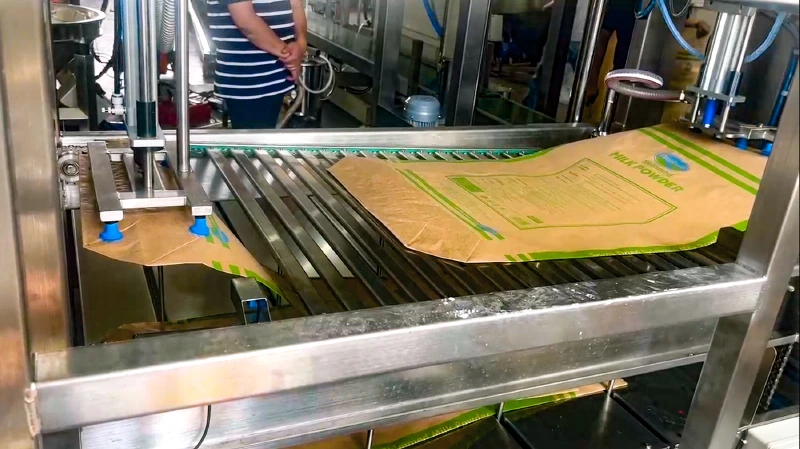
    Stainless steel roller conveyor with vacuum grippers handling kraft paper powder bags on a packaging line
    What the old manual route leaves behind

    Manual bag opening and free-fall filling can leave sugar around the bag mouth and closure area. Operators may have to hold a heavy bag, straighten a twisted body, or push a skewed mouth toward the sewing or sealing head. Air retained in the filled bag can also produce an uneven shape, while weight drift may be found only after the bag has reached dispatch. These are process handoff problems, not just filling problems.

    Why a sugar packaging line fits the industrial-bag route

    Mipline treats the bag as a controlled process unit. A bag magazine and pickup sequence present the empty bag; a clamp holds the mouth while vertical screw feeding and a lifting platform support bottom-up filling. The reference control logic uses fast, medium, and slow dosing stages so the final dose can be managed around the product and bag. Where configured, vacuum extraction or de-aeration helps prepare the bag for closure.

    After filling, the sugar packaging line can be configured with dust removal, trimming, inner heat sealing, sewing, paper-tape wrapping, pressing, and counting for compatible composite bags. A roller or belt transfer then gives the filled bag a defined path toward settling, shaping, metal detection, checkweighing, reject, and discharge. The goal is to reduce manual bag straightening before sewing or sealing, while keeping the actual closure and inspection requirements visible during line design.

    Engineering note: Sugar behavior still decides the final configuration. Confirm bulk density, particle size, flowability, moisture, aeration, bag construction, target weight, closure method, throughput, and site utilities before specifying the machine. A stick-sachet request should be redirected to the correct sachet technology rather than forced into an industrial bagger.

    Sugar packaging line structure and reference data

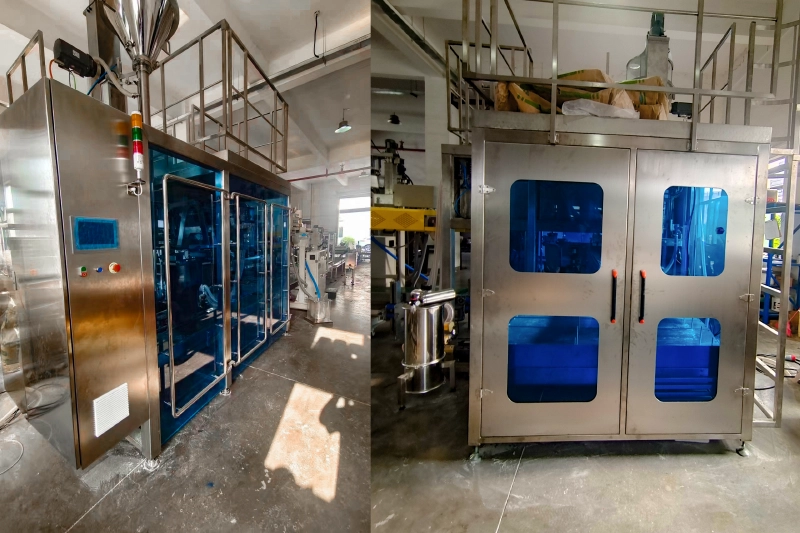
    The transfer evidence matters because the final metre often decides whether the bag reaches the closure head square and clean. The twin-belt transfer image shows central guarding and adjustable side guides; the enclosed-machine image shows blue viewing windows, double doors, a control interface, and a top maintenance platform. These are visible design references, not proof of a universal model, capacity, or customer result.

    For a project team comparing dry powder packaging equipment, the following figures define the reference range rather than a blanket promise. The selected sugar packaging line must be confirmed against trials and the approved machine configuration. For more detail on stable handoff, compare the related powder bag transfer before sewing discussion and the automatic powder bagging machine overview.

    Design pointMipline referenceWhat must be confirmed
    Bag formatNominal 25 kg industrial dry-powder or granular bagsBag dimensions, material, filling factor, and closure
    Filling methodVertical screw feeding with bottom-up lifting and three-stage dosingSugar bulk density, flowability, dust behavior, and target weight
    Reference capacityDS25K: 1–3 bags/min; another 25 kg reference: 1.5–2 bags/minMaterial trials, bag format, and approved line configuration
    Reference accuracyDS25K stated at ≤±0.2%; other references varyFinal checkweigher and filling validation for the project
    Controls and utilitiesPLC/HMI control; DS25K reference includes 380/220 V, 50–60 Hz and 5 kWPlant voltage, compressed air, extraction, and interface layout
    Downstream controlSettling, shaping, metal detection, checkweighing, reject, and roller discharge can be configuredInspection limits, reject logic, palletizing, and food-safety requirements
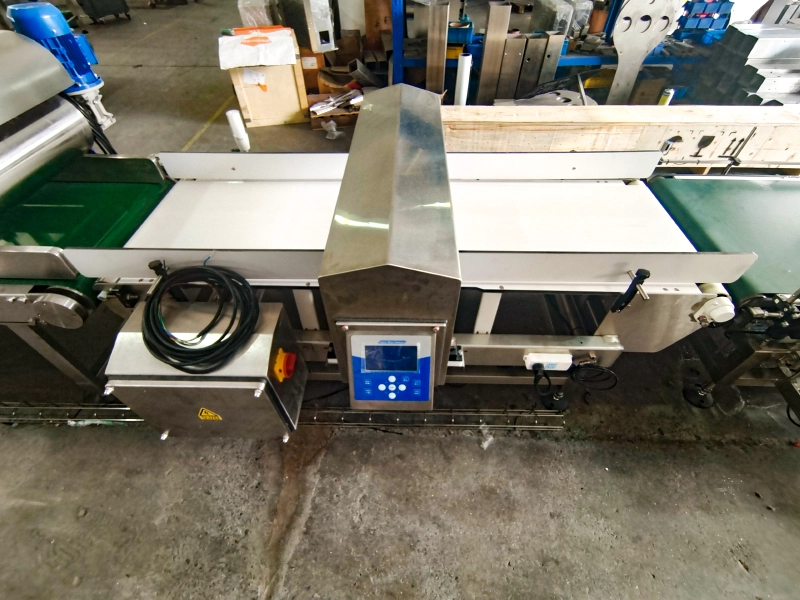
    Stainless-steel twin-belt transfer conveyor with central control housing and adjustable side guides
    Stainless steel enclosed industrial machine with blue viewing windows, double doors, and top maintenance platform

    Specify the result before you buy

    The right sugar packaging line keeps the selected industrial bag under control from pickup to final discharge: cleaner filling, a more repeatable handoff before sewing or sealing, defined inspection, and fewer manual corrections. If the target is retail stick sachets, request a different machine category. If the target is 25 kg industrial bags, send the sugar properties, bag drawing, closure route, speed, and utilities for a Mipline configuration review.

    Discuss your bag format
  • Powder Packaging Line for 5 kg Limestone Flour

    Powder Packaging Line for 5 kg Limestone Flour

    Project fit | Sverdlovsk Oblast

    Powder Packaging Line for 5 kg Limestone Flour

    For a limestone flour plant in Sverdlovsk Oblast, Mipline connects controlled filling, guided bag transfer, closure and inspection in a powder packaging line for 5 kg industrial bags. The target is a cleaner, more stable handoff between filling and final closure.

    Real factory photo of an enclosed stainless-steel powder packaging line with safety doors and conveyor interface

    The plant scene: 5 kg limestone flour needs controlled handling

    A limestone flour operation in Sverdlovsk Oblast may need to move from loose material handling to a repeatable 5 kg industrial bag format. Fine powder behavior is affected by bulk density, flowability, moisture and aeration, so the powder packaging line should be specified around the actual material and bag construction rather than treated as a generic flour filler. Kraft paper, paper-plastic composite and coated woven bags can be considered where the selected closure method and project trials support them.

    The practical production question is not only how to place 5 kg of powder into a bag. It is how to open and hold the bag, keep the fill point controlled, close the mouth, transfer the filled bag and present it squarely to the next station. Mipline is positioned as a connected powder packaging line for that sequence, with bag supply, clamp handling, filling, closure, shaping and inspection planned as one process.

    Stainless steel roller conveyor with vacuum grippers handling kraft paper powder bags on a packaging line
    What the old manual route leaves at the last station

    When operators open, hold, straighten and reposition each bag by hand, the final sewing or sealing station receives inconsistent bag mouths. Free-fall filling can also push powder toward the mouth and closure area. A conveyor that only moves the bag does not necessarily control its orientation, and a scale without downstream inspection cannot define a complete reject path. The result is extra correction at the last meter, dusty closure work and unstable bags before palletizing or warehouse handling.

    Why Mipline fits this 5 kg powder application

    Mipline treats the bag magazine, pickup or opening step, bag clamp and filling head as linked stations. Its bottom-up tracked filling concept keeps the fill point close to the rising powder level and is designed to reduce dust escape compared with open free-fall filling. A three-stage screw feed—fast filling, medium filling and slow final dosing—provides a controlled route toward the target weight. For limestone flour, the final screw, extraction and bag settings still need confirmation through a material and bag trial.

    After filling, the powder packaging line can be configured around the required closure sequence. Depending on the bag and project design, this may include dust removal, trimming, inner heat sealing, pressing, sewing, paper-tape wrapping or final pressing. Settling and shaping then prepare the closed bag for metal detection, checkweighing, reject handling and roller discharge. The line is therefore matched to a defined 5 kg route, not sold as a standalone filling unit disconnected from bag handling.

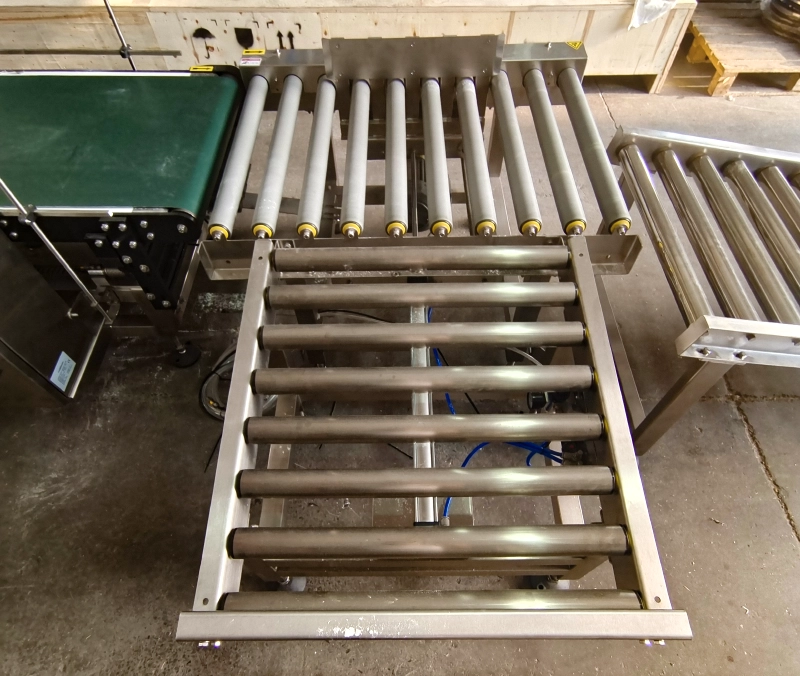
    Stainless steel roller conveyor transfer section with angled rollers for industrial bag handling and line integration

    Engineering reference The DS25K reference covers 5–25 kg bags, with stated accuracy up to ±0.2% and 1–3 bags/min, plus 380/220 V, 50–60 Hz, 5 kW and 6 kg/cm² air supply references. These values are configuration references; the final powder packaging line must be confirmed against limestone flour density, bag dimensions, closure, dust extraction and site utilities.

    Structure, parameters and image evidence

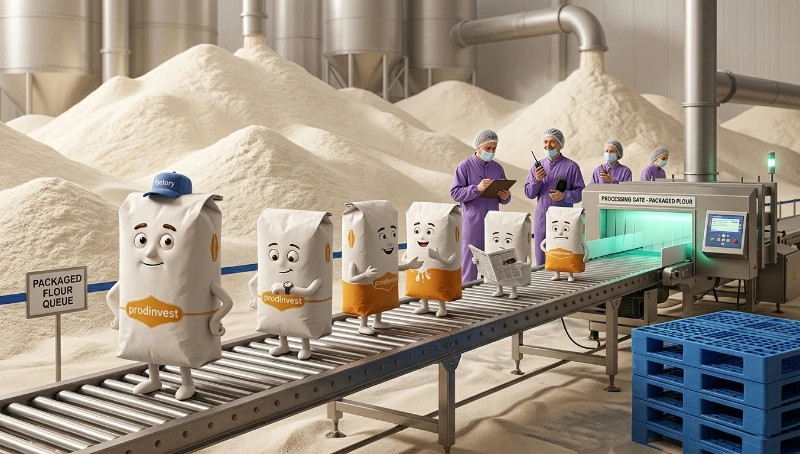
    The production images show the physical logic behind the proposal. The enclosed stainless-steel station has safety doors and a conveyor interface. The roller-transfer image shows angled rollers and a welded frame for controlled bag handling. A separate flour-line render helps explain the intended factory flow, but it is a layout illustration—not proof of capacity or a customer result. The actual line must be tested with the specified limestone flour and 5 kg bag.

    For a plant team comparing a manual route with a powder packaging line, the useful checks are concrete: can the bag magazine feed the selected bag reliably; can the clamp keep the mouth aligned; can the filling method limit powder at the closure area; can the transfer hold the bag shape; and can the inspection and reject stations be reached without manual rework? The Mipline concept answers these questions with dedicated stations while leaving the final settings open for project engineering. A related 5 kg limestone flour bagging assessment and the guide to settling and final inspection provide additional context.

    3D render of an automated flour bag conveyor line inside a food processing factory
    Project pointMipline design responseWhat to verify
    5 kg limestone flourDS25K reference range begins at 5 kg with staged screw feedingBulk density, flowability, aeration and target accuracy
    Bag mouth and closureBag clamp, controlled fill, dust removal and selected sealing or sewing stepsBag material, dimensions and closure sequence
    Filled-bag handoffGuided belt and roller transfer with shaping before downstream inspectionBag shape, line speed and handoff geometry
    Quality releaseMetal detection, checkweighing and reject path after forming and closureProduct effect, detector model and approved checkweigher data

    Review the 5 kg limestone flour layout

    A project review can turn the Sverdlovsk Oblast application into a confirmed specification: material test, bag sample, target speed, closure method, utility conditions, dust extraction and palletizing handoff. Share those inputs before selecting the final powder packaging line configuration.

    Request a project review
  • Powder Bagging Line: Smallest Salt Pack

    Powder Bagging Line: Smallest Salt Pack

    MIPLINE | SALT POWDER PACKAGING

    Salt Powder Bagging Line: Smallest Pack Size

    If you are asking which is the smallest salt pack that Mipline can be configured to handle, the practical reference starts at 5 kg on the DS25K range. The line is built for dry-powder bags, not stick sachets, and the final minimum depends on salt flowability, bulk density, moisture, bag construction, closure and the required output.

    Factory-floor conveyor system with control panel and emergency stop on a Mipline powder bagging line

    What a salt processor is really asking

    A salt, seasoning or compatible dry-powder producer may begin with a simple question: can one line fill a smaller industrial bag before moving to the familiar 25 kg format? In a powder bagging line, the answer is not determined by the auger alone. Bag dimensions, salt particle size, aeration, humidity and the way the bag is closed all affect the usable lower limit. A line that fills 25 kg reliably is not automatically a good 5 kg line.

    The old approach is usually manual weighing or an open, free-fall filling point followed by hand-held bags. That creates dust around the mouth, uneven settlement and extra straightening before sewing or sealing. Operators may also have to reposition a light, partly filled bag because the conveyor does not control its handoff. For a small salt pack, these problems can be more visible because a small weight error becomes a larger percentage of the target.

    Automated powder bagging line conveyors, steel frames and wheeled machine modules with no manual operation required overlay
    Why the smallest pack needs a confirmed configuration

    “5 kg” is a useful reference point, not a universal promise. Salt can bridge, absorb moisture or aerate differently from flour or milk powder. The bag may also need a different clamp position, fill profile and closure sequence. Confirming these inputs prevents a nominal small-pack request from becoming a manual correction station.

    Why Mipline fits a smaller salt bag project

    Mipline treats bag supply, opening, clamping, filling, closure, transfer, shaping and inspection as one controlled process. For a smaller salt bag, the DS25K reference covers 5–25 kg, with a stated reference accuracy of no more than ±0.2% and a reference rate of 1–3 bags per minute. These are configuration values to verify against the salt sample and the final bag; they are not a blanket performance claim for every build.

    The filling section uses vertical screw feeding with staged dosing and a bottom-up lifting motion. Keeping the fill point close to the rising powder level is intended to reduce the uncontrolled dust path associated with free-fall filling. A bag magazine, pickup and clamp sequence holds the bag during dosing. Where the project requires it, vacuum extraction or de-aeration can be reviewed before closure. The downstream powder bagging line can then be arranged around sewing, heat sealing, paper-tape closure or another approved method.

    Engineering view: The smallest practical salt pack is established by a material test and bag trial. The current reference answer is 5 kg, while a 25 kg industrial configuration remains a separate, common application.

    Structure, parameters and image evidence to check

    For a buyer comparing a small salt filler with a complete powder bagging line, the important evidence is the controlled sequence between stations. The factory images show conveyor controls, emergency-stop protection, wheeled machine modules and connected transfer sections. They support the line-integration concept; they do not by themselves prove salt capacity, final accuracy or a particular customer result.

    Use the following project inputs to convert the reference into a buildable specification. The salt sample, empty bag and closure sample should be reviewed together, because the right dosing setting is only useful when the filled bag can transfer squarely to the next operation.

    Item to confirmMipline reference or visible evidenceWhy it changes the result
    Smallest target weightDS25K reference: 5–25 kgSets screw, clamp and weighing trial requirements
    Filling methodVertical screw feed, staged dosing, bottom-up liftControls dust, aeration and final dosing behavior
    Bag handlingMagazine, pickup, opening and clamp sequenceReduces manual holding and mouth repositioning
    TransferGreen belts, roller sections, guides and controlled handoffKeeps the filled bag aligned before sewing or sealing
    Utilities and inspectionReference 380/220 V, 50–60 Hz, 5 kW and 6 kg/cm² air; detector and checkweigher selected by projectPrevents a nominal pack size from being disconnected from the plant

    Get the correct salt pack-size recommendation

    The short answer is 5 kg as the current Mipline reference minimum, subject to testing. Send the target weight, salt type and particle range, bulk density, moisture, bag dimensions, bag material, closure method, required bags per minute and available utilities. We can then confirm whether a small-bag setup or a 25 kg powder bagging line is the right route. For related process context, see the stable bag transfer guide and the final bag inspection guide.

    Request a salt pack-size review
  • Gypsum Powder Packaging Line: 1 kg Beige Gypsum

    Gypsum Powder Packaging Line: 1 kg Beige Gypsum

    Dry powder bagging · Beige gypsum

    Gypsum Powder Packaging Line for Beige Gypsum Bags

    Beige gypsum is milled fine, it carries almost no moisture, and it is judged at the last meter of the line: dust settles on the bag mouth, the aerated bag slumps out of square, and the sewing or sealing head inherits whatever shape arrives. This gypsum powder packaging line treats bag supply, clamping, bottom-up filling, closure, settling, shaping and finished-bag inspection as one sequence instead of four separate machines.

    Real-world automated powder packaging line with safety enclosure, conveyor section, and stacked finished bags

    What beige gypsum asks of a bagging line

    Gypsum powder is milled fine and it aerates the moment it leaves the filler. On a free-fall station the falling stream lifts a dust cloud inside the bag, the displaced air escapes upward through the open mouth, and the top section of the bag — exactly the band the sewing head or heat sealer has to grip — ends up coated. A dusty mouth gives a weak seam, a seam that has to be trimmed, or a bag that gets cut open and refilled.

    The material also stays slightly clingy and abrasive. Powder left on the clamp and bag-holding faces transfers to the next bag, and the same fines that spoil a seam can shift a metal detector reading, which is why product effect is verified with the customer’s own beige gypsum on the actual belt. That is the reason a gypsum powder packaging line is specified around bag handling and transfer as much as around a filling head.

    Stainless-steel twin-belt transfer conveyor with central control housing and adjustable side guides
    Where a gypsum line actually loses money

    Rarely at the filler. At the last meter: an operator straightening a heavy bag by hand, a skewed bag mouth entering the sewing head, a bag reaching the palletizer out of square, and a reworked bag that has to be opened and refilled. That last meter is what a gypsum powder packaging line is designed around.

    The old solution: a scale, a pair of hands and a crooked bag

    Most gypsum and plaster plants start with a manual station: an operator holds the empty bag under a screw outlet, fills to weight on a platform scale, then lifts and drops the bag to settle the powder. Filling is free-fall, so dust escapes at the mouth and the operator works inside that dust plume for a full shift. That is the station a gypsum powder packaging line replaces — bag supply, clamping and controlled filling instead of a hand on the spout.

    The second half of the problem arrives after filling. A freshly dropped gypsum bag is still aerated and unstable; it slumps, twists and loses its rectangular footprint before it reaches the sewing head. Someone straightens it by hand, at the last meter, several times a minute, and when the mouth still arrives skewed the sewing head runs unevenly. The result shows up on the pallet a day later as leaning stacks, damaged bags in transit and a complaint that is hard to trace back to a shift. A comparable dairy installation is described in the milk powder packaging line with stable bag transfer, and the gypsum-specific bag route is covered in the gypsum plaster 25 kg bagging article.

    What we ask before configuring: the material sample, the bag the plant runs today, the pack format and target weight (an industrial 25 kg bag and a 1 kg retail pack are different dosing and bag-handling questions), the required bags per minute, and the closure method. Bulk density, flowability, moisture, aeration and bag construction decide how the filling head, clamp and transfer are set — a configuration cannot be finalised from a material name alone.

    Matching the gypsum powder packaging line to the bag it has to close

    Mipline is built as one controlled sequence. A bag magazine and vacuum pickup present the bag, the clamp holds it square, and a lifting platform raises it while a three-stage screw feed fills bottom-up: fast, medium, then slow final dosing. Because the fill point stays close to the rising product surface, there is far less free fall, and far less dust lifting into the mouth, than on an open free-fall station. After dosing, the composite-bag closure path runs dust removal, trimming, inner heat sealing, pressing, sewing and paper-tape wrapping where the project requires it, and the filled bag is then settled, shaped, checked for metal, checkweighed, rejected if out of tolerance, and discharged on rollers.

    The transfer section is where a gypsum powder packaging line earns or loses its rework rate, so it is specified as a process step rather than an accessory. A twin-belt transfer conveyor carries the bag between adjustable side guides and hands it over with the mouth still aligned, as seen in the transfer photo above; a settling conveyor gives the powder time to drop; a shaping section brings the bag back to a square footprint before it is stacked.

    Format and target weight are confirmed per project: the gypsum powder packaging line is sized on the bag and the pack format, not on a material name. The DS25K reference covers 5–25 kg with stated accuracy within ±0.2% and 1–3 bags per minute; the 25 kg line reference is stated at 1.5–2 bags per minute with accuracy within ±0.1–0.2%, a 63 m³/h vacuum rate, 5 kW main power, 5.5 m³/h air consumption and a SUS304 body. A small retail format such as a 1 kg pack is reviewed as its own dosing and bag-handling case instead of being assumed from the 25 kg reference. Checkweigher accuracy above all must come from the project-approved datasheet: published source values differ between ±15 g and ±25 g at different throughputs, so no single number is quoted here.

    StageReference data (confirm per project)
    Bag formats25 kg kraft paper, paper-plastic composite and coated woven bags; small retail formats reviewed individually
    FillingBottom-up lifting fill with three-stage screw feed; 5–25 kg working range on the DS25K reference
    Stated accuracyWithin ±0.2% (DS25K reference); ±0.1–0.2% on the 25 kg line reference
    Throughput1–3 bags/min (DS25K reference); 1.5–2 bags/min (25 kg line reference), material dependent
    Utilities380/220 V, 50–60 Hz, 5 kW; air supply 6 kg/cm²; 63 m³/h vacuum rate on the 25 kg configuration
    Body and guardingSUS304 stainless steel body, enclosed stations, blue inspection windows, guarding and access platform
    Conveying5,000 mm PVC belt at 10 m/min; 3,000 mm settling conveyor 600 mm wide at 15 m/min; 1,500 mm shaping section, 600 mm belt width
    Metal detectionER6023 reference: 600×230 mm aperture, maximum product 550×200 mm, Fe ≥1.2 mm, non-ferrous ≥2.0 mm, SUS304 ≥2.5 mm, 520 mm belt at 28 m/min; product effect to be verified
    CheckweighingRange, belt width and tolerance to be confirmed from the approved datasheet for the actual bag

    Send the bag, the powder and the target weight

    A gypsum powder packaging line is decided on the material sample, the bag construction and the format you actually sell — a 1 kg retail pack and a 25 kg industrial bag are configured differently. Share the powder, the bag, the target weight and the required bags per minute, and the filling, clamping, settling, inspection and transfer sections can be matched to your floor before anything is quoted.

    Request a line review
  • Flour Bagging Line: Clean Bag Handoff Before Sewing

    Flour Bagging Line: Clean Bag Handoff Before Sewing

    Flour, Starch and Dairy Powder

    Flour Bagging Line: Clean Bag Handoff Before Sewing

    A Mipline flour bagging line fills 25 kg kraft paper and coated woven bags from the bottom up, then hands each bag to the sewing or sealing head through guided roller and twin-belt transfer. The aim is a square, clean-topped bag at the closing station instead of an operator pulling it straight at the last meter.

    Stainless steel bagging conveyor line with green belts, vertical guide frame, and emergency-stop control box on a flour bagging line

    Where Flour Bagging Lines Lose Their Rhythm

    Flour, starch and milk powder are light, aerated and quick to escape, which is why most flour bagging lines fail in two places: the fill point and the last meter before sewing. In a plant that still fills by free fall, the product drops from a fixed height into an open bag. The air pushed out of that bag carries fines upward and coats the inside of the bag mouth, the spout area and the floor around the station. The bag then reaches the closing head with a dusty, uneven top edge, and the stitch line or heat seal is laid over a contaminated surface.

    Manual handling compounds the problem. Operators open bags by hand, hold them under the spout through the whole fill, then lift and straighten a 25 kg bag before it reaches the sewing head. A twisted bag, a collapsed gusset or a skewed mouth passes the closing station out of square, and the bag is re-sewn, downgraded or opened again. Weight is rarely the issue at that stage. Bag geometry and bag-mouth condition are.

    Real factory photo of an enclosed stainless-steel powder packaging line with safety doors and conveyor interface
    The metre that decides your rework rate

    If the bag mouth is dusty, folded or skewed when it arrives at the sewing head, no amount of care at the sewing head fixes it. The failure is created upstream, in the transfer between the filling station and the closer.

    Filling, Transfer and Closure as One Process

    On a Mipline powder packaging line, the filling station, the transfer conveyors and the closing head are configured as one process rather than three machines that happen to stand next to each other. Bags come from a magazine, are picked up by vacuum, opened and clamped before any product is released. Filling is bottom-up: a lifting platform raises the bag so the spout stays close to the rising product surface, and a three-stage screw feeder runs fast, then medium, then slow for final dosing. Because the fill point tracks the material level instead of sitting at a fixed height, free-fall distance stays short and less air is driven through the powder.

    After filling, the line does not simply drop the bag onto a flat belt. Roller conveyor sections and a twin-belt transfer conveyor with adjustable side guides keep the bag supported and square on its way to the closing station, and settling and shaping sections give the product time to de-aerate before inspection. On a flour bagging line this handoff is part of the machine design, not an accessory bought later. It is the same principle used on a milk powder packaging line, where a dusty bag mouth and a skewed stitch line cause the same downtime.

    Practical note: On powder lines, most “sewing problems” are transfer problems. Stabilise the bag before the closer and the sewing head becomes a boring, repeatable station — which is exactly what a shift team wants.

    Specifying a Flour Bagging Line Around Your Bag and Powder

    Bagging lines are often quoted on throughput alone, and that is where mismatch starts. A line should be specified against the bag itself: kraft paper or paper-plastic composite, open-mouth or valve, bag length and gusset, and whether closure is sewn, heat sealed or wrapped with hot-melt paper tape. The powder matters as much as the machine. Bulk density, flowability, moisture, aeration after bulk transport and dust behaviour decide the feeder type, the spout design, and whether vacuum extraction or de-aeration is needed before closure. Rejection strategy belongs in the same conversation, because a bag that fails metal detection or checkweighing needs a defined path out of the line — the same discipline described in final bag inspection for powder bagging lines.

    For each item above, the reference configuration answers with hardware rather than a promise. Sealed and clamped bag handling replaces hand opening and hand holding. Bottom-up lifting fill with three-stage screw feeding targets a short free-fall distance and cleaner bag mouth. Enclosed SUS304 stations with blue inspection windows keep the filling area contained and observable. Guided roller and twin-belt transfer keeps the bag square into closure, and settling, shaping, metal detection, checkweighting, reject and roller discharge cover the finished bag instead of stopping at the fill.

    ItemReference configuration
    Nominal bag weight25 kg industrial bags; other weights and bag formats on project review
    Bag typesKraft paper, paper-plastic composite, coated woven bags
    Filling methodBottom-up tracked lifting fill with three-stage screw feed (fast, medium, final dosing)
    Reference capacity1.5–2 bags/min on the reference configuration; material, bag and closure dependent
    Reference accuracyStated up to ±0.1–0.2% for that configuration; confirm against your own powder on test
    ControlPLC with HMI, alarm and log functions
    ConstructionSUS304 stainless steel, enclosed stations with blue inspection windows and guarding
    Vacuum extraction63 m³/h on the reference configuration; de-aeration optional before closure
    Power and air5 kW main power, 5.5 m³/h air consumption on the reference configuration
    TransferRoller conveyor and twin-belt transfer with adjustable side guides; 3,000 mm settling conveyor at 15 m/min; 1,500 mm shaping section
    Final bag checkMetal detection with 600 × 230 mm aperture window (reference values: Fe ≥ 1.2 mm, NF ≥ 2.0 mm, SUS304 ≥ 2.5 mm), checkweighing, reject and roller discharge

    Match the Line to Your Bag, Not to a Brochure

    Send us your bag dimensions, powder type, target weight and closure method, and we will review which flour bagging line configuration fits your floor — including extraction, inspection and reject handling.

    Request a line review
  • Starch Powder Packaging Line: Stable 25 kg Bag Transfer

    Starch Powder Packaging Line: Stable 25 kg Bag Transfer

    Starch Powder Packaging Line Engineering

    Starch Powder Packaging Line: Stable 25 kg Bag Transfer Before Sewing

    Discover how a Mipline starch powder packaging line integrates automated bag magazine supply, bottom-up filling, and guided twin-belt transfer to keep 25 kg industrial kraft bags square, stable, and dust-free right up to the sewing and sealing head.

    Stainless steel automatic bagging machine with blue inspection windows, bag magazine conveyor, and top access platform

    Why Bag Alignment Fails at the Last Meter Before Sewing

    In high-speed food and dry-powder plants, packing 25 kg bags of starch, flour, or dairy powder into multi-wall kraft paper sacks is only half the battle. The most persistent bottleneck occurs in the transition zone between the gross filling station and the sewing or sealing head. When filled bags are propelled along generic roller paths without dedicated guidance, they frequently twist, skew, or bulge irregularly.

    This misalignment forces line operators to manually straighten bags at the final meter before the sewing needle, introducing ergonomic strain, inconsistent seam lines, and unplanned downtime. A dedicated starch powder packaging line must replace manual intervention with engineered physical constraints.

    Stainless steel roller conveyor transfer section with angled rollers for industrial bag handling and line integration
    The Cost of Skewed Bag Mouths

    Uncontrolled bag transfer causes the bag mouth to arrive at the sewing head at an angle, leading to skipped stitches, tape jams, powder leaks, and rejected pallets that require costly manual rework.

    Engineered Solutions: Bottom-Up Filling & Guided Handoff

    To eliminate bag distortion, the Mipline automatic bagging machine adopts a comprehensive two-stage approach. First, bottom-up tracked filling raises the bag during the dosing cycle, keeping the fill spout near the material surface to suppress airborne dust migration. Second, once filled and clamped, the heavy kraft bag transitions onto precision transfer modules.

    Adjustable side guide rails and synchronized twin-belt conveyors grip the moving sack securely, maintaining a square profile as it passes through the settling and shaping sections.

    Engineering Insight: By locking the bag geometry immediately after gross weighing and maintaining positive drive through the roller transfer table, downstream sewing and heat-sealing heads receive perfectly aligned bag mouths every single cycle.

    Technical Specifications and Line Parameters

    A typical 25 kg starch powder packaging line configuration balances dosing accuracy, structural hygiene, and continuous transport speeds to match plant output targets.

    System ModuleDesign Specification & MaterialsOperational Function
    Bag Magazine & PickupAutomated suction gripper with motorized stack feedPulls and positions empty 25 kg bags into the clamp
    Filling StationEnclosed SUS304 stainless steel frame with blue viewing windowsBottom-up lifting fill with 3-stage screw dosing and dust extraction
    Transfer ConveyorTwin-belt transfer with central housing and adjustable guidesMaintains square bag alignment prior to sewing or sealing
    Shaping & InspectionRoller conveyor sections with integrated checkweigher & metal detectorSettles product, verifies target weight, and rejects out-of-spec bags

    Optimize Your Starch Powder Packaging Line Today

    Speak with our engineering team to design a custom 25 kg powder bagging and transfer solution tailored to your plant’s layout and throughput requirements.

    Request an Engineering Review
  • Powder Packaging Line: Settling Before Inspection

    Powder Packaging Line: Settling Before Inspection

    MIPLINE DRY-POWDER PACKAGING

    Powder Packaging Line: Settling Before Inspection

    A powder packaging line must control more than the fill point. For 25 kg dairy, flour, starch, feed, and compatible dry-powder bags, Mipline links bag supply, bottom-up filling, closure, settling, shaping, inspection, and guided discharge so the bag reaches sewing or sealing in a controlled condition.

    Real-world automated powder packaging line with safety enclosure, conveyor section, and stacked finished bags for controlled powder bagging

    A 25 kg powder line starts with the handoff problem

    A dairy powder, flour, or starch plant may have a reliable weigher and still lose time at the next station. The filled kraft paper, paper-plastic composite, or coated woven bag leaves the filler with a soft body, trapped air, or a mouth that is no longer square. Before the sewing or sealing head, an operator then has to catch the bag, straighten it, pull the mouth into position, and keep the next bag from closing the gap. That is the real operating context for a powder packaging line: not only filling kilograms, but carrying a heavy bag through the last controlled transfer.

    The older arrangement is usually a filler followed by a plain belt or roller conveyor. It moves the bag, but it does not necessarily hold its geometry. A twist at the discharge can become a skewed sewing path; a dusty mouth can weaken the closure step; uneven settling can make the bag hard to stack. Mipline addresses this gap as a connected process. Its bag magazine, pickup and clamp logic, filling station, closure equipment, and downstream transfer are specified together instead of leaving the last meter to manual recovery. For a related view of this handoff issue, see the Mipline final-bag inspection workflow.

    Stainless steel roller conveyor with vacuum grippers handling kraft paper powder bags for guided bag transfer
    The failure is usually after filling, not inside the filler

    Manual bag opening, free-fall filling, loose transfer, and late bag straightening create a chain of small interruptions: powder on the mouth, unstable sewing, bags that retain air, missed weight deviations, and reject decisions made too late. A conveyor alone transports the problem; a coordinated line gives each handoff a defined job.

    Why Mipline fits the dry-powder workflow

    Mipline is configured around the behaviour of the material and the bag, rather than sold as a generic automatic packing machine. The sequence can include bag magazine storage, vacuum pickup, opening, placement and clamping; a lifting platform for bottom-up tracked filling; and vertical screw feeding with fast, medium, and slow dosing stages. Keeping the fill point close to the rising powder level is designed to reduce dust escape compared with open free-fall filling. Where the project requires it, vacuum extraction or de-aeration can be added before closure.

    After filling, the line can combine dust removal, trimming, inner heat sealing, pressing, sewing, hot-melt paper tape, or other approved closure steps for the selected bag construction. The finished bag then moves through turning, settling, shaping, metal detection, checkweighing, reject handling, and roller discharge. This is why the powder packaging line is suitable for 25 kg milk powder and other dairy powder, flour, starch, feed, food powder, and selected dry-chemical projects—but the final configuration still depends on bulk density, flowability, moisture, aeration, bag dimensions, closure method, target speed, and site layout. A milk-powder example is described in the stable 25 kg bag transfer guide.

    Engineering point: Treat settling and shaping as quality-control preparation, not as an afterthought. A bag that is square and supported before inspection gives the metal detector and checkweigher a more repeatable product presentation, while the guided handoff reduces the need for manual straightening at the sewing station.

    Stainless-steel twin-belt transfer conveyor with central control housing and adjustable side guides for stable powder bag handoff

    Reference structure and parameters to verify

    Factory evidence for this powder packaging line shows the type of physical control the buyer should inspect: an enclosed powder packaging station, stainless-steel guarding, green belts, roller sections, bag gripping, adjustable side guides, and visible control hardware. The images show machine structure and application logic; they do not by themselves prove capacity, accuracy, customer identity, or a universal material fit. Those items must be confirmed against the approved project datasheet and bag sample.

    The reference values below explain how the line is sized without turning one variant into a promise for every plant. The 11889 configuration lists 25 kg bags, 1.5–2 bags/min, stated accuracy of no more than ±0.1–0.2%, 5 kW main power, 5.5 m³/h air consumption, and a SUS304 body. The DS25K reference covers 5–25 kg, 1–3 bags/min, and stated accuracy of no more than ±0.2%. Conveyor and inspection modules also change with layout and product effect, so commissioning targets should be agreed before purchase.

    Line pointReference configurationBuyer verification
    Bag and fillNominal 25 kg industrial bags; bottom-up tracked lift and three-stage screw feedingBag construction, dimensions, density, flowability, moisture, and target weight
    Capacity1.5–2 bags/min on one 11889 reference; 1–3 bags/min on DS25K referenceMaterial test, closure cycle, operator concept, and line balance
    Settling and shaping3,000 mm settling conveyor, 600 mm width, 15 m/min; 1,500 mm shaping section, 600 mm width, 15 m/min referenceAvailable floor length, bag height, palletizing interface, and required residence time
    InspectionER6023 reference: 520 mm belt, up to 28 m/min, 600 × 230 mm window; checkweigher values vary by modelProduct effect, Fe/NF/SUS test pieces, checkweigher datasheet, and reject logic
    Industrial conveyor line with touch-screen control box, emergency stop, and roller transfer sections for powder bag alignment

    At the end of a correctly matched project, the result is not simply a filled bag. It is a cleaner, supported, and inspectable 25 kg bag moving from filling through closure and controlled transfer, with a defined reject path and a more predictable handoff to sewing, sealing, palletizing, or warehouse handling. That is the practical value of selecting a powder packaging line around the full bag journey.

    Confirm the right powder packaging line configuration

    Send the powder sample, bag construction, target weight, output requirement, closure method, utilities, and available layout. Mipline can then be reviewed as a complete dry-powder process rather than as an isolated filler.

    Request a project fit check