Automatic Bagging Machine & Palletizing Systems Manufacturer

Category: English

  • Peat Valve Bag Packing Line: 25–50 kg Retail Format

    Peat Valve Bag Packing Line: 25–50 kg Retail Format

    VPLINE / Peat bagging

    Peat Valve Bag Packing Line: 25–50 kg Retail Format

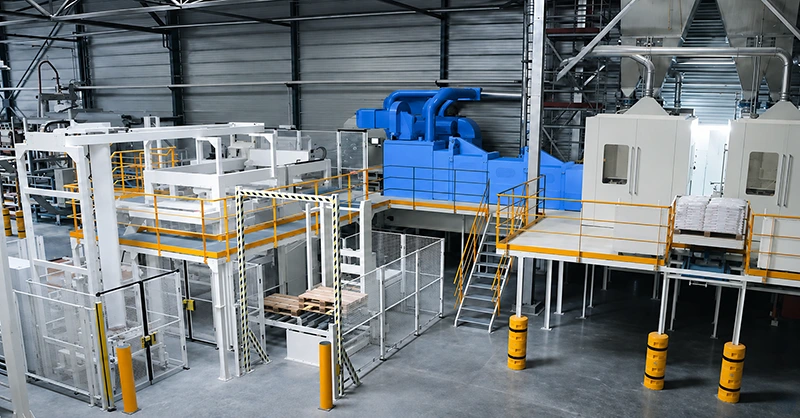
    A peat valve bag packing line turns bulk peat into sealed 25–50 kg valve sacks for horticulture and garden-center shelves. VPLINE ties air-conveyed valve filling, ultrasonic sealing, checkweighing, negative-pressure bag shaping and robotic palletizing into one closed cell so a fibrous, air-bearing material reaches the truck dry, square and stackable.
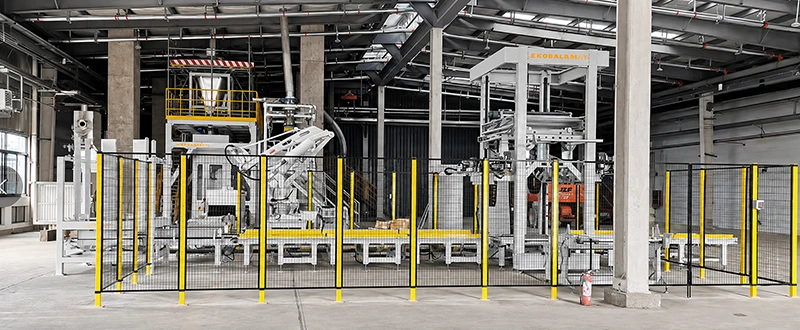
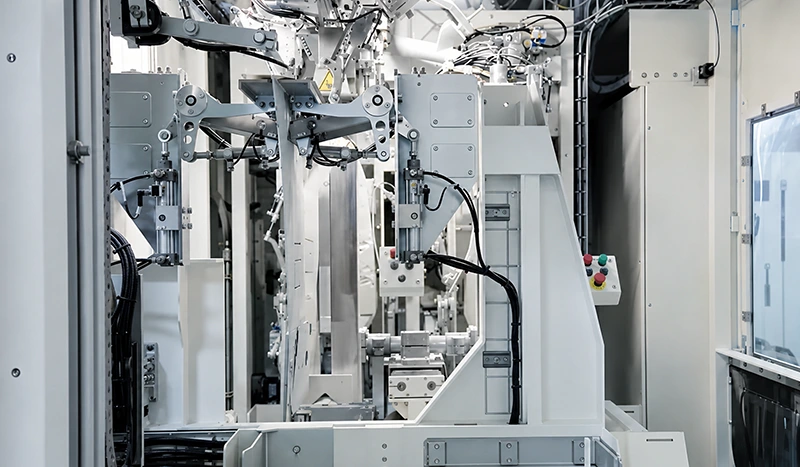
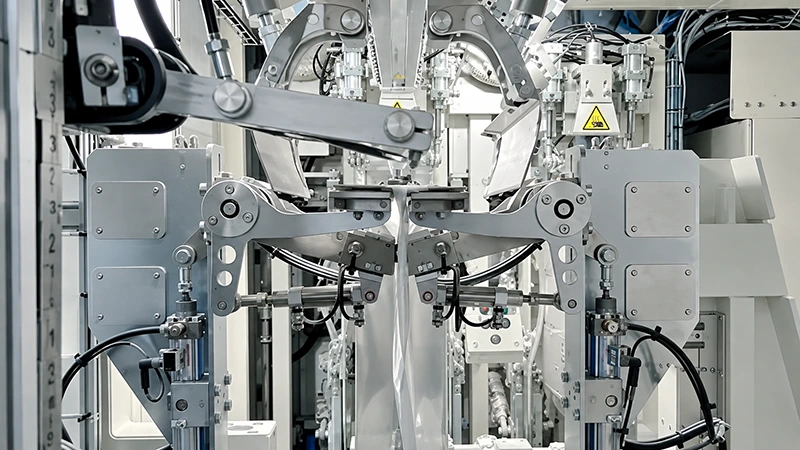
    Automated valve bag packaging line with robotic bagging station and safety fencing for peat bagging

    Why peat producers leave FIBCs behind

    Horticultural buyers, garden-center chains and the bagged-soil aisle cannot unload a one-tonne FIBC with a fork truck. They want 25 kg, 40 kg or 50 kg valve sacks that shelf on a wooden pallet and stack in a retail back-room. The shift from FIBC to valve bag opens three pain points that are easy to ignore while peat still ships in bulk.

    First, peat is fibrous and air-bearing. Free-fall filling puffs the bag up, and any trapped gas stays inside the fibre wall long after the line stops. Second, giveaway on a low-density, high-volume product is expensive: a few hundred grams of peat per bag becomes a few truckloads per year. Third, dry peat throws dust at every transition — the operator, the floor, the load-cell and the open valve mouth.
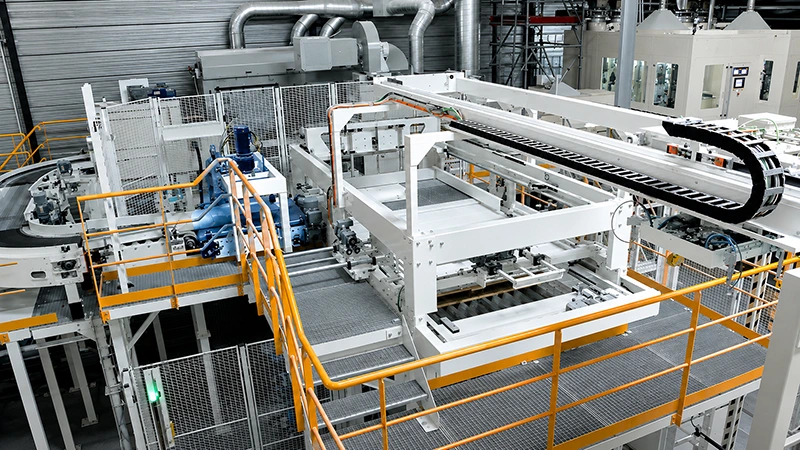
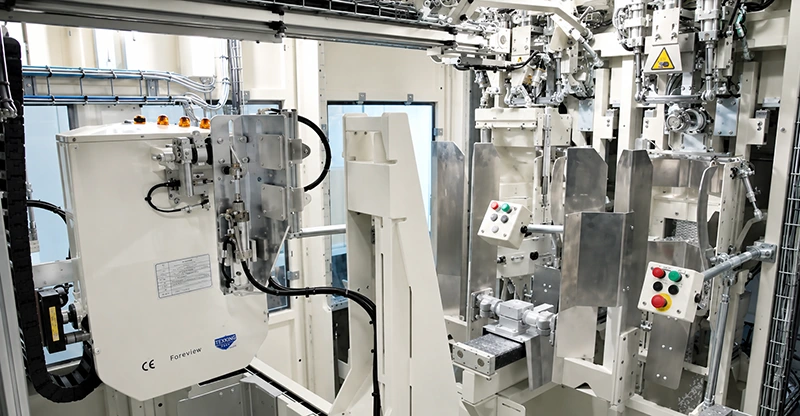
    Real factory photo of an automated valve bag packaging line with overhead bagging gantry and conveyors for peat filling
    The hidden cost of a 25 kg peat bag that doesn’t seal

    A peat bag that leaks from the valve mouth on the pallet is not just a hygiene problem — it loads the next pallet, the forklift deck and the customer’s delivery truck with fibre. Peat producers know this. The question is whether the discharge end of the peat valve bag packing line is the cause or the cure.

    How VPLINE closes the loop for fibrous peat

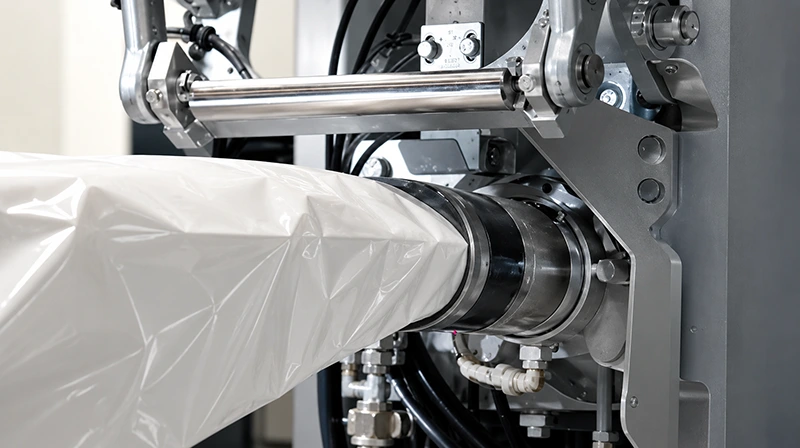
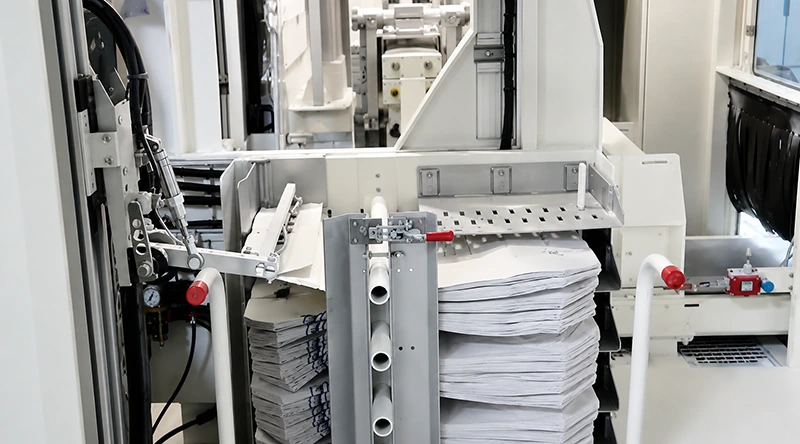
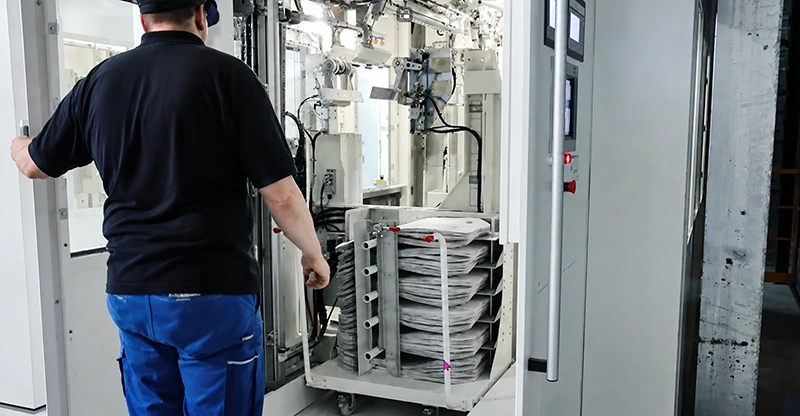
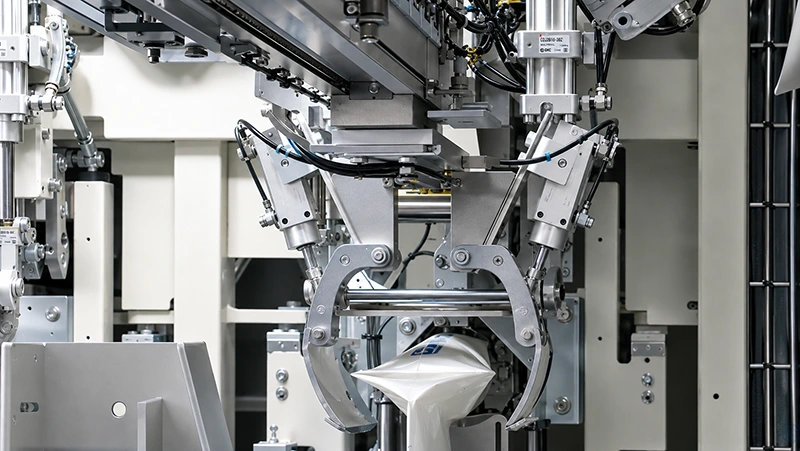
    VPLINE starts with a wheeled bag magazine that an operator tops up while the line runs, so the bag pickup is never the bottleneck. Twin-arm pneumatic grippers seat the valve mouth onto an expandable nozzle; the boot inflates against the inner bag wall and the air-conveyed fill starts at the lower corner and progresses upward through the valve port. That upward fill path is what keeps the air out of the bag body instead of trapping it inside the fibre.

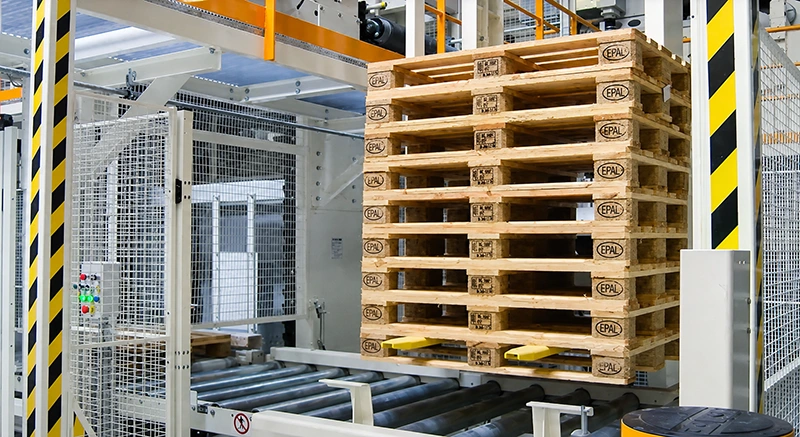
    After gross weight stabilises, a 20–40 kHz ultrasonic head closes the valve mouth — no thread, no glue, no heat that would scorch the coating on a coated paper or PE-lined valve sack. The bag then runs through checkweighing and metal detection, drops onto a flat-belt conveyor with side guides, and enters a negative-pressure station that pulls the trapped air out of the body before a robotic palletizer lays an interlocking three-bag-per-layer stack on an EPAL pallet. From the operator’s chair, the peat valve bag packing line reads as one continuous motion: bag picked, bag filled, bag sealed, bag shaped, bag stacked.

    Why ultrasonic, not heat: For a fibrous material that holds air, a heat sealer that brings the bag surface to 160–200 °C scorches the PE coating and lifts dust into the seal line. Ultrasonic seals by friction inside the valve mouth itself — the heat stays inside the seal line, the bag skin stays cool, and the dust never reaches the weld.

    Throughput, accuracy and bag sizes — what to verify before you specify

    The numbers below are line targets, not promises. They depend on peat moisture, fibre length, bulk density and the bag maker. Treat them as the figure you confirm during the site-acceptance trial, not a number you print on a quotation. A peat valve bag packing line that ships with a fixed “800 sacks/h” label is signalling that the supplier has not read your peat yet.

    Three project decisions are usually locked in before the peat valve bag packing line ships: bag weight range, valve-port geometry and pallet layer pattern. Get these wrong and the rest of the line compensates around them. Get them right and the line runs the way the layout drawing said it would.

    ParameterRange / ValueProject note
    Bag weight range10–50 kg (typical 25 kg)project-confirmed against peat bulk density
    Throughput5–12 bags/minscales with fibre length and moisture
    Filling precision±1–2 ‰validated against the downstream checkweigher
    Bag materialcoated woven, kraft paper, PE-lined valve sackvalve-port tolerance must match ultrasonic head
    Contact parts304 stainless steelseal-side surfaces in fill path
    Air supply0.5–0.7 MPadynamic pressure stability tested on site
    Sealing20–40 kHz ultrasonicbag-material validation trial before order
    Pallet pattern3-bag interlock, layer height per projectEPAL 1200 × 800 mm wooden pallet

    Send us your peat spec, get a closed-loop layout back

    Share your current bulk format, target retail bag size, peat moisture range and the pallet pattern you ship today. We will return a peat valve bag packing line layout with throughput matched to your fibre, an ultrasonic-seal validation plan against your bag supplier, and a pallet-stack drawing your truck driver can read at a glance.

    Talk to a VPLINE engineer
  • Cement Bagging Types: Inside a 25 kg Valve Line

    Cement Bagging Types: Inside a 25 kg Valve Line

    VPLINE Cement Bagging Types · Buyer Guide

    Cement Bagging Types: Inside a 25 kg Valve Line

    Walk through the cement bagging types a modern cement, dry-mix or additive plant actually runs on the dispatch floor — 25 kg valve, open-mouth kraft, and 1-ton FIBC bulk — and see how a valve bag packing line ties robotic loading, air-assisted filling, ultrasonic sealing, and palletizing into one closed cell.

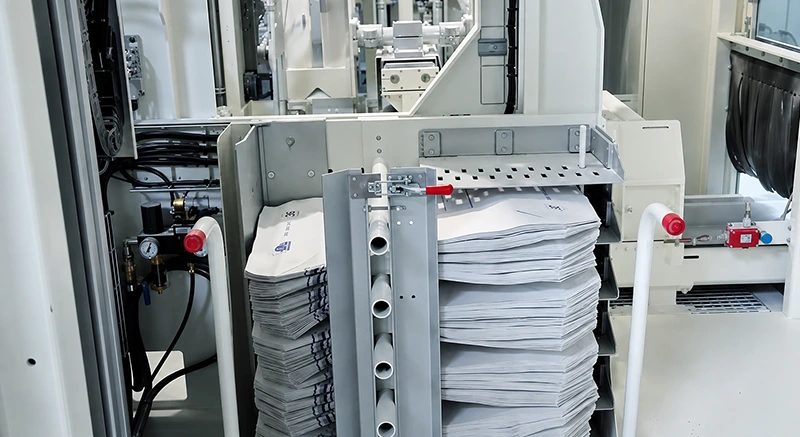
    Movable valve bag magazine feeding empty valve bags into the bagging station of a 25 kg cement bagging types valve line

    Where Cement Bagging Types Actually Run on the Plant Floor

    When a cement buyer asks “what cement bagging types are used on a real line,” the honest answer is shorter than the question. Most cement, dry-mix and additive plants ship in three cement bagging types: 25 kg or 50 kg valve bags for construction retail and export, open-mouth kraft or coated woven bags for binder, grout and patch compounds, and 1-ton FIBC big bags for road base, mine backfill and bulk dispatch. Inside those three formats, the 25 kg valve bag is the format plants standardize on when they want a sealed, dust-controlled, retail-ready unit that still flows through a robotic palletizer.

    The valve bag itself is a self-sealing paper or woven PP sack with an internal sleeve. Once the bag is slid onto an expandable filling nozzle, the sleeve closes around the powder under its own elasticity — no heat sealer at the bag mouth, no sewing thread, no manual tying. That single mechanical difference is why valve bags dominate cement bagging types in retail construction channels: every other step from ultrasonic sealing through to palletizing can be automated, while open-mouth bags still depend on a sewing head and an operator at the last meter of the line.

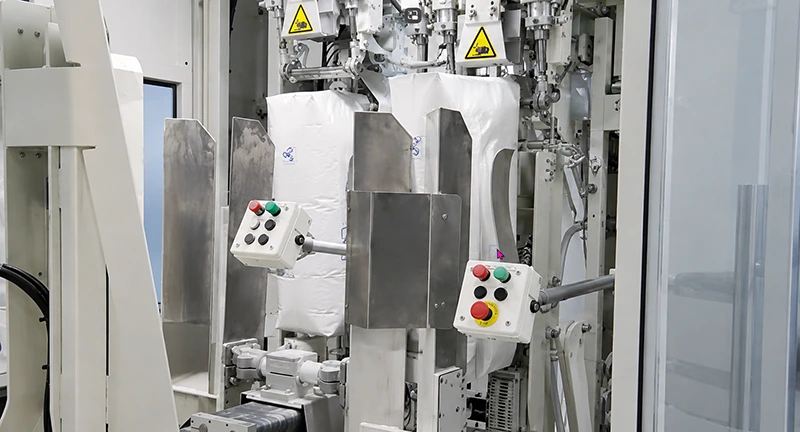
    Dual-station automatic valve bag filling machine running cement bagging types on a 25 kg valve bag packing line
    The Plant-Floor Pain List

    Every cement plant that has tried to scale up valve bag output without changing the line says the same things — dust at the fill point, manual bag straightening at the sewing head, off-weight bags slipping into the pallet, and unstable stacks that lean on long-haul trucks. Those are not four separate problems; they are the same problem of open-mouth mechanics applied to a closed bag format.

    What Plant Teams Ask Before Changing Cement Bagging Types

    The first question is always material behaviour. Ordinary Portland cement flows, but masonry cement, fly-ash blends, and fine-ground slag need different air pressure and a different nozzle sleeve profile. BPMpack confirms bulk density, particle size and flow rate before quoting a cement bagging types solution, because the wrong nozzle-to-sleeve pairing is what causes valve bags to leak at the shoulder and reject at the metal detector gate. The second question is bag supply. Coated woven PP valve bags, kraft paper valve bags and composite valve bags all behave differently under ultrasonic sealing; trials run on the actual bag stock the plant will receive, with sleeve geometry and weld energy matched to that stock.

    Then comes layout. A 25 kg valve bag line is roughly 15–20 m long, 4–6 m wide, and needs about 4.5 m of clear ceiling for the robotic palletizer and stretch-hood station. Plants switching cement bagging types from open-mouth to valve usually need to relocate the dispatch conveyor, add a checkweigher and metal detector before the palletizer, and reroute dust extraction to the fill point. We tie those new stations into the same control panel so a single HMI runs the whole valve bag cell, and so the operator only learns one screen when output scales.

    Field note: When the dust at the fill point comes from the bag itself — not from the cement — the answer is rarely “more suction.” It is usually a tighter valve sleeve and a slower vent cycle on the expandable nozzle. We test sleeve fit and vent timing on your bag stock before locking the line design, so the cement bagging types format you ship in is the one we built the seal around.

    How a 25 kg Valve Bag Line Runs Through Every Station

    Once the cement bagging types and bag stock are confirmed, the line runs as one continuous sequence. An empty 25 kg valve bag drops from a wheeled bag magazine onto a twin-arm pneumatic gripper; the gripper opens the valve sleeve and slides the bag over the expandable filling nozzle. Air-conveyed cement packs the bag from below through a large-bore feed path with a small-bore vent, the valve sleeve recovers and self-seals under its own elasticity, and a 20–40 kHz ultrasonic head welds the inner valve flap for an extra dust-tight seal. The bag then walks past a checkweigher that rejects underweight or overweight sacks, a metal detector that flags ferrous and stainless contamination, and a negative-pressure shaper that pulls the filled bag flat so the pallet pattern interlocks cleanly.

    After shaping, a robotic palletizer stacks the bags three at a time (one across, two along) on an EPAL pallet, rotating each layer so the stack interlocks instead of leaning. A stretch-hood station wraps the loaded pallet in UV-resistant hood film before it rolls out on the roller conveyor to dispatch. This is the same station sequence for any cement bagging types built around the 25 kg valve format, with cycle rate set by material flow, bag size and pallet pattern rather than by an operator’s pace. The result is a 25 kg cement bagging types output that stays square, weighed and sealed from silo to truck.

    StationFunction in the cement bagging types flowKey specification
    Wheeled bag magazineEmpty valve bag stack ready for pickHolds 100–150 empty 25 kg valve bags, casters for refill
    Twin-arm baggerPicks, opens, slides bag onto nozzlePneumatic grippers, 5–12 cycles/min matched to filler
    Air-conveyed fillerPacks cement through expandable nozzle304 SS wetted parts, 0.5–0.7 MPa plant air, large bore feed / small bore vent
    Ultrasonic sealerWelds inner valve flap20–40 kHz horn, validated on coated woven PP and kraft paper valve stock
    CheckweigherRejects out-of-band bags before pallet±0.2–0.4 kg on 25 kg, automatic divert arm
    Metal detectorCatches ferrous and non-ferrous tramp metalFe ≥1.5 mm, Non-Fe ≥2.0 mm, SS ≥2.5 mm
    Negative-pressure shaperEvacuates air from filled bagPulls bag flat against profile plate for stable pallet pattern
    Robotic palletizerStacks bags three per layerEPAL pallet, interlocked 5–8 layer stack, layer sheet feeder
    Stretch-hood wrapperFinal load seal for dispatchUV-resistant hood film, pallet exits onto roller conveyor

    Plan a 25 kg Valve Bag Line for Your Plant

    Send us your cement grade, target output in bags per hour, current bag format, bag stock supplier and floor layout. We will return a station-by-station cement bagging types recommendation with cycle rate, pallet pattern, ultrasonic seal trial notes and a price envelope for the valve bag line that fits your dispatch floor.

    Send Your Plant Layout
  • 50 kg Cement Valve Bag Packing Line: M400 Closed-Cell Bagging

    50 kg Cement Valve Bag Packing Line: M400 Closed-Cell Bagging

    Cement M400 / 50 kg Valve Bags

    50 kg Cement Valve Bag Packing Line: M400 Closed-Cell Bagging

    M400 grade cement is finer and more dust-prone than ordinary Portland. Once it leaves the cement mill, every gram that escapes from a 50 kg valve bag becomes a packaging defect, an EHS incident, and a rejected pallet. A purpose-built 50 kg cement valve bag packing line keeps that bag mouth inside a sealed boot from pickup through ultrasonic seal — so the cell runs as one continuous, closed-loop workflow rather than a string of standalone stations.

    Real factory-installed valve bag packaging line with enclosed platforms, dust extraction ducts, and integrated conveyors

    Why M400 Cement Pushes 50 kg Valve Bags Harder

    M400 is a 400 kg/cm² compressive grade, ground finer than ordinary Portland to speed early strength. The same fineness that makes it set faster also makes it dusty, aerated, and hungry for moisture. On a 50 kg cement valve bag packing line, that shows up as cement dust hanging at the bag mouth, valve pockets puffed up with entrained air, and pallets that lean on the dispatch floor.

    None of those are mechanical problems. They are symptoms of a half-open bagging layout that lets the bag mouth breathe while it is being filled and sealed. Three failure modes follow. First, dust leakage at the spout during air-conveyed filling, which raises respirable load around the operator station and fouls the conveyor bearings downstream. Second, underweight bags because the filler cannot reach the target weight when the air column inside the bag is unstable. Third, bag-to-bag variation that only shows up at the palletizer, where the robot drops bags that do not match the programmed pick pattern. A 50 kg cement valve bag packing line that treats filling and sealing as separate, open-mouth stations cannot fix any of these at the root.

    Close-up of a stainless steel valve bag filling nozzle and clamping collar during automatic bag insertion
    M400 bagging is dust-bound, not dust-tolerant.

    M400 plants report that on a half-open layout, fugitive cement dust at the bag mouth is the number one cause of bag rejections — not underweight fill, not seal failure, but the dust that accumulates inside the sealer and forces line stoppage every shift.

    What a Closed-Cell 50 kg Cement Valve Bag Packing Line Looks Like

    A closed-cell layout puts the bag mouth inside a sealed fill boot from the moment the twin-arm gripper picks the bag out of the magazine to the moment the ultrasonic head closes the valve. The fill boot is mechanically clamped around the filling nozzle and the bag neck — there is no open seam, no manual touch, no breathable gap. The robotic loader does not set the bag on a table and walk away; it indexes the bag onto the nozzle and holds it there until the ultrasonic seal is complete.

    Inside that sealed volume, the filler runs on an air-conveying principle: a large-bore inlet duct feeds the cement into the bag, a smaller-bore return duct bleeds displaced air back to a filter. That double-channel geometry is what allows the filler to push a dense 50 kg charge into a valve bag without puffing the bag or choking the sealer. Once the ultrasonic head has welded the valve flat, the bag drops onto a checkweigher and into a metal detector, both positioned close enough that no bag reaches the palletizer without passing through both gates.

    From the BPMpack field team: On a M400 50 kg cement valve bag packing line, the upstream silo is sized for steady head pressure, the air supply is stabilized at 0.5–0.7 MPa, and the contact surfaces are 304 stainless steel — those three are the baseline conditions that turn a closed-cell layout into a reliable production cell rather than a demo machine.

    How a 50 kg Cement Valve Bag Packing Line Is Stacked

    The cell is sequenced in six linked stations, not eight standalone machines. A wheeled bag magazine feeds empty 50 kg valve bags to the twin-arm loader. The loader indexes each bag onto the expanding filling nozzle inside the sealed boot. The air-conveyed filler discharges 50 kg of cement through the large inlet duct while the return duct evacuates displaced air back to the bag filter. The ultrasonic head welds the valve flat. A checkweigher verifies the 50 kg target, a metal detector scans the bag, and the bag transfers to a robotic palletizer that builds the dispatch stack.

    Throughput at 50 kg follows from the cycle time at the filling station, not from the loader or the sealer. The 50 kg cement valve bag packing line is therefore not paced by the slowest station; it is paced by the air-conveying cycle, which has to push a denser charge through the same valve geometry used at 25 kg.

    ParameterSpecification (project baseline)
    Bag weight10–50 kg (50 kg typical for M400 retail / export)
    Throughput5–12 bags / minute (subject to bulk density and head pressure)
    Filling accuracy±1–2‰ (verify on site against target weight)
    Bag materialCoated woven PP, kraft paper, laminated valve bags
    Air supply0.5–0.7 MPa, stabilized; consumption depends on cycle
    Power supplyAC 380 V / 50 Hz / ~15 kW for the bagging group
    Material-contact parts304 stainless steel
    Pallet outfeedRobotic palletizer, EPAL-compatible, with stretch-hood

    Spec Your 50 kg Cement Valve Bag Packing Line

    For an M400 plant, the right 50 kg cement valve bag packing line starts with three numbers: cement grade, target output in bags per hour, and the bag stock currently on hand. Share those with the BPMpack engineering team and we will return a station-by-station layout, an air-consumption estimate, and a CAD footprint for the cell on your site.

    Request a Quote
  • Cement Valve Bag Packing Line Price: 25 kg Plant Budget

    Cement Valve Bag Packing Line Price: 25 kg Plant Budget

    BPM Cement Packaging

    Cement Valve Bag Packing Line Price: 25 kg Plant Budget

    A 25 kg cement valve bag packing line price is built from the bagging cell, the air-assisted filler, the ultrasonic sealer, the inspection stations, the negative-pressure shaper, the robotic palletizer and the stretch-hood wrapper — not from a single machine card. This page breaks the 25 kg cement cell cost into the stations that actually drive it, and shows where the hidden costs on an open-mouth or manual line usually come from.

    Real factory photo of an automated valve bag packaging line with overhead bagging gantry, conveyors, and safety fencing

    How the Cement Valve Bag Packing Line Price Is Built

    A 25 kg cement valve bag packing line price is not one number — it is a layered budget that ties a wheeled bag magazine, a twin-arm robotic bagger, an air-assisted filling nozzle, an ultrasonic valve sealer, a checkweigher, a metal detector, a negative-pressure shaping station, a robotic palletizer and a stretch-hood wrapper into one continuous cell. Each station has its own drive, frame, control panel, guarding and integration scope. Plant contact parts in 304 stainless steel and frame in carbon steel are the default, with AC 380 V / 50 Hz / 15 kW on the packer electrical load and 0.5–0.7 MPa on the plant air.

    The choice between skid-mounted stations and a welded single line base changes the cement valve bag packing line price by a wide margin. The skid-mounted plant is faster to install on a tight site, but the welded base delivers a tighter dust seal between the filler and the sealer and a shorter commissioning trial. Most 25 kg cement plants end up with welded bases for the filler-sealer block and skid-mounted stations for the inspection and palletizing block, so the first capex discussion must lock the layout before any supplier prices anything.

    Close-up of a stainless steel valve bag filling nozzle and clamping collar during automatic bag insertion
    Where the old 25 kg cement cell loses money

    Manual bagging or open-mouth auger filling lets cement dust escape into the packing hall. Visible dust forces the bagging team to slow down, drops the line below its nameplate 5–12 bags per minute, and raises the cost per bag because labor, building, compressed air and depreciation still run per minute. A bag that leaves the hall dusty also triggers customer claims on the retail pallet, and each claim is a real line item in the cement plant cost model.

    Where the Old 25 kg Cement Cell Loses Money

    The first hidden cost on an old cement cell is not the machine — it is the dust. A 25 kg cement valve bag packing line with a closed boot at the air-assisted filler keeps the bag mouth inside a sealed interface during fill. That sealed interface is what justifies the higher station cost versus an open-mouth auger packer, and it is what protects the plant’s per-bag cost on a 5–12 bag-per-minute run.

    The second hidden cost is the bag itself. Old cells tend to step up to a heavier paper sack or a multi-ply laminate to fight seal failures from dust contamination, and the heavier sack adds freight cost to every truck that leaves the dispatch floor. A clean ultrasonic valve sealer running at 20–40 kHz lets the plant step down to a single-ply laminate or a coated woven PP sack, and that step-down alone usually pays for the cell over a few years.

    Engineering note: Bag speed 5–12 bags per minute and ±1–2‰ filling accuracy are project-record numbers, not catalogue guarantees. They depend on the cement grade, the bulk density and the air-pressure stability on site. None of those numbers can be quoted without a sample test on the customer’s cement, so they belong in the project record — not in a marketing line card.

    Cement Valve Bag Packing Line Price by Station

    The complete cement valve bag packing line price for a 25 kg cement plant stacks station by station. The table below shows what each station does and what drives its share of the budget, so the capex conversation starts from real line items rather than a single round number.

    Plants that buy walk-up stations and integrate them in-house usually pay more, because the integration scope, the commissioning hours and the dust-tight interface are priced as one budget only when the supplier owns the full line. A 25 kg cement valve bag packing line price that is split across four or five vendors tends to grow on the integration day, not in the quote stage.

    StationWhat it doesWhat drives its price
    Wheeled bag magazineHolds 200–400 empty 25 kg valve sacks, feeds the baggerBag format, magazine count, sensor refill vs foot switch
    Twin-arm robotic baggerPicks, opens and slips the bag onto the filling nozzleArm reach, gripper type, single- vs twin-arm configuration
    Air-assisted fillerFills the bag through an expanding nozzle inside a closed bootFiller drive, expanding boot material, dust port size
    Ultrasonic valve sealerSeals the valve mouth with 20–40 kHz vibrationHorn material, generator size, valve-sack lamination
    Checkweigher + metal detectorRejects out-of-spec bags before palletizingReject arm type, belt width, detector aperture
    Negative-pressure shaperEvacuates air from the filled bag before palletizingVacuum pump size, bag-volume range
    Robotic palletizer + sheet feederBuilds an interlocking pallet stack with interlayer sheetsRobot reach, gripper head, sheet stack size
    Stretch-hood wrapperSeals the finished pallet for outdoor storage or exportHood size, film format, throughput
    Integration: PLC, HMI, electrical, piping, guardingTies every station into one 25 kg cellNumber of stations, plant air, plant power, plant layout

    Quote a 25 kg Cement Valve Bag Packing Line Price

    Send your 25 kg cement grade, bag format, plant air pressure, plant layout sketch and dispatch window. We will price the cell station by station, with the dust-tight interface, the integration scope and the commissioning hours on the same line — so the capex conversation stays on real numbers from day one.

    Request a Cement Valve Bag Packing Line Price
  • Cement Bagging Equipment: Closed Loop 25 kg Cell

    Cement Bagging Equipment: Closed Loop 25 kg Cell

    25 kg valve sack cell

    Cement Bagging Equipment: Closed Loop 25 kg Cell

    Most cement bagging equipment on the dispatch floor still runs as separate stations: a manual bag spotter, an open-mouth filler, a sewing head, and a forklift doing the pallet math. A closed-loop 25 kg valve sack cell replaces that hand-off chain with one continuous flow from bag magazine to wrapped pallet. The plant gets tighter dust control, steadier cycle time, and a real audit trail at the seam between production and logistics.

    Real factory photo of an automated valve bag packaging line with overhead bagging gantry, conveyors, and safety fencing

    From Bag Magazine to Pallet Wrap in One Continuous Cell

    A modern 25 kg cement bagging equipment cell starts at the wheeled bag magazine, where empty valve sacks are stacked, aligned, and lifted by a twin-arm pick-and-place head. Suction cups grip the top ply, open the valve, and sleeve it over the inflatable filling nozzle without an operator standing underneath. The cell wall keeps the dust inside the boot, not in the operator’s breathing zone.

    Downstream, the same cement bagging equipment carries the bag through air-assisted filling, ultrasonic valve sealing, an inline checkweigher, and a metal-detection gate before negative-pressure shaping flattens the sack for stable pallet geometry. By the time the robotic pallet head places the bag on the layer, the cell has already weighed, sealed, shaped, and confirmed the unit — without a single bag leaving the steel frame. The result is a closed loop that survives a 12-hour shift without a manual hand-off, and that is the difference between a cement bagging equipment investment and a list of separate machines.

    Real factory-installed valve bag packaging line with enclosed platforms, dust extraction ducts, and integrated conveyors
    The Hidden Cost of an Open-Mouth Cell

    Every manual bag spot, every open-mouth fill, and every forklift trip is a line item your EHS manager cannot audit. In a 25 kg cement dispatch hall, those line items compound across three shifts.

    What the Cement Floor Actually Pays For

    The first pain is dust. An open-mouth screw or impeller fill on a 25 kg cement bag lets fines escape at the bag-machine interface; even with a hood, the operator’s gloves, sleeves, and the floor still carry the load. A closed-loop cement bagging equipment cell holds the bag mouth inside the boot through pick-and-place, air-assisted filling, and ultrasonic sealing, so the bag never opens to the room air. That cuts both visible plume and the long-term maintenance load on the bag-side dust collection duct.

    The second pain is unstable pallet geometry. Air pockets left in the bag after filling turn into leaners, which turn into re-stacks, which turn into a load that arrives at the customer with a torn outer ply. Negative-pressure shaping on the same cement bagging equipment cell evacuates the headspace before the bag reaches the layer, and the layer pattern — typically three bags per layer with controlled rotation — keeps the stack square on the EPAL pallet. Cold-drawn stretch hood then locks the load against weather and shift handling.

    Industrial valve bagging machine with suction cup pick-and-place head and stacked bag magazine

    Engineering note: Bag tolerance, valve-flute geometry, and the cement’s bulk density are not optional details. A bag that is even 2 mm too tight on the valve will not seat on the inflatable nozzle, and ultrasonic sealing will not bond through a clay-heavy surface film. The same cement bagging equipment that runs at the higher end of its 5–12 bags/min band on a dry-mix plant will not run the same number on a fine cement with high LOI without a confirmed bag sample and a sealed-window test on the actual laminate.

    Station-Level Specs for a 25 kg Cement Bagging Equipment Cell

    Buyers who compare cement bagging equipment by station count rather than by interface usually end up with mismatched cycle times. The table below lists the stations a continuous 25 kg cell typically ties together and the interface each station carries into the next.

    Values reflect the current BPMpack VPLINE valve sack cell reference and must be confirmed against the project’s bag sample, bulk density, plant air pressure, and dispatch throughput target. Throughput and accuracy depend on the cement grade and the dust-handling interface.

    StationFunctionInterface / Spec
    Bag magazineEmpty valve sack stack, mobile frame with casters~200–300 bags per refill, stainless guide rails
    Pick-and-place headSuction cup bag pickup, valve opening, sleeve over nozzleTwin-arm pneumatic, 0.5–0.7 MPa plant air
    Inflatable filling nozzleClosed-boot air-assisted cement fillInflatable seal, 304 SS product contact
    Ultrasonic valve sealer20–40 kHz bond on valve flapSealed window depends on bag laminate
    Inline checkweigherNet-weight confirmation, auto-reject±1–2‰ of target weight (project-confirmed)
    Metal-detection gateFerrous / non-ferrous / stainless rejectMounted on the same conveyor as the checkweigher
    Negative-pressure shaperEvacuates headspace, flattens bag faceVacuum head matched to bag face size
    Robotic pallet headLayer placement, controlled bag rotationTypically three bags per layer
    Stretch hood / wrapFinal pallet weather protectionCold-drawn PE hood, full pallet coverage

    Ready to Map a 25 kg Cement Bagging Equipment Cell?

    Send your bag sample, plant layout, and dispatch target. We will return a closed-loop proposal with confirmed cycle time, dust-handling interface, and pallet geometry for your specific cement grade.

    Request a Project Review
  • Gypsum Valve Bag Line: Closed Air Conveying for 25 kg Plaster

    Gypsum Valve Bag Line: Closed Air Conveying for 25 kg Plaster

    25 kg Valve Bags · Dry-Mix Plants

    Gypsum Valve Bag Line: Closed Air Conveying for 25 kg Plaster

    A gypsum valve bag line that ships 25 kg plaster to retail and jobsite customers needs to keep the powder dry, leave the bag mouth sealed tight, and stack pallets square enough to survive a long truck ride. VPLINE ties closed-loop air-conveyed filling, ultrasonic valve sealing, and robotic palletizing into one cell so a white, sticky, dust-sensitive powder ships the same way it left the silo.

    Operator pushing wheeled valve bag magazine into automatic bag loading station on a gypsum valve bag line

    Why 25 kg gypsum valve bags break a manual or open-mouth line

    Gypsum plaster is finer, whiter, and more hygroscopic than ordinary cement or fly ash. On a manual or open-mouth packing station the problems show up at three points: at the bag mouth, where open loading throws a visible white dust cloud into the plant air; at the closure, where a sewn valve mouth lets fine powder escape and slowly set inside the stitch; and on the pallet, where soft filled bags bulge against each other and lean during 4-hour forklift moves. Plant managers trying to retrofit a cement bagging line usually find the screw geometry, the bag pickup timing, and the bag mouth tolerance all need to change.

    For a 25 kg plaster pack the spec window is tight: bag weight 10–50 kg, typical 10–25 kg, with 25 kg common in retail and export. Throughput for a single-head filler on a VPLINE gypsum valve bag line is 5–12 bags per minute, depending on bulk density, valve geometry and air supply. None of those numbers mean anything if the line throws dust, leaks at the bottom of the pallet, or rejects 8% of bags for underweight.

    Movable valve bag magazine with stacked empty 25 kg gypsum plaster sacks and pneumatic feed clamps
    The open-mouth vs valve-bag trade-off on a 25 kg plaster line

    Open-mouth screw conveyors move a lot of powder fast, but they leak at three places: the feed throat, the bag mouth during fill, and the sewn closure after fill. A valve bag line keeps all three inside a sealed boot and an ultrasonic seal — at the cost of stricter valve geometry and tighter bag tolerance. On white plaster, the dust and stain arguments alone usually settle the decision before the throughput numbers do.

    How closed-loop air conveying keeps the powder dry from silo to bag

    VPLINE solves the first problem — keeping gypsum plaster inside the bag — with a closed-loop air-conveyed filler. Material leaves the silo through a rotary valve, enters the inflation-type filling nozzle as a metered pulse, and is delivered to the bag as a dense phase stream inside a sealed boot. The boot has separate fill and return-air channels: large channel for material, small channel for displaced air back to a filtered receiver. The bag mouth stays clamped against the nozzle during the entire fill, so the air–powder interface never opens to the room.

    Material contact parts are 304 stainless steel; the rest of the frame is carbon steel. This matters on a gypsum valve bag line: trace iron contamination shows up as dark specks on a white wall finish, and operators will reject a load they can see marks in. The air supply must hold 0.5–0.7 MPa at the receiver; below that, the dense phase flow collapses and throughput drops without any alarm. Power for the packing module is AC 380 V, 50 Hz, 15 kW.

    Close-up of a valve bag filling nozzle and ultrasonic heat sealing head on the gypsum plaster valve bag line

    Engineering note — ultrasonic sealing on a plaster valve mouth: The 20–40 kHz sonotrode seals the inside of the valve mouth under controlled pressure. There is no needle hole, no thread path, and no sewn closure for fine plaster to slowly set inside. Bag-to-bag compatibility must still be confirmed on the customer’s actual sack — paper, coated woven and laminate constructions each behave differently — but on a tested stock the closure is hermetic at the valve.

    Robotic loading, ultrasonic sealing, and robotic palletizing in one cell

    Empty 25 kg sacks ride into the line on a wheeled bag magazine — the operator rolls a fresh stack into the pickup station, and the twin-arm pneumatic gripper does the rest. The bag magazine is the visible difference between a manual line and a VPLINE gypsum valve bag line: instead of an operator picking up one bag at a time, the line pulls from a stack of 80–120 empty sacks while the operator refills the magazine at the side of the cell. After filling, the ultrasonic sealing head closes the valve mouth; the bag then passes a checkweigher and a metal-detection gate on a stainless steel conveyor with touchscreen HMI and emergency stop wired into the cell guard circuit.

    Before palletizing, every bag goes through a negative-pressure shaping station that evacuates trapped air and pulls the pack into a square, flat-bottomed shape. A robotic palletizer then builds the dispatch stack in an interlock pattern — bags rotated 90° layer by layer — and a stretch-hood wrapper applies the final weather seal. On a 25 kg gypsum pack the underweight rate is the single number the dispatch team watches: every rejected bag is one less pallet on the truck.

    Twin-arm valve bagging station with pneumatic actuators and control panel on the gypsum plaster line
    ParameterValueNote
    Bag weight25 kgRange 10–50 kg; 10–25 kg typical; 25 kg common in retail and export
    Throughput5–12 bags/minSingle-head filler; depends on bulk density, valve geometry and air supply
    Bag stockPaper / coated woven / laminateValve geometry and ultrasonic sealing layer must be tested per stock
    Material contact304 stainless steelPrevents iron specks on white plaster finish
    Frame materialCarbon steelPowder-coated
    Air supply0.5–0.7 MPaStable pressure at receiver; no published L/min figure
    PowerAC 380 V, 50 Hz, 15 kWPacking module only; robot and auxiliaries sized per cell
    Closure20–40 kHz ultrasonic valve sealingHermetic at the valve mouth on tested stocks
    InspectionCheckweigher + metal detectorStainless steel conveyor, touchscreen HMI, E-stop wired into guard circuit
    PalletizingRobotic, interlock patternNegative-pressure shaping before stack; stretch-hood final seal
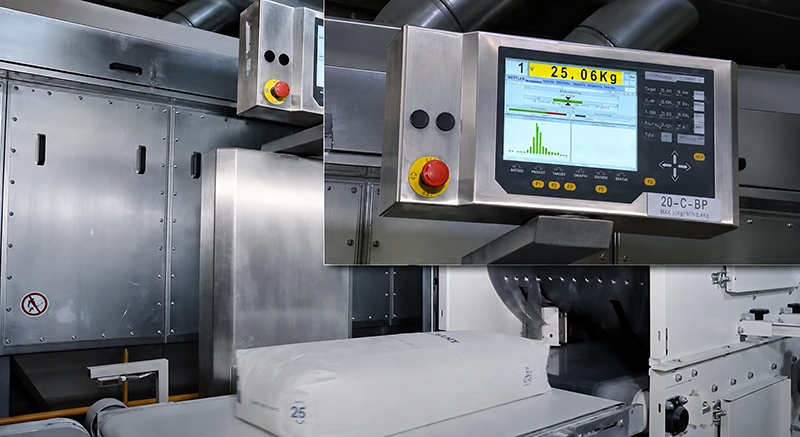
    Stainless steel checkweigher conveyor with touchscreen HMI and emergency stop on a gypsum valve bag line
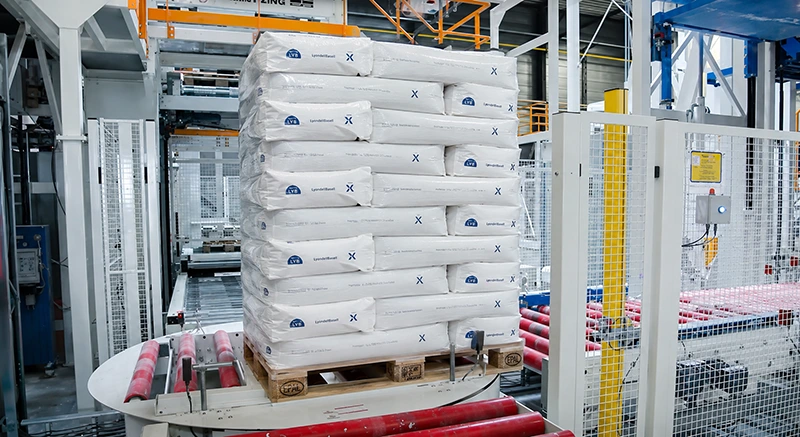
    Palletized 25 kg gypsum plaster valve bags on a roller conveyor inside the VPLINE cell with safety fencing

    Send your plaster spec, bag stock and dispatch target

    A VPLINE gypsum valve bag line for 25 kg plaster is configured per project — bag stock, valve geometry, throughput target, air supply and pallet format all feed the layout. Share your plaster grade, current bag spec, dispatch volume and site constraints, and we will return a project review with a draft cell layout and a station-by-station scope.

    Request a VPLINE Project Review
  • Cement Valve Bag Packing Line: 25 kg Robotic Loading

    Cement Valve Bag Packing Line: 25 kg Robotic Loading

    Cement Valve Bag Packing Line: 25 kg Robotic Loading

    A purpose-built cement valve bag packing line ties a wheeled bag magazine, twin-arm robotic loader, air-assisted filling, ultrasonic sealing, checkweighing and robotic palletizing into one continuous 25 kg cement cell — replacing open-mouth dust, manual bag handling and unstable pallet stacks on the dispatch floor.

    Automated valve bag packaging line with robotic bagging station, conveyor modules, and safety fencing for cement packing

    Why 25 kg Cement Valve Bags Stall on a Manual or Half-Auto Line

    Most cement mills still ship 25 kg in valve bags that are loaded, sealed and palletized by hand. The packer holds the bag against the discharge spout while a screw or gravity stream fills it, an operator brushes cement dust off the valve mouth, and the bag is then stacked by lift onto a wooden pallet. The result is predictable: airborne cement in the packing hall, giveaway weight on every bag because the operator cannot read a scale, and pallet stacks that lean after a few layers because the bags are still half-full of air.

    A cement valve bag packing line that is engineered as one continuous cell removes each of those failure points at the station where they originate. The bag magazine feeds empty 25 kg sacks in a clean orientation, the loading arms seat the valve onto the nozzle without an operator’s hands, and the filling interface is sealed before dust has a chance to escape. Cement does not forgive open-mouth filling — the airborne fraction is what triggers respiratory complaints, regulatory inspection findings, and rejected export pallets.

    By the time a half-auto line has filled, sealed and stacked 25 kg cement at 4–5 bags per minute with two operators per station, the labor cost alone is already above the energy and depreciation bill of a fully automatic cement valve bag packing line. The reason many plants tolerate the manual workflow is that they have not yet seen what robotic loading and ultrasonic sealing can sustain at production cadence.

    How a Robotic Twin-Arm Loader Handles 25 kg Valve Bags

    The first station that makes a real difference on a 25 kg cement valve bag packing line is the loader. The empty-bag supply sits on a wheeled magazine that an operator can refill in a low-dust zone away from the fill point; a fork picks a single 25 kg sack off the stack and presents it to the loading arms.

    The twin-arm loader then drives the bag onto the inflatable filling nozzle. Both arms move in mirror image: one arm grips the bag from above, the other opens the valve mouth, and a coordinated stroke seats the valve onto the nozzle collar so the bag does not slip sideways when the air stream starts. Because the valve is loaded onto a tapered stainless-steel collar, the cement enters through the large feed channel and displaced air returns through the smaller vent channel, so the bag is filled without whipping dust back into the hall.

    Dual robotic bagging arms with pneumatic grippers feeding 25 kg cement valve bags into the loading station

    On a 25 kg cement valve bag packing line, the twin-arm loader is what lets a single machine serve two filling heads in turn. One arm places a bag on the active filling station while the previous bag is being sealed on the other station, which raises the effective bag-per-minute count without doubling the loader’s footprint. That is the layout you can see on a VPLINE cell when one bagging robot is shown alternating between two packers — it is a configuration choice for capacity, not a one-size-fits-all default.

    Air-Assisted Filling and the Stainless-Clamp Inflatable Nozzle

    The filling nozzle is the only part of the cement valve bag packing line that touches cement inside the bag. On a 25 kg run that contact zone is also where dust leaks, where the bag slips, and where the bag weight drifts. VPLINE uses an inflatable valve-seat: a tapered nozzle with a stainless collar that expands once the valve is in position, clamping the bag against a 304 stainless surface so the cement stream enters through the feed channel while displaced air bleeds back through the vent channel.

    Close-up of a stainless steel valve bag filling nozzle and clamping collar for dust-tight cement bagging

    Because the nozzle is 304 stainless on every cement-contact surface and carbon steel on the structural frame, the cell tolerates the abrasive cement fines that wear down mild-steel collars after a few months. The feed and vent channels are sized so that a 0.5–0.7 MPa plant air supply can fluidize the cement and push 25 kg through the valve without back-blowing dust into the loading zone. The pressure window has to be confirmed against the actual cement bulk density and moisture content on site — it is a parameter, not a guaranteed throughput.

    What that nozzle delivers on the dispatch floor is a sealed fill event: the valve mouth never opens to the hall air, so the operator at the loader station sees a clean contact, not a dust cloud. For a cement valve bag packing line, that single interface is what separates a packaging cell from a packaging room.

    Ultrasonic Sealing, Checkweighing and the Dual-Station Guard Cell

    Once a 25 kg bag is filled, the valve must close in a way that survives stacking, transport and outdoor storage. Ultrasonic sealing applies a 20–40 kHz vibration at the valve mouth; the plastic and film layers melt locally and bond even if a fine film of cement dust is still present. Compared with hot-bar sealing, ultrasonic sealing tolerates the residual dust that always lives on a cement valve, and it does so without heating the entire bag.

    After sealing, the bag travels through a dual-station guard cell: a checkweigher reads each 25 kg sack to the rated tolerance, and a metal-detection gate rejects any bag with ferrous or non-ferrous contamination. Both stations are wrapped in stainless steel guards with a pendant control and an emergency stop on the front face — the layout you see on a real VPLINE installation, where two filling stations are flanked by their own guarding so a jam on one side does not stop the line.

    Dual-station automatic valve bag filling machine with stainless steel guards and pendant controls on the cement valve bag packing line

    The reject path drops the off-weight or contaminated bag onto a side conveyor before the bag enters the palletizer, so a rejected 25 kg cement sack never makes it onto a customer’s pallet. On a cement valve bag packing line that ships to retail and export, this gate is the difference between a 0.5% customer complaint rate and a 0.05% rate.

    Spec Snapshot for a 25 kg Cement Valve Bag Packing Line

    ParameterVPLINE reference valueProject note
    Bag weight25 kg typical (10–50 kg envelope)Confirm 25 kg bag spec, not 50 kg upgrade
    Filling speed5–12 bags / minuteDepends on cement bulk density and air pressure
    Filling tolerance±1–2‰ nominalVerify against checkweigher rejection rate
    Bag materialCoated woven PP, kraft paper, laminatedValve must accept ultrasonic sealing layer
    Contact material304 stainlessCarbon-steel frame and guards
    Air supply0.5–0.7 MPaConfirm dynamic pressure drop at peak draw
    PowerAC 380 V / 50 Hz / 15 kW (packer unit)Add palletizer, checkweigher, metal detector loads
    Sealing20–40 kHz ultrasonic valve sealBag material test required before sign-off
    InspectionCheckweigher + metal detectorReject path to side conveyor
    PalletizingRobotic, interlocking layersLayer count and pattern set per project

    All of these numbers are VPLINE reference values; the project-specific figure must be locked after the bag, cement and air-supply trials. The 25 kg cement valve bag packing line is not a catalog configuration — it is built up from these parameters once the cement bulk density, valve-bag tolerance and plant air pressure are confirmed.

    Final Result: Stable 25 kg Cement Pallets Leaving the Cell

    A 25 kg cement valve bag packing line that runs as one cell delivers a different kind of pallet than a manual or half-auto line. The bag arrives at the palletizer already sealed, already weighed, already cleared by the metal-detection gate, and already shaped against the conveyor so it does not balloon. The palletizer places 25 kg bags in an interlocking pattern with separator sheets on the configured layers, then a stretch-hood wrapper locks the load against rain and forklift handling.

    The visible result on the dispatch floor is a pallet that leaves the cell square, holds its shape through container loading, and arrives at the customer without giveaway weight claims or dust on the bag surface. For a cement mill running 25 kg valve bags to retail, export or hardware channels, that is the operational payoff of the cement valve bag packing line: less labor at the bagging station, less dust in the hall, less giveaway in every bag, and a pallet that looks the same on day 300 as on day one.

    If you are scoping a 25 kg cement valve bag packing line, share your bag spec, plant air supply and target bags-per-minute and we will return a layout, a station list, and a parameter sheet keyed to your cement — not a generic quote.

    Ready to scope a 25 kg cement valve bag packing line for your plant? Send us your cement bulk density, valve-bag spec and target bags-per-minute.

    Request a Project Review
  • Cement Valve Bag Packing Line: 25 kg Dust-Tight Sealing

    Cement Valve Bag Packing Line: 25 kg Dust-Tight Sealing

    Cement bagging

    Cement Valve Bag Packing Line: 25 kg Dust-Tight Sealing

    A 25 kg cement valve bag packing line replaces the open-mouth packer and the manual bag handler with a closed cell. The empty valve bag rides through the same boot from pick-and-place to ultrasonic valve seal, and the cement stays inside the cell until the bag is sealed, weighed, and stacked.

    Real photo of stainless steel cement valve bag packing line with automatic bagging and dual control stations

    From the bag magazine to the valve nozzle: the 25 kg cycle

    The line starts at a wheeled bag magazine loaded with empty 25 kg valve sacks. An operator pushes the rack into the indexing station; the twin-arm gantry then grips, opens, and feeds each bag onto the filling nozzle one at a time. This is the part most plants still do by hand, and it is also the part that loses the most cement to the floor. On a cement valve bag packing line built around this gantry, the bag mouth stays inside a stainless-steel boot from the moment it leaves the magazine until the sealer closes it.

    For real cement flow, the gantry has to hold the bag against the nozzle under positive air pressure. The expandable section of the nozzle opens to admit cement, and the return-air channel pulls displaced air back through a separate path. That dual-channel arrangement is what turns a cement valve bag packing line into a sealed interface rather than a localized dust source.

    Stainless steel automated valve bagging head with dual pneumatic grippers feeding empty bags onto the cement valve bag packing line nozzle

    The bag itself is a coated woven sack with a paper or PE valve sleeve. The valve tolerance, the laminate thickness, and the sealer pad response all have to be matched on site, because the same 25 kg cement batch behaves differently through a paper valve than through a coated PE valve. Plants that skip the matching exercise end up with seal creep and bag-edge dust after thirty minutes of running. We treat the bag as a project input, not a commodity.

    Cement dust on the floor is not a nuisance. It is a measurable loss.

    For a 25 kg bag produced eight times per minute, even a 5 g leak per bag adds up to 2.4 kg of cement per minute, or roughly 144 kg per hour on the floor. That number is one a plant manager can read directly off the procurement log. A cement valve bag packing line that puts the bag mouth inside a closed boot during filling, then ultrasonically seals the valve closed inside the same boot, cuts that loss to the level where the floor no longer carries the audit story.

    The ultrasonic valve seal is what makes the cement cell closed

    If you specify a sealed filling interface, the line stops being a dust source. Most retrofit projects only move the dust collector. A cement valve bag packing line moves the cement through a sealed boot and a 20–40 kHz ultrasonic sealer. The sealer head stays inside the same boot, so dust cannot escape through the sealer either. It is one enclosure that holds the bag.

    Ultrasonic sealing generates friction heat only at the laminate interface; the surrounding air stays cool. The valve sleeve is locally melted and pressed together, and the bag is released. There is no heated plate, no exhaust plume, and no flame path inside the cell. For a cement valve bag packing line, that matters because cement residue acts as an insulator and a heat sink, so traditional hot-bar sealers foul in days on cement contact surfaces.

    Close-up of cement valve bag packing line filling nozzle and ultrasonic heat sealing head inside the closed filling boot

    The robustness of the seal still depends on the bag. We run a 25 kg cement sample through the actual valve sleeve you intend to dispatch, using your bulk density and your screw-feed rate. Until that bag-and-cement qualification is on file, no cement valve bag packing line should be quoted as a sealed cell. We treat it as a project qualification, not a default claim.

    What the lab pass actually buys you: A passing cement-on-valve qualification is what lets us quote the cell as dust-tight. If the bag fails the test, we suggest changing the valve sleeve or the laminate before delivery, instead of shipping a cell that will leak on day one.

    Throughput, mass accuracy, and what the line actually moves

    A properly sized cement valve bag packing line holds 5–12 bags/min on a single host, with a mass accuracy of ±1–2‰ when the bulk density stays inside the tested window. Power draw on the packer head is 15 kW at 380 V / 50 Hz. Compressed air is the hidden utility: the gantry, the boot clamp, the bag inflator, and the sealer head all draw from a 0.5–0.7 MPa supply, and that pressure has to be stable across an eight-hour shift.

    For a 5,000–8,000 bags-per-shift cement plant, the same cement valve bag packing line that seals the bag also palletizes it, weighs it, and shapes it before the hood goes on. Layer counts, hood film grade, and pallet height have to be matched to the dispatch pattern. A 25-bag-per-pallet retail stack is not the same pallet as a 50-bag-per-pallet export stack, and the palletizer recipe is set per project.

    EPAL wooden pallet stack in an automated pallet magazine with roller conveyor on the cement valve bag packing line outbound cell
    StationFunctionKey spec
    Wheeled bag magazine + gantryEmpty bag feed and mouth open304 SS grippers, twin-arm pneumatic
    Expandable filling nozzleCement inlet, return-air path304 SS contact parts, dual channel
    Ultrasonic valve sealer20–40 kHz seal of valve sleeveHeld inside closed boot, no hot plate
    Checkweigher + metal detectorMass and contamination gate±1–2‰ accuracy, auto rejector
    Negative-pressure shaperAir-out, flat bag profileAdjustable vacuum level per cement grade
    Robotic palletizer + stretch hoodStable pallet, weather wrapLayer count and hood grade per project

    Send your cement sample and your valve bag drawing

    We will run a 25 kg cement-on-valve qualification on the bag you intend to dispatch, then return an equipment list, throughput figure, and floor plan sized to your cell. No cement valve bag packing line quote leaves the office until that bag-and-cement seal test is on file.

    Request a project review
  • 50 kg Cement Valve Bag Packing Line: Price Drivers

    50 kg Cement Valve Bag Packing Line: Price Drivers

    VPLINE / Cement Industry

    50 kg Cement Valve Bag Packing Line: Price Drivers

    A 50 kg cement valve bag packing line is not a 25 kg line with thicker steel. The fill mass nearly doubles, the bag-handling kinematics change, and the pallet pattern shifts from short retail pallets to one- or two-ton export blocks. Every one of those shifts shows up on the price sheet. Here is how a 50 kg cement valve bag packing line is typically priced, which stations move the number the most, and what project conditions move it again.

    Industrial valve bag palletizing scene with shrink-wrapped 25kg sacks and dual robotic handling units in a 50 kg cement valve bag packing line

    Why a 50 kg Cement Valve Bag Packing Line Is Not Just a Scaled-Up 25 kg Line

    A 25 kg valve bag of OPC or slag cement sits at the limit of what one operator can still swing by hand. A 50 kg bag crosses that limit. The empty blank is longer, wider, and stiffer; the same bag filled with cement hits roughly 50 kg on the scale. Three things change on the line when the format moves from 25 kg to 50 kg.

    First, the wheeled bag magazine has to hold bigger blanks. Each pocket is wider, and the wheeled rack cannot be hand-loaded with the same density as the 25 kg magazine. The bag-magazine frame on VPLINE uses a steel skeleton with casters and a side handle so one operator can swap a full magazine during a shift change without blocking the bagger.

    Second, the twin-arm bagger gripper has to open a wider, thicker bag blank without tearing the corner. The pneumatic gripper pattern and the suction-cup layout are scaled to the 50 kg bag footprint, and the clamp closing force is re-rated. The robot reach also has to clear the deeper bag before slipping it onto the filling nozzle.

    Third, the palletizer must place heavier bags without losing cycle time. A 50 kg bag placed at the edge of the pallet exerts more moment on the layer, so layer count, interlock pattern, and pallet pattern all become decisions, not assumptions.

    Operator pushing wheeled valve bag magazine into automatic bag loading station on a 50 kg cement valve bag packing line
    What buyers ask first when pricing a 50 kg cement valve bag packing line

    Three questions come up on almost every 50 kg cement RFQ: how does the line hold 50 kg bags without tearing, where does the dust go at the fill point, and what does the pallet pattern look like at the end of the cell. The price only makes sense once those three answers are fixed.

    Where the Price Actually Goes on a 50 kg Cement Valve Bag Packing Line

    The headline number for a 50 kg cement valve bag packing line is rarely the price of one machine. It is the sum of seven stations, plus engineering, plus site integration. Buyers see this split during proposal review and the seven stations are:

    1. Wheeled bag magazine with casters and a side handle.
    2. Twin-arm robotic bagger with pneumatic grippers.
    3. Air-conveyed filling station with an expandable valve-bag nozzle and a clamping collar.
    4. Ultrasonic valve sealing head running at 20 to 40 kHz.
    5. Checkweighing and metal detection over a stainless steel conveyor.
    6. Robotic palletizer with bag-turn, layer-sheet dispenser, and stretch-hood infeed.
    7. Controls: HMI, PLC, E-stop network, and the safety guarding that wraps the cell.

    Most 50 kg cement valve bag packing line proposals sit inside one of three configurations: a single filling host with one robot palletizer, a twin-filling host that shares one robot palletizer, or a turnkey cell that also covers the dust extraction duct, the metal-detector gate, and the stretch-hood wrapper at the outfeed.

    Buyer note: A 50 kg cement valve bag packing line price is set station-by-station, not as one machine number. If a quote does not split the seven stations, ask for the split before comparing it with a competing proposal.

    Spec-by-Spec: Components and What They Cost on a 50 kg Cement Valve Bag Packing Line

    Below is a typical price-driver map for a 50 kg cement valve bag packing line. The exact percentages shift with throughput and bag format, but the order rarely does.

    StationWhat it does on a 50 kg cement valve bag packing lineCost driver
    Wheeled bag magazineHolds 50 kg valve bag blanks, hand-swappable during shift changeFrame size, casters, magazine count
    Twin-arm robotic baggerPicks, opens, and slips the empty 50 kg bag onto the nozzleGripper force, vacuum pump, pneumatic circuit
    Air-conveyed fillingExpandable nozzle with a two-channel fill and return-air circuitStainless contact parts, dosing valve size, dust extraction port
    Ultrasonic seal head20 to 40 kHz weld across the coated valve areaSealing layer compatibility, dust extraction at the head
    Checkweigher and metal detectorOnline weight check and tramp-metal rejectBelt width, reject mechanism, conveyor length
    Robotic palletizerLayer forming, layer sheet, and pallet handlingRobot reach and payload, gripper head, layer pattern software
    Controls and guardingPLC, HMI, safety fence, E-stop networkCell footprint, number of access gates, audit history

    The two biggest single line items on a 50 kg cement valve bag packing line are the filling station (because the nozzle, the air system, and the ultrasonic head are made for cement-specific dust load) and the robotic palletizer (because the 50 kg bag weight and the layer pattern drive the robot specification).

    Palletized valve bags on roller conveyor inside an automated 50 kg cement valve bag packing line cell with safety fencing

    Project Conditions That Move the 50 kg Cement Valve Bag Packing Line Price

    Beyond the seven stations, project conditions can shift a 50 kg cement valve bag packing line price by a double-digit percentage. The four most common are throughput target, bag format, pallet pattern, and site integration.

    Throughput target. A 50 kg cement valve bag packing line running at 5 bags per minute and one running at 9 bags per minute do not share the same filling head, the same palletizer, or the same controls budget. Each 1-bag-per-minute step up typically requires a larger filling nozzle, faster checkweighing, and a higher-payload palletizer.

    Bag format. A 50 kg valve bag with a paper outer ply and a PE inner ply welds differently under ultrasonic than a 50 kg woven PP bag with a coating. The sealing head is selected against the exact 50 kg bag sample, which is part of why the ultrasonic station has its own price band rather than a flat rate.

    Pallet pattern. A 50 kg cement pallet stacked in three-bag layers with a layer sheet on every fourth layer uses more layer sheet and more palletizer cycle time than a 50 kg pallet stacked without layer sheets. Layer-sheet count, pallet height, and pallet weight target are quoted as line items, not defaults.

    Dust extraction and site integration. A 50 kg cement valve bag packing line running inside an existing building needs a coordinated dust extraction duct, compressed-air supply at 0.5 to 0.7 MPa, and a 380 V, 50 Hz, 15 kW power drop. Where the building has none of these, the integration price grows.

    Stainless steel checkweigher conveyor with touchscreen HMI and emergency stop on a 50 kg cement valve bag packing line

    Request a 50 kg Cement Valve Bag Packing Line Quote

    Send the 50 kg bag sample, target throughput in bags per minute, the pallet pattern you want to land on dispatch, and the existing utilities at the site. We will return a station-by-station price breakdown for your 50 kg cement valve bag packing line, with the ultrasonic head model, the palletizer payload and reach, and the stretch-hood wrapper type written into the proposal.

    Request Quote
  • Automatic Bagging Line for 25 kg Heavy-Bag Projects

    Automatic Bagging Line for 25 kg Heavy-Bag Projects

    PPLINE HEAVY-BAG BAGGING LINE

    Automatic Bagging Line for 25 kg Heavy-Bag Projects

    An automatic bagging line from BPMpack links hopper feed, vacuum bag pickup, servo weighing, sealing, and pallet handoff so feed, seed, fertilizer, and plastic pellet plants keep 25 kg woven sacks moving without manual rework.

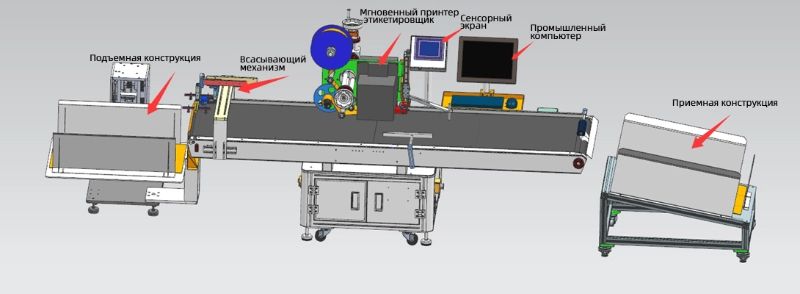
    3D CAD rendering of automatic conveyor labeling system with vacuum applicator, touchscreen and industrial PC

    What a 25 kg Heavy-Bag Project Really Needs on Site

    Heavy-bag packaging in feed, seed, fertilizer, and plastic pellet plants is rarely a one-machine decision. A 25 kg woven sack must travel from a stainless steel buffer hopper through servo weighing, vacuum bag pickup, filling, heat sealing or sewing, and finally onto a pallet — without tipping, spillage, or a single manual straightening step. The line owner wants an automatic bagging line that keeps the front-end bagging speed matched to the back-end palletizing speed, because mismatched stations are exactly where the shift starts losing hours and the operators start improvising handoffs that should never have existed in the first place.

    BPMpack builds the ppline family around that reality. Instead of a standalone filler bolted to a conveyor, the project starts from a CAD-driven factory layout. The bag magazine, weighing scale, sealing or sewing unit, checkweigher, reject conveyor, labeler, and either a robot or high-level palletizer are all sized against the same site drawing, the same aisle width, and the same column positions. Standard builds run on Inovance PLCs; higher-speed and higher-demand projects move to Siemens, so the line stays matched to the actual plant cycle instead of forcing the plant to slow down to match the machine.

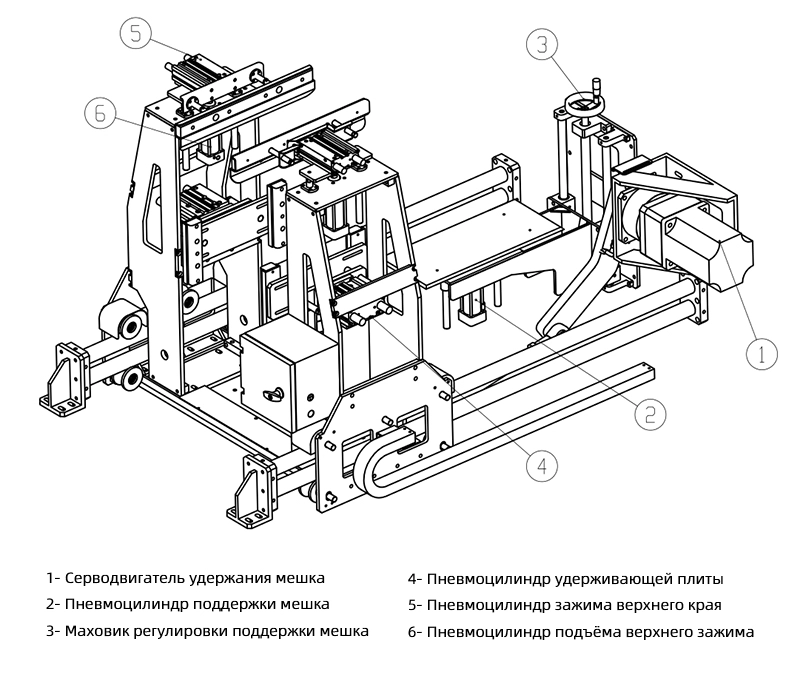
    Technical CAD drawing of bag clamping and bottom support assembly with pneumatic cylinders, servo motor, and Russian annotations
    Why a single-machine filler fails on a heavy-bag project

    Plants that buy only a filler soon discover the bottleneck is not filling — it is what happens to the 25 kg sack after it leaves the spout. Without a guided transfer, an upright-bag turner, and a checkweigher with a reject lane, every rejected bag has to be pulled by hand and the palletizer becomes the new bottleneck that nobody planned for.

    From Spout to Pallet: How the Automatic Bagging Line Stays in Sync

    An automatic bagging line running at 700 bags per hour in standard builds — and up to about 800 bags per hour with optimized stations — only stays stable if every transfer station between the bagger and palletizer is sized for the same cycle. BPMpack matches this by selecting the scale head against the project: a single-head servo scale handles 5 kg or 25 kg dual-spec work at roughly 15 to 25 cycles per minute; a double-bucket scale stabilizes standard granular throughput on feed and fertilizer lines; a single-bucket four-servo scale steps up the cycle for higher-speed lines. The right scale is what lets one project switch between 5 kg, 25 kg, and 7 to 30 kg dual-spec work without a full rebuild.

    The transfer path matters as much as the scale. A right-angle bag turner converts upright filled bags into horizontal bags for the next station. A dual-layer incline conveyor bridges the height gap between the filling floor and the palletizing floor. A checkweigher in the 5 to 50 kg range, with about plus or minus 10 g accuracy, 18 to 20 bags per minute throughput, and 100 recipe memories, catches out-of-spec sacks before they hit the pallet. Each station is what makes a heavy-bag setup a real line, not a filler plus accessories that drift apart after commissioning.

    Engineer insight: The fill accuracy of any heavy-bag setup is set by the scale, not the conveyor. A servo-controlled single-head scale with proper load cells and rejection logic holds plus or minus 0.2% on feed projects and plus or minus 0.1 to 0.2% on seed projects, which is what stops the giveaway that quietly eats margin on every 25 kg sack.

    Engineering Numbers Behind the Heavy-Bag Bagging Setup

    For project planning, the line parameters that drive layout and procurement decisions are the same ones that appear on a BPMpack engineering data sheet. The core packaging weight range is 10 to 50 kg, with some project configurations covering 5 kg or 25 kg dual-spec work. Power supply is AC380V plus or minus 5% at 50Hz, total power around 15 kW, and air supply at 0.5 to 0.7 MPa with air consumption between 1200 and 2000 NL/min depending on the route and the number of pneumatic stations.

    Sealing options — heat seal, sewing, heat seal plus sewing, or heat seal plus sewing plus hot-melt tape — are matched to bag type and dispatch route. Sewing units run at around 2700 rpm with a stitch width of 7 to 10.5 mm. The labeler stations around 12 to 13 pieces per minute. PLC, HMI, inverter, photoelectric and proximity sensors, load cells, cylinders, solenoid valves, servo motors, and the vacuum system all sit on a single electrical stack so one controls team can service the whole line instead of three. Standard builds use Inovance; higher-speed or higher-demand builds step up to Siemens for cycle stability and recipe handling.

    ModuleSpecification
    Packaging weight range10–50 kg (5 / 25 / 7–30 kg dual-spec projects available)
    Standard packaging speedup to 700–800 bags/hour
    High-speed configurationup to 900–1200 bags/hour depending on route
    Weighing accuracy±0.2% (feed); ±0.1–0.2% (seed)
    Power supplyAC380V ±5%, 50Hz
    Total power~15 kW
    Air supply0.5–0.7 MPa
    Air consumption1200–2000 NL/min
    Single-head servo scale15–25 cycles/min, 5 / 25 kg dual-spec
    Checkweigher5–50 kg, ~±10 g, 18–20 bags/min, 100 recipes
    Sewing machine~2700 rpm, stitch width 7–10.5 mm
    Labeler~12–13 pcs/min
    PLC optionsInovance (standard) / Siemens (high-speed)

    Send Your Site Layout and Bag Specs

    An automatic bagging line starts from your factory CAD — floor space, column positions, forklift aisles, bag size, and palletizing direction. Send your drawing and project data, and BPMpack will return a layout-matched proposal with the right scale, transfer path, and palletizing option for the actual material you are packing.

    Request a Project Review