Automatic Bagging Machine & Palletizing Systems Manufacturer

Category: English

  • Powder Packaging Line: 25 kg Bag Mouth Alignment

    Powder Packaging Line: 25 kg Bag Mouth Alignment

    Dry milk · 25 kg bags · line engineering

    Powder Packaging Line: 25 kg Bag Mouth Alignment Before Sewing

    A dry milk plant filling 25 kg kraft or paper-plastic bags rarely loses output at the dosing screw. It loses it in the last three metres, where a dusty, still-aerated bag twists and its mouth arrives skewed at the sewing head. This powder packaging line treats bag supply, clamping, bottom-up filling, shaping and transfer as one controlled process, so the mouth is already aligned before the closing station sees it.
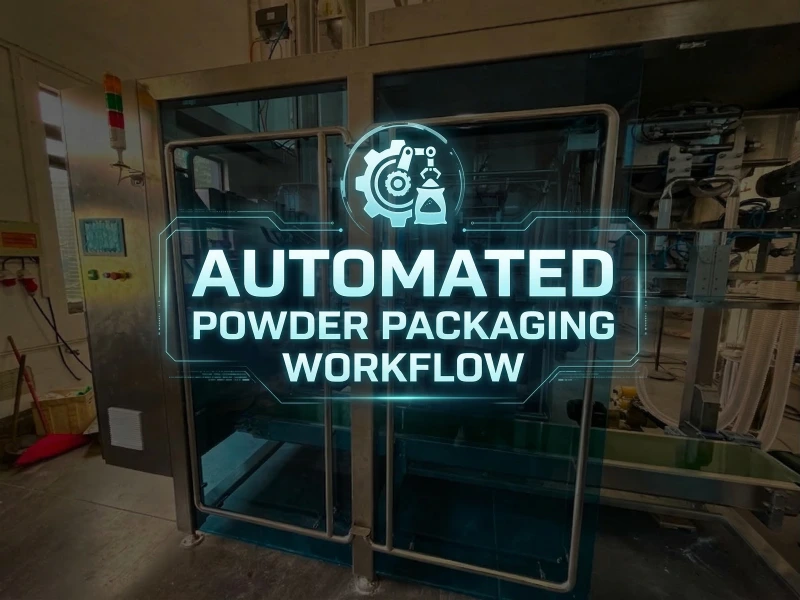
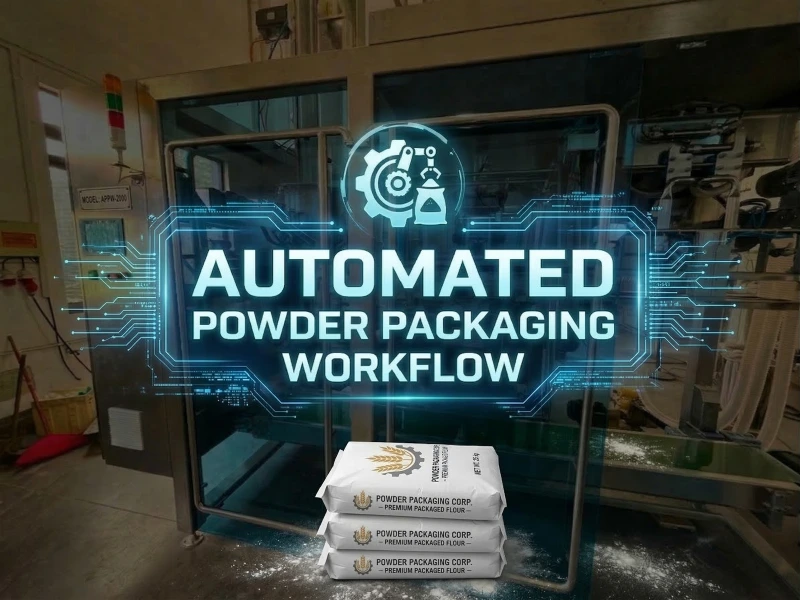
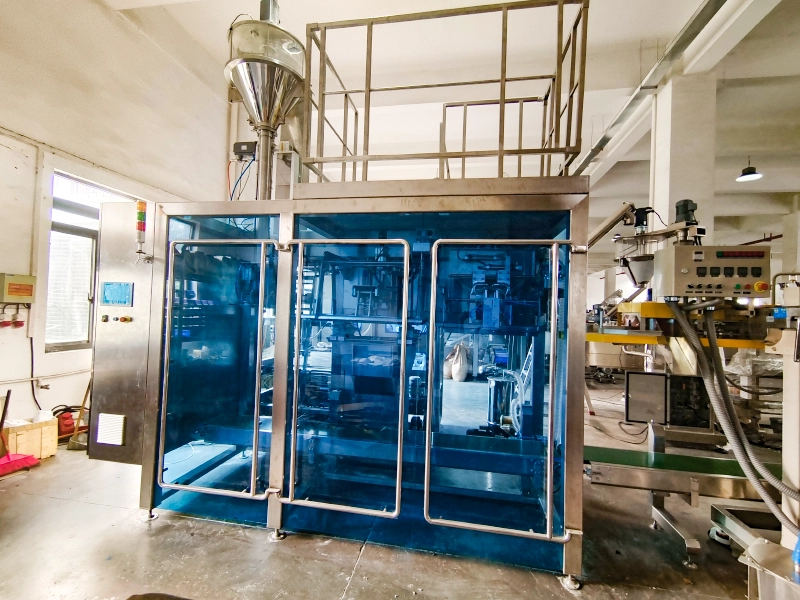
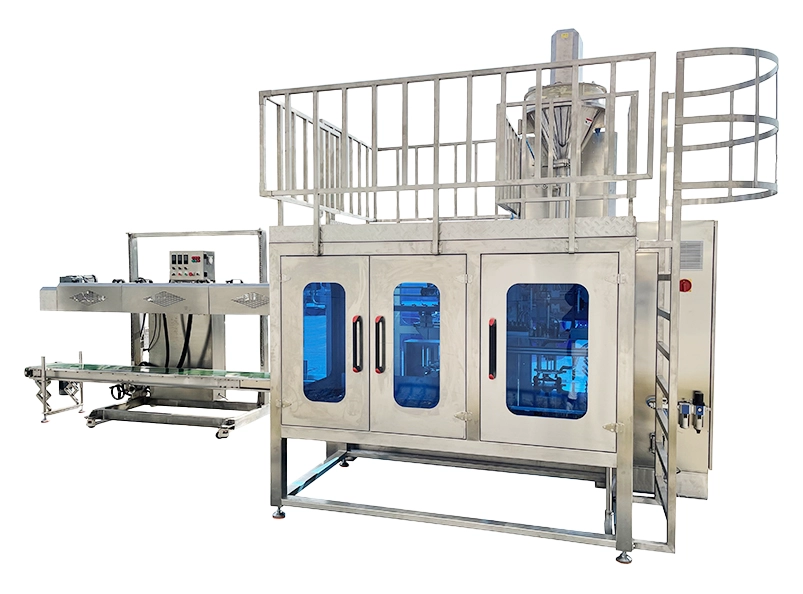
    Enclosed stainless steel powder packaging line with safety doors and conveyor interface

    Where a 25 kg dry milk bag actually goes wrong

    Free-fall filling is the first place a dairy powder bag starts to fail. Spray-dried skimmed milk is fine, light and easily airborne. Dropped through open air into a bag, it pushes powder back out of the mouth, and that dust settles on the exact strip of paper the sewing head has to close. The operator then holds the bag open with one hand, straightens the mouth with the other, and the seam starts the shift with a wrinkle in it. On a coated woven or paper-plastic composite bag the effect is worse, because dust on the inner layer interferes with the heat-sealing step that follows.

    The second failure is geometry, not dosing. A filled 25 kg bag is aerated, and it settles unevenly as it travels. If the conveyor only moves the bag, nothing holds both faces, so the bag rotates a few degrees on the belt, the mouth leans and the shoulders drop. By the time it reaches the sewing head, the mouth is skewed, the sewing guide rides up one edge, and somebody walks to the last metre to straighten it by hand. That manual correction is the hidden cost inside most so-called automatic powder bagging lines, and it is what a controlled powder packaging line is built to remove.
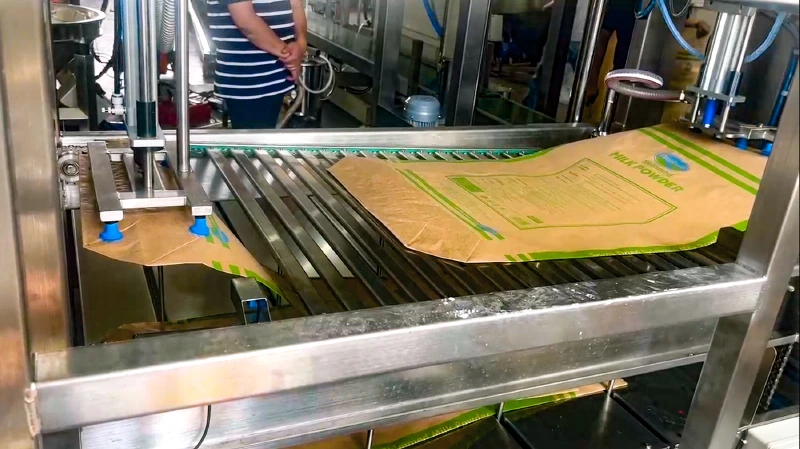
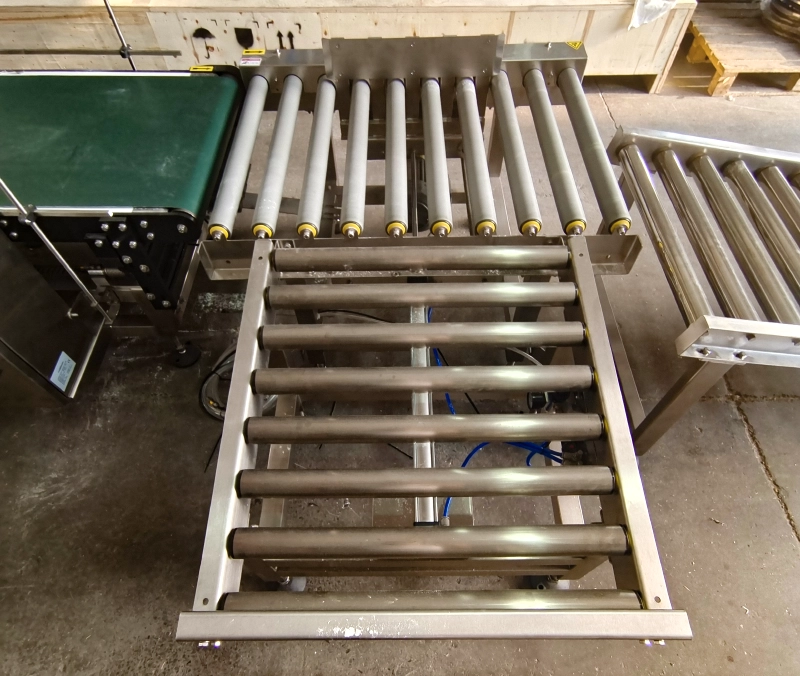
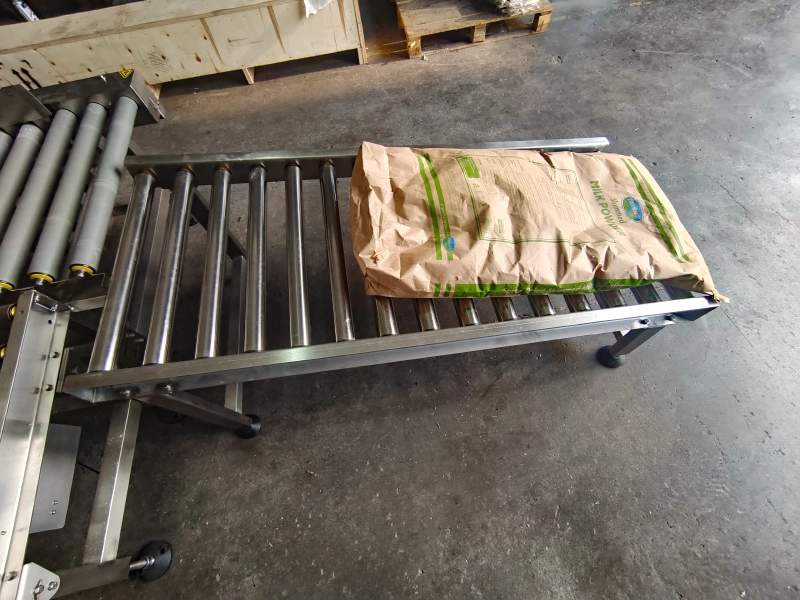
    Roller conveyor with vacuum grippers holding a kraft paper powder bag at the mouth alignment point
    The failure is not the filler

    Most complaints on a 25 kg dairy line trace back to the handoff, not the weighing accuracy. A bag that leaves the clamp square and arrives at the sewing head square needs no operator. A bag that arrives skewed cannot be fixed by a better dosing screw.

    Why Mipline fits a dry milk powder packaging line

    Mipline is configured as a controlled line rather than a standalone filling unit. Bags are taken flat from a magazine, opened by vacuum pickup and placed in a clamp that closes before any product enters. Because the clamp holds the mouth from the empty state onward, the bag never has to be re-gripped after it is heavy. Filling is bottom-up: a lifting platform carries the bag down as the level rises, so the fill point stays close to the material instead of dropping powder through open air. A three-stage screw handles fast, medium and slow final dosing, and where the powder is highly aerated, vacuum extraction or de-aeration runs before closure.

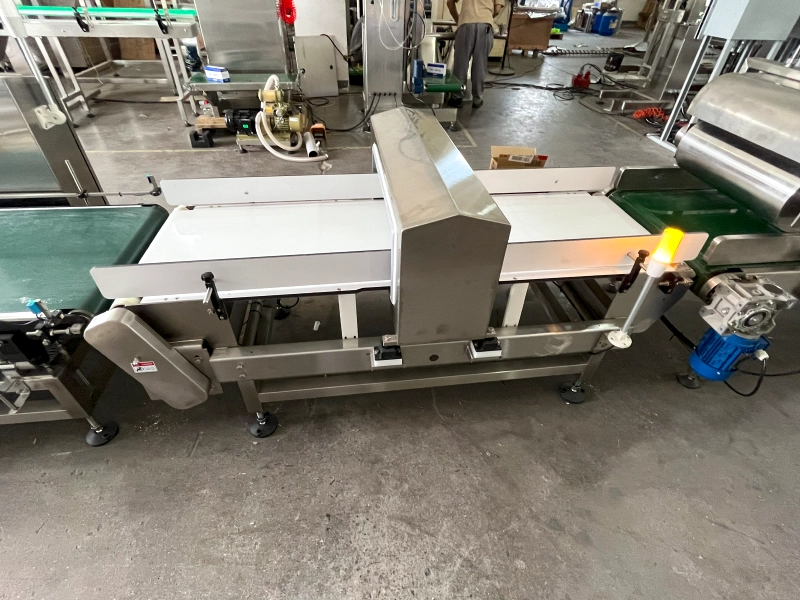
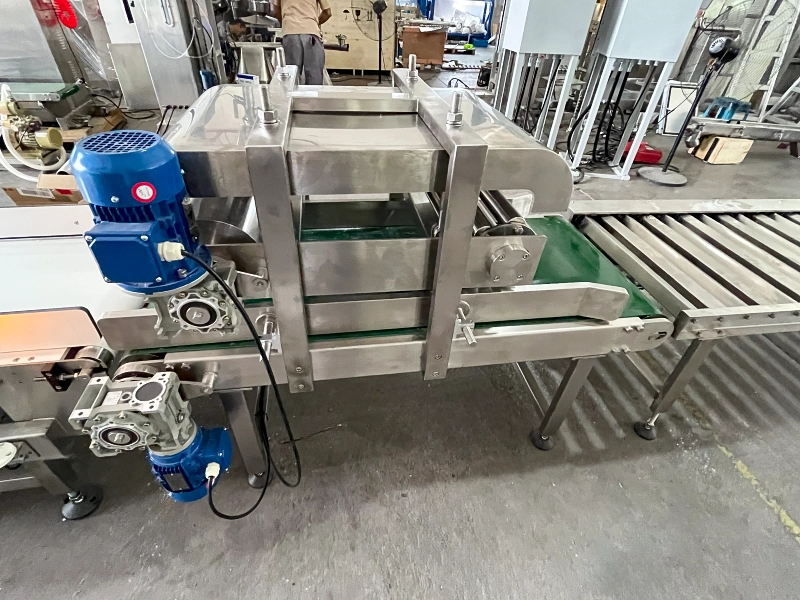
    Downstream, the same principle continues. The bag is held and guided through belt and roller transfer, side guides are set to the bag width, and a twin-belt section keeps both faces parallel so the mouth stays vertical between stations. Enclosed stainless-steel stations with blue inspection windows and guarding let an operator watch the clamp and the mouth line without opening a door, and the HMI and emergency-stop boxes sit on the frame where the line is actually run. That is the difference between a powder packaging line and a set of conveyors bolted together: the bag has a controlled owner at every metre.

    Engineering note: specify the bag before the machine. Bag construction and stiffness, bulk density, flowability, moisture and aeration of the milk powder, the closure method, target bags per minute and the palletizing layout are the inputs that decide clamp geometry, guide widths, screw stages and settling length. Two dairy powders at the same 25 kg target weight can need different transfer settings.

    Structure, settings and the handoff that decides bag quality

    The table below shows how each station on this powder packaging line contributes to a square bag mouth. Values are reference figures from stated configurations, not one universal promise; they are confirmed against the material test and the project datasheet.

    StationWhat it controls on a 25 kg bagReference values to confirm per project
    Bag magazine and vacuum pickupBag is taken flat and opened squarely before the clamp closesBag stack height and bag stiffness per bag construction
    Clamp and lift platformMouth is held from empty to full; fill point follows the product level25 kg nominal; one stated configuration at 1.5–2 bags/min
    Three-stage screw dosingFast, medium and slow final dosing hold the weight bandStated accuracy ≤±0.1–0.2% on that configuration
    Guided transfer with side guidesBoth bag faces held, mouth kept vertical between stationsGuide width set to measured bag width
    Settling and shaping sectionAerated powder settles and the bag is squared before inspection3,000 mm settling belt, 600 mm wide, 15 m/min; 1,500 mm shaping section
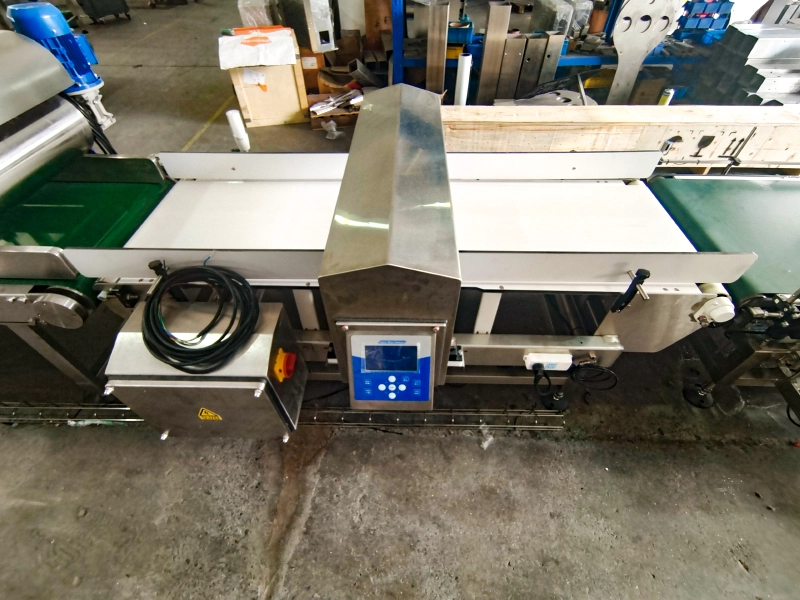
    Metal detection and checkweighingFinished bag checked after closure, with a defined reject pathER6023 reference window 600 × 230 mm; checkweigher rated to 50 kg
    Roller dischargeSquare, closed bag handed to palletizing or warehouse handlingTransfer length per layout; 5,000 mm belt at 10 m/min is one reference
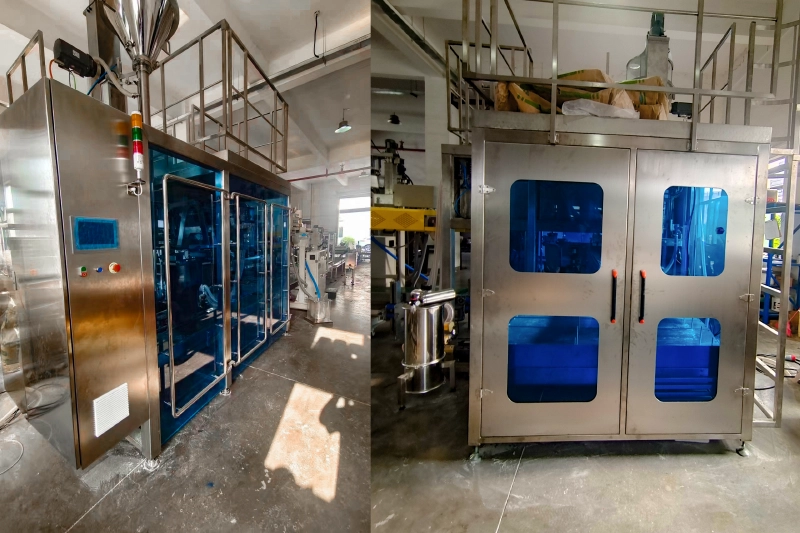
    Automated powder packaging line with safety enclosure, conveyor section and stacked finished bags

    The result is measurable on the floor rather than in a brochure. Operators stop walking to the last metre to straighten bags, the sewing or sealing head receives a mouth that is already square and dust-free, bag shape stays consistent into palletizing, and underweight or contaminated bags are rejected after closure instead of being found at dispatch. On a dairy powder plant running three shifts, that removes the small steady losses that never appear in a capacity figure but do appear in the monthly bag and rework count — which is the practical reason a powder packaging line is specified as one continuous process rather than a filler plus conveyors.
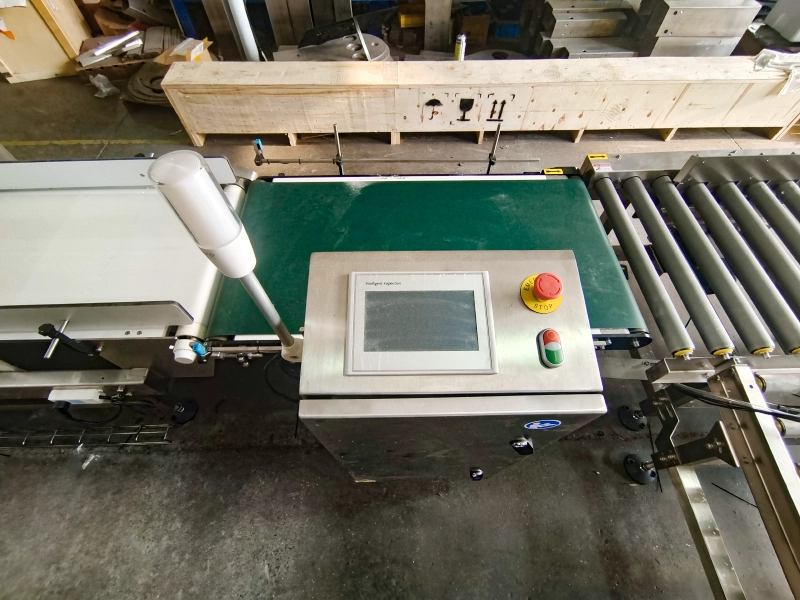
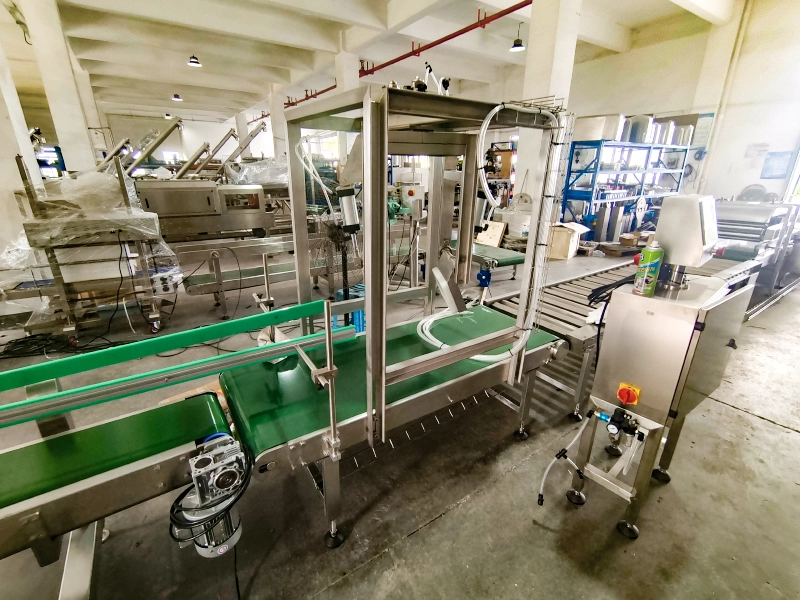
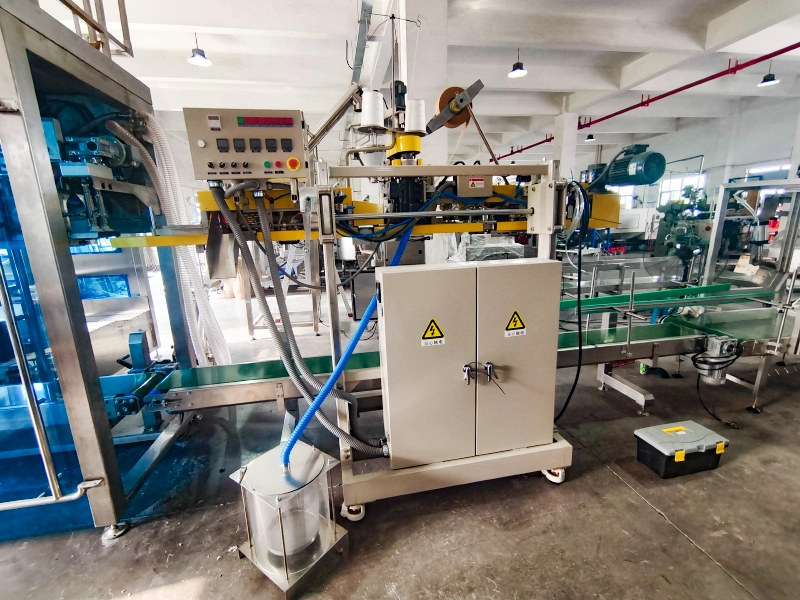
    Powder packaging line conveyor with touch-screen control box, emergency stop and roller transfer sections

    Specify the line around your bag, not around a catalogue

    Send the bag construction and dimensions, the powder and its bulk density, the target weight, the closure method and the required bags per minute. We will come back with the station list, the transfer layout and the settings that hold a 25 kg bag mouth square before sewing.

    Request a line layout
  • Powder Bagging Line for PE Bags From 10 to 50 kg

    Powder Bagging Line for PE Bags From 10 to 50 kg

    PE film bags from 10 to 50 kg

    Powder Bagging Line for PE Bags From 10 to 50 kg

    Most powder plants build the line around kraft paper or woven sacks, then a customer asks for 10 to 50 kg PE bags and expects the same equipment to keep running at the same rate. It usually does not, because a polyethylene bag has almost no stiffness of its own. On a powder bagging line the bag has to be supported, clamped and guided from the magazine all the way to the sealer. If it is not, the filled bag folds over in the last metre and the sealing jaw closes on a wrinkle instead of a flat mouth.

    Real factory photo of an enclosed stainless-steel powder packaging line with safety doors and conveyor interface

    Why a PE bag from 10 to 50 kg behaves nothing like a kraft sack

    At 10 kg the bag is light and airy: the film lifts with the product and the mouth will not stay open by itself. At 50 kg the same film spreads under load, the base bulges, and the mouth pulls out of square. Kraft paper hides both problems because the sheet holds a crease once it is folded. PE film does not hold anything. So every step in the weight range changes how the bag must be held, and a powder bagging line that was set up for one weight will fight the rest of the range. The symptom always shows up in the same place: the bag reaches the closure station twisted, and an operator stops the line to straighten it by hand.

    We size the front end around a flat bag magazine conveyor rather than a sack hopper. One bag is taken from the stack, opened and placed at the clamp station, where the mouth is held before any product enters. Clamping before dosing is the only moment you can fully control a soft bag, so it is the moment we use. The station sits inside a stainless steel enclosure with blue inspection windows, which lets the operator watch the mouth and the fill without opening the guarding. The range itself is set from the touch-screen control panel, with the emergency stop at the operator position and roller transfer sections carrying the bag away from filling.

    Industrial conveyor line with touch-screen control box, emergency stop, and roller transfer sections
    The old setup: kraft-scale habits applied to soft film bags

    A line tuned for 25 kg kraft sacks has nothing to support a limp PE bag. Operators end up straightening bags by hand at the last metre, the sealer head runs unevenly because the mouth arrives skewed, and the rejects come back as leakers that nobody can trace to a station. The cause is almost never the filler.

    Where the transfer, not the filler, decides the bag

    Filling accuracy is rarely the problem on a powder bagging line. The problem lives in the two metres between the clamp and the closure station. A soft PE bag that leaves the clamp with a lean keeps that lean, because nothing downstream pushes it back into shape. Mipline holds both faces of the bag through the handoff and releases it at guide height, so the bag is carried square instead of being dragged along a belt. Adjustable side guides on the twin-belt transfer section are set to the width of the bag being run, and the roller sections after the belts keep the base flat so the bag settles instead of tipping.

    The hardware is visible in the photos on this page: the twin-belt transfer conveyor with its central control housing and adjustable side guides, stainless roller conveyor sections on welded frames with levelling feet, and the HMI box with the emergency stop where the operator actually stands. Nothing in that path lifts a filled bag by its mouth, which is the single most common reason a PE bag folds over just before sealing. Open roller sections and blue inspection windows give the operator and the maintenance team a clear line of sight to the mouth without stopping production.

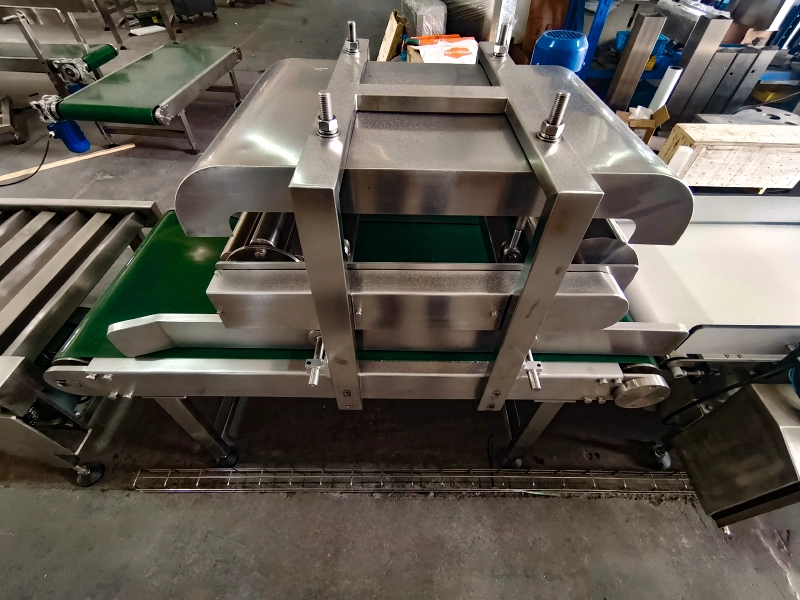
    Stainless-steel twin-belt transfer conveyor with central control housing and adjustable side guides

    Field note: judge the line by the last metre, not by the dosing screw. If the bag mouth is a few millimetres out of square when it reaches the closure station, the seam will leak no matter how accurate the fill was. A camera check at the sealer tells you more than a week of weight data.

    What to verify before you commit a 10 to 50 kg range

    A 10 to 50 kg range is really four or five different handling problems sharing one powder bagging line, and each of them asks a different question of the machine. Before quoting we ask for the bag drawing, the film gauge, the bulk density of the product, and the target bags per minute at both ends of the range. Those four answers decide the magazine format, the clamp opening, the guide settings and whether closure is a sealer or a sewing head with a creped tape.

    On the Mipline powder bagging line each of those points is answered mechanically rather than by operator skill. The magazine takes the flat bag format the plant actually buys, the clamp holds the mouth before dosing, the side guides are set to the bag width, and the bag arrives at the closure station square and settled. Where a plant still packs 25 kg kraft or woven sacks for other customers, the same line runs both formats with the closure changed, so the capacity is not stranded the day the next order arrives in PE film. For a look at the handoff in isolation, read guided bag transfer before sewing, and for a dairy example see the dry milk bag handoff walk-through.

    Bag weightWhat a PE bag tends to doWhat the line has to hold
    10 kgLight film lifts with the product and the mouth collapsesClamp the mouth before dosing and support the base through transfer
    20 kgBag settles slowly, trapped air keeps it fat and unstableA settling run on the belt before the closure station
    25 kgBulges at the base where the film stretches around the productSide guides set to bag width and a flat roller base under the bag
    40 kgFilm stretches under load and the mouth pulls out of squareHold both faces through the handoff, never lift by the mouth
    50 kgBag leans and tips as soon as it leaves the clampGuided transfer at guide height and a square bag at the sealer
    Real-world automated powder packaging line with safety enclosure, conveyor section, and stacked finished bags

    Send the bag drawing, not just the weight

    Weight alone does not size a powder bagging line for PE film. Send the bag drawing, the film gauge, the bulk density and the target output at 10 kg and at 50 kg, and we will come back with the station layout, the clamp and guide settings, and the closure option that fits your format.

    Request a line layout
  • Durum Semolina Flour Bagging Line at a Pasta Plant

    Durum Semolina Flour Bagging Line at a Pasta Plant

    Pasta plant · durum semolina · 25 kg kraft bags

    Flour Bagging Line at a Pasta Plant: Where Durum Semolina Bags Lose Their Shape

    A flour bagging line in a pasta plant is not judged at the dosing screw. It is judged in the last two metres, where a 25 kg semolina bag either arrives at the sewing head square or gets straightened by hand first. Mipline holds the bag mouth in a clamp from the bag magazine through filling, transfer and the sewing handoff.

    Stainless steel bag-feeding conveyor with dual gear motors and clamping frame on a Mipline flour bagging line

    Where a pasta plant really loses semolina bags

    Durum semolina is not the easiest powder to put into a 25 kg bag. It is coarse, it carries air out of the conveying system, and it fills unevenly, so the bag turns bottom-heavy within two seconds of the fill ending while the mouth is still open. On the older layout — a fixed spout, a bag stand and an operator holding the mouth by hand — that is the exact moment the bag starts to sag and rotate on the stand. By the time it reaches the sewing head the mouth is out of square, the stitch line drifts and the seam folds over itself.

    The cost rarely shows up as a machine fault on the maintenance sheet. It shows up as one operator parked at the last metre, straightening every bag by hand before the sewing head, and as pallet stacks that lean because the bags are no longer square to each other. Across a shift the sewing head is adjusted far more often than the filler, because a skewed mouth is what actually moves the seam — not the dose.

    Bag format change is the other place the old layout costs time. When the plant switches from a 25 kg kraft bag for bulk dispatch to a shorter bag for a customer line, a bag-stand layout needs the spout height and the support re-set by hand, and the first bags of the new run are usually straightened twice before the seam settles.

    Downstream, the pasta extruder asks for one thing only: a bag that presents the same edge at the same height every cycle. A flour bagging line that guarantees that handoff is worth more to a pasta plant than a filler with a wider dosing window.

    3D-rendered flour bag conveyor line entering a packaged flour processing gate at a pasta plant
    The last two metres decide the bag

    A semolina bag is not lost at the dosing screw. It is lost after the clamp opens, when nothing holds both faces parallel and the sewing head receives a mouth that has already turned.

    Why the Mipline layout suits semolina and durum flour

    Mipline is designed around the handoff rather than the dose. Flat kraft or woven bags sit in a magazine and are carried forward on a bag-feeding conveyor, picked, and clamped at the mouth before any product enters. Because the bag is held by the mouth instead of standing on its own base, the fill cannot tip it, and the mouth stays parallel to the sewing plane. That single decision is what separates this flour bagging line from a spouted filler sitting next to a bag stand.

    Filling happens inside an enclosed stainless steel station with guarding and blue inspection windows, so the operator can watch the mouth, the fill level and the bag face without opening a door. Dosing into a clamped bag also allows a bottom-up fill, which pushes air ahead of the product instead of through it; a semolina bag filled that way settles flatter and stays flatter once the clamp releases.

    Field note: downstream, the guides set the bag shape, not the filler. Twin-belt transfer sections with adjustable side guides hold both bag faces after the clamp opens, so a bag that was square at the spout is still square at the sewing head.

    Factory-installed stainless steel conveyor line with enclosed center module, side rails and motorized drive for 25 kg powder bags

    Structure and evidence to check on the machine

    Ask to see the machine from the clamp to the sewing head, not from the control cabinet. The useful evidence on a Mipline flour bagging line is mechanical: where the bag is held, what keeps both faces parallel, and how the bag is handed over at the end of the conveyor.

    These are the stations a pasta plant should follow during a factory acceptance run, and what each one is doing for the bag.

    StationJob for the bagVisible evidence
    Bag magazine and feed conveyorPresents flat kraft or woven bags square to the pickupGreen belt, dual gear motors and clamping frame on a stainless conveyor
    Mouth clamp at the filling stationHolds the bag open and parallel to the sewing plane before dosingClamp jaws at the enclosed station, bag face visible through the blue window
    Clamp-held fillingDoses semolina into a supported bag so the fill cannot tip itBottom-up fill inside the stainless enclosure with dust kept in the cell
    Twin-belt transferKeeps both bag faces parallel and settles the aerated fillAdjustable side guides, twin belt runs and a central control housing
    Roller handoffDelivers the bag level and square to the sewing headRoller conveyor with adjustable leveling feet and side rails
    Control and inspection accessLets the operator verify the transfer without reaching insideTouch screen HMI, stack light, emergency stop and hinged guards

    On a pasta plant floor the result is a bag that no longer needs straightening in the last metre. The sewing head sees the same mouth height and the same edge every cycle, seams stay closed through the palletizer, and finished bags stack flat because they are already square when they leave the flour bagging line. Inspection and cleaning also stay outside the product path: stainless surfaces, hinged guards, blue windows instead of open hatches, and a touch screen from which the transfer can be checked.

    Send one bag before you specify the line

    Every plant has its own bag — paper weight, gusset, mouth width, and the way the empty bag behaves when the clamp takes it. Send one bag and your target weight, and we will confirm the clamp position, the guide settings and the sewing handoff on the flour bagging line for your semolina, then return a layout and a station list.

    Send your bag sample
  • 10 kg Powder Bagging Line: Stable Bag Transfer Before Sewing

    10 kg Powder Bagging Line: Stable Bag Transfer Before Sewing

    Mipline · Dry Powder Bag Filling

    10 kg Powder Bagging Line: Stable Bag Transfer Before Sewing

    A dairy powder, flour or starch plant that scales down from 25 kg sacks to 10 kg bags keeps the same dosing logic but loses margin in the last metre. This 10 kg powder bagging line clamps the bag mouth before dosing, holds both bag faces through belt and roller transfer, and hands a square bag to the sewing head instead of a twisted one.

    Enclosed stainless steel automatic bagging station with blue safety enclosure, top hopper, and control cabinet on a 10 kg powder bagging line

    Where a 10 kg Bag Goes Wrong on an Existing Line

    A 10 kg paper or paper-plastic bag is shorter and stiffer than a 25 kg sack, so it behaves differently at every station. It leaves the filling spout aerated and slightly inflated, it takes the shape of whatever carries it, and it tips easily once the center of gravity sits low. On a line that was originally laid out for heavier sacks, the bag is never clamped during dosing, so the mouth drifts open, powder lands on the sealing area, and the bag lands on the belt skewed.

    By the time the bag reaches the last metre, two operators are usually standing there: one pulls the mouth straight, one holds the bag while the sewing head engages. Nothing in that arrangement appears on a capacity calculation, yet it decides the real output of a 10 kg powder bagging line. When one of those operators steps away, the sewing head receives a leaning bag, the seam runs crooked, and the bag is either reworked or downgraded.

    Stainless steel bag-feeding conveyor with dual gear motors and clamping frame on a 10 kg powder bagging line
    The shortcut that keeps failing

    Adding a straightening table and a second person at the sewing head hides the problem without removing it. The bag is still filled without a clamp, still arrives dusty, and still depends on a human hand at the exact point where the line should be most repeatable.

    Clamp-Held Filling and Guided Transfer Before the Sewing Head

    Mipline treats bag supply, opening, clamping, filling, closure and transfer as one process rather than a row of independent machines. A flat bag magazine feeds the stack, a vacuum pickup opens the mouth, and a clamp holds the bag through the entire dose. The filling head rises with the fill level, so the drop height stays short at the start and at the finish, and a three-stage screw covers fast, medium and slow final dosing. On a 10 kg powder bagging line that staged dosing matters more than on a heavy sack, because a 200 g overshoot is two percent of the target weight.

    After dosing, the bag is released into a guided handoff: a twin-belt transfer with adjustable side guides squares both faces, a roller section carries the bag to settling and shaping, then metal detection and checkweighing run before the sewing head. The station itself is enclosed stainless steel with blue inspection windows, guarding, an HMI panel and an emergency stop, so the clamp, the seam area and the transfer path can be checked without opening the line. That visibility is what makes a 10 kg powder bagging line auditable rather than dependent on operator memory.

    Field note: On a 10 kg target, a stated filling accuracy of ±0.2% equals roughly ±20 g per bag. Treat that as the reference figure for a defined configuration, not a promise for any powder: bulk density, flowability and moisture move the number. The checkweigher is where drift is caught and rejected before dispatch.

    What to Fix Before Ordering a 10 kg Powder Bagging Line

    Every item a buyer brings to the table changes the machine, and each one already has a defined answer inside the Mipline configuration. Bag construction and dimensions select the magazine, the clamp stroke and the guides, because kraft paper, paper-plastic composite and coated woven bags do not fold the same way. Bulk density, flowability and aeration set the screw stages, the lifting fill speed and the de-aeration step. Closure method selects the module stack: dust removal, trimming, inner heat sealing, pressing, sewing and hot-melt paper tape are combined per bag type instead of being assumed. Target speed and palletizing layout determine conveyor lengths, settling time and roller discharge height.

    The bag weight range is the first number to confirm: a reference DS25K configuration covers 5 to 25 kg, so a 10 kg powder bagging line sits inside a proven envelope rather than at the edge of it. Inspection follows the same logic. A metal detector with a 600 × 230 mm aperture and a checkweigher rated for the finished bag are placed after closure and shaping, with a reject path that removes the bag instead of stopping the line. Confirm the detector and its product effect against your actual powder, and keep checkweigher accuracy to the datasheet of the selected unit.

    ParameterReference configuration (confirm per project)
    Bag weight range5–25 kg, so 10 kg bags fall inside the range
    Stated filling accuracy≤ ±0.2% of target weight
    Stated throughput1–3 bags/min, material and configuration dependent
    Power supply380/220 V, 50–60 Hz, 5 kW
    Air supply6 kg/cm²
    Product contact / bodySUS304 stainless steel, enclosed station with inspection windows
    Ambient guidance0–40 °C, 10–70% RH
    3D render of kraft paper powder bags on a roller conveyor entering a processing gate after a 10 kg powder bagging line

    Size the Line Around Your 10 kg Bag

    Send the bag dimensions, bag material, powder bulk density, target weight and required bags per minute. We will come back with the station layout, the clamp and screw configuration, the closure modules and the inspection points for a 10 kg powder bagging line matched to that powder, so the bag reaches the sewing head square without an operator holding it.

    Request a bagging line proposal
  • Flour Bagging Line: A Pasta Factory Walk-Through

    Flour Bagging Line: A Pasta Factory Walk-Through

    Pasta factory · 25 kg flour bags

    Flour Bagging Line: A Pasta Factory Walk-Through

    A pasta factory buys flour by the tonne and sells it back as dry shapes, so a 25 kg bag has to weigh right and reach the sewing head straight. This walk-through follows one flour bagging line from bag pickup to the last roller before the pallet.

    Stainless steel automatic bagging machine with blue inspection windows, bag magazine conveyor, and top access platform

    What the Packing Hall Sees Every Shift

    In a pasta plant the packing hall sits between the mill holding silos and the pallet stack: semolina and wheat flour arrive in bulk, are packed into 25 kg kraft paper or paper-plastic composite bags, then closed by sewing or heat sealing. The material that fed the press a few hundred metres away is the same material inside the bag, so the bag is judged on three things only — weight, shape, and how clean the mouth looks when it reaches the closing head.

    The older layout handles that work by hand. Two or three operators per shift pull flat bags from a stack, hold them open over a spout, steady them while the screw runs, then straighten each bag on the way to the sewing machine. A flour bagging line built that way does run, but it depends on people standing in the right place at the right second, and on a 25 kg bag being manhandled at the exact point where it is least stable.

    Stainless steel roller conveyor transfer section with angled rollers for industrial bag handling and line integration
    Where a flour bag actually fails

    Not at the dosing screw. The bag twists when the clamp releases, the mouth arrives dusty and skewed, and the sewing head pulls a curve into the seam. The last two metres decide whether the pallet is square.

    Why the Bag Changes Shape After It Is Full

    Flour holds air. A free-fall fill drops the whole 25 kg through the mouth in one pass, so the powder hits the base, aerates, and pushes dust back up into the mouth area — exactly where the closure has to work. A tracked bottom-up fill keeps the filling head close to the rising material level, so the drop is short, the dust stays inside the bag, and the fill happens from the base upward instead of ballooning the faces.

    That is why a flour bagging line is designed as a chain of controlled handoffs rather than a filler with a conveyor bolted on. The bag is lifted from the magazine, opened and clamped before the first gram falls, held at the mouth through the fill, then released onto a surface that keeps both faces under control. Every handoff removes one place where an operator used to correct a bag by hand.

    On the floor: the cheapest fix is rarely more speed. It is deleting the moment when a full bag is unsupported between two machines.

    Stainless-steel twin-belt transfer conveyor with central control housing and adjustable side guides

    Inside the Mipline Flour Bagging Line

    The bagging station is enclosed in stainless steel, with blue inspection windows in the front doors and a bag magazine conveyor feeding the pickup, so the operator can watch the clamp and the filling head without opening a guard. Green belts and stainless roller sections carry the filled bag away, and a twin-belt transfer with adjustable side guides holds both faces on the approach to the sewing head. The line runs from a touch-screen HMI with an emergency stop, and the transfer path is open enough to clear a jammed bag without tools.

    Configuration follows the material. On a 25 kg flour bagging line, one reference build is stated at 1.5–2 bags per minute with filling accuracy around ±0.1–0.2%, while other references in the range run 1–3 bags per minute on 5–25 kg bags at ≤±0.2%. The body is SUS304, main power is 5 kW, and where vacuum extraction is fitted the stated vacuum rate is 63 m³/h. Those figures move with bulk density, bag construction, closure method, and how much settling the bag needs before palletizing, so they are quoted per project. The same rule applies at the end of the line: detector aperture and checkweight tolerance have to be matched to the flour and the bag, not copied from a catalogue.

    StationWhat happensVisible on the machine
    Bag magazine and pickupFlat kraft or composite bags are lifted and openedBag magazine conveyor, vacuum pickup, guarded frame
    Clamp and holdThe mouth is fixed before the first gram fallsBag clamp inside the stainless station, blue inspection windows
    Bottom-up fillingThree-stage screw feed with the head tracking the fill levelLifting fill head, weighing control, HMI
    Air and dust controlExtraction or de-aeration before closureVacuum line, sealed station
    ClosureDust removal, trimming, heat sealing, sewing and paper tape where configuredClosure handoff path, paper-tape unit
    Settling and shapingThe aerated bag is flattened and squared on the moveTwin-belt transfer with adjustable side guides
    Inspection and rejectMetal detection and checkweight on the finished bagDetector aperture, checkweigher, reject path
    DischargeRoller sections toward palletizingStainless roller conveyor, leveling feet

    Planning a Line Like This for Your Plant?

    Send the flour type, bag size and construction, target bags per minute, the closure method you use, and where the packing hall sits in your building. We will reply with a flour bagging line layout, the stainless configuration, and the inspection points that fit your site. For background, compare these notes on 25 kg powder bag transfer before sewing and on clamp filling to sewing handoff.

    Request a line proposal
  • Powder Bagging Line for Alabaster: 25 kg Bag Handoff

    Powder Bagging Line for Alabaster: 25 kg Bag Handoff

    Alabaster and building gypsum · 25 kg industrial bags

    Powder Bagging Line for Alabaster: 25 kg Bag Handoff

    Alabaster, and the building gypsum ground from it, punishes a plant at the bag mouth rather than at the filler. A powder bagging line for this material has to clamp the empty 25 kg bag, dose from the bottom, pull dust out of the bag neck and hand the filled bag to the sewing head still square. When it does not, the last two metres decide the output of the whole shift.

    Enclosed stainless-steel powder bagging line with blue viewing doors and conveyor interface for filling 25 kg alabaster bags

    Where an alabaster bagging job actually loses output

    Ground gypsum plaster is fine, dry, light for its volume and full of air. Poured in free fall from a fixed spout, it throws a dust cloud up into the bag neck and across the sealing area, while the bag balloons around the product. The bag then reaches the sewing head with powder in the seam, a mouth that is no longer parallel to the head, and a body that slumps as soon as it is stacked. None of that is a weighing fault. The scale can be perfectly on target and the bag still fails.

    The failure compounds on the transfer. A 25 kg alabaster bag that leaves the clamp without support keeps drifting in whatever direction the belt is least able to correct, and operators end up at the last metre straightening bag faces by hand — the position that is hardest to guard and easiest to leave under-staffed on a night shift. On a powder bagging line the transfer belongs to the filling process, not to the gap between filling and sewing; if you are replacing a manual or semi-automatic layout, compare it against a 25 kg powder bagging line with a controlled bag transfer before sewing before you assume the filler is the limit.

    Stainless steel roller conveyor transfer section with angled rollers keeping 25 kg powder bags aligned on a powder bagging line
    The pattern we see on gypsum and alabaster bags

    Clean weighing, dirty bag mouth. The weigher reports in tolerance, the bag looks full and level at the clamp, and then the sewing head produces a skewed seam, a powder-contaminated seam or a torn bag neck within the first hundred bags of a shift. The cause is usually the air and dust leaving the bag at the moment the clamp releases, not the dosing system.

    Clamp first, dose from the bottom, keep the neck clean

    Mipline treats bag supply, opening, clamping, filling and closure as one process. The empty bag is taken from a flat magazine, opened at the mouth and clamped before any product enters, so the bag geometry is fixed by steel instead of by an operator’s hands. Dosing then runs on a lifting platform that follows the fill level, keeping a three-stage screw close to the powder surface: fast fill, medium fill, slow final trim. The closer the dosing point stays to the product, the less free fall there is to create dust inside a powder bagging line.

    Before closure, vacuum extraction or de-aeration, where the configuration includes it, pulls air out of the bag so the filled body settles instead of breathing powder out through the seam. Closure then follows the bag you already buy: dust removal and trimming, inner heat sealing, sewing, hot-melt paper tape and final pressing on a paper-plastic composite bag, or a plain sewn kraft bag. Each option changes what the bag mouth must look like when it arrives at the head, which is why the clamp, guides and transfer have to be decided together with the closure rather than after it.

    Field note: on alabaster, ask what happens in the first 30 cm after the clamp opens. If the bag body is unsupported there, no level of weighing accuracy will hold the seam straight.

    Specification points that change the machine

    Four inputs move the design: bulk density and flowability of the plaster, bag construction, closure method and the bags per minute you actually need. A light, aerated plaster needs more dwell and more extraction than a dense one; a paper-plastic composite bag needs dust removal and heat sealing that a plain kraft bag does not. The table below pairs each buying decision with the mechanical answer on a Mipline powder bagging line, so the response is a component and a setting rather than a promise.

    For orientation, the reference range looks like this: the DS25K filling group covers 5–25 kg with a stated accuracy of ≤±0.2% at 1–3 bags/min, a dedicated 25 kg line is stated at 1.5–2 bags/min, the body is SUS304, and conveying references include a 5,000 mm PVC belt at 10 m/min and 0.75 kW, a 3,000 mm settling conveyor 600 mm wide at 15 m/min, and a 1,500 mm shaping section at 600 mm belt width. Inspection is project-specific: an ER6023 detector reference uses a 600×230 mm window at 28 m/min, and checkweigher accuracy must come from the selected datasheet rather than from a generic figure. Treat every number as a starting point to confirm against your plaster, your bag and your site.

    Buyer requirementHow the line answers it
    Aerated 25 kg alabaster bagClamp-held bag, bottom-up lifting fill, three-stage screw trim before release
    Dust in the bag neck and seamVacuum extraction before closure inside an enclosed stainless station with blue inspection windows
    Bag skew at the sewing headClamp held to closure, twin-belt and roller transfer with adjustable side guides
    Weight control before dispatchIn-line metal detection and checkweighing with a defined reject path
    More than one bag constructionKraft paper, paper-plastic composite and coated woven bags, with closure matched to the bag
    Cleaning, inspection and accessSUS304 body, hinged blue viewing doors, maintenance platform with guarding and leveling feet
    Vacuum grippers on a stainless steel roller conveyor holding kraft paper alabaster bags at the bag supply station of a powder bagging line

    Build the line around your bag, not around the filler

    Send the bag size, the plaster bulk density and the bags per minute you need, and we will return a station-by-station powder bagging line proposal: clamp, bottom-up fill, de-aeration, closure, inspection and discharge.

    Request a line proposal
  • Sugar Bagging Line: 25 kg Bags Square Before Sewing

    Sugar Bagging Line: 25 kg Bags Square Before Sewing

    Sugars and crystalline powders · 25 kg kraft and woven bags

    Sugar Bagging Line: Keeping 25 kg Bags Square Before Sewing

    A sugar bagging line is not judged at the dosing spout. It is judged in the metre before the sewing head, where a 25 kg bag of granulated sugar either arrives square or arrives twisted. Mipline clamps the bag mouth before filling starts, holds both bag faces through guided belt and roller transfer, and hands a straight bag to the closure station instead of a collapsed one.

    Stainless steel enclosed sugar bagging line station with blue inspection windows, double doors and top maintenance platform

    Where a Sugar Bagging Line Loses Its Rhythm

    Walk the dispatch end of a sugar repacking plant and the filler usually looks healthy. The damage happens about forty centimetres after the spout. In a conventional layout an operator holds the empty kraft bag under the dosing head, the bag fills slightly off-centre, and then it is dropped onto a low belt. Granulated sugar is free-flowing and dense: the base sets hard within a second while the neck stays soft and open. The neck leans, one belt face drags faster than the other, and by the time the bag reaches the sewing head the mouth is no longer parallel to the seam line.

    That is why a sugar bagging line is measured at the handoff rather than at the scale. A skewed mouth forces the operator to stop the belt and straighten the bag by hand. A twisted bag sews a wandering seam that fails a pallet check. A collapsed shoulder stacks badly on the pallet and splits in the truck. None of those failures appear in a filling accuracy report, which is exactly why they survive the audit and come back on the night shift.

    Sugar bagging line bag infeed conveyor with green belts, vertical guide frame and emergency stop box
    The real bottleneck is the open gap, not the dosing screw

    On most 25 kg sugar lines the filler is stable and the palletizer is stable. What is not stable is the open stretch between the filling spout and the sewing head, where the bag is still aerated, still moving, and supported by nothing except a flat belt.

    Why This Sugar Bagging Line Suits Granular Sugar

    Granulated sugar is not flour and it is not milk powder. It is free-flowing, heavy per litre, and it settles the moment the bag stops moving. It also leaves a fine sticky film on frames and rails by the end of a shift. Mipline is laid out for that product: an enclosed stainless steel bagging station with blue inspection windows, a flat bag magazine feeding the clamp, and a transfer path long enough for the sugar to settle before closure. The product path is stainless, not painted mild steel, so a wash-down at the end of the shift does not start a rust line under the guides.

    The bag mouth is clamped before filling begins, so the bag geometry is fixed while the sugar enters and while the bag gains weight. That grip is not released until the filled bag sits on the guided transfer, where adjustable side guides and twin-belt sections hold both faces parallel to the direction of travel. On a sugar bagging line built this way the sewing head receives a bag that is already the right width, so the seam follows the mouth instead of trying to correct it.

    Engineering note: the side guides are adjustable, not welded to the frame. That matters when a plant runs 25 kg printed kraft bags for retail and 25 kg woven bags for bulk in the same week. Guide width belongs on the changeover list, and most bag-mouth skew we are asked about on site is a guide-width error, not a sewing fault.

    Roller conveyor transfer on a sugar bagging line keeping a 25 kg kraft paper bag square before sewing

    Station by Station: What the Structure Has To Do

    The photographs on this page come from the same machine family, so the parts described below are the parts you can actually see. The enclosed station carries the clamp and the filling head behind blue inspection windows, with double doors for maintenance access and a platform above the frame. Upstream, a green belt infeed conveyor with a vertical guide frame and an emergency stop box delivers the flat bag to the clamp. Downstream, a stainless roller transfer section carries the filled kraft bag to the closure station with the mouth still open, square and centred.

    StationVisible componentJob before sewingWhat to confirm
    Bag feedFlat bag magazine and green belt infeed conveyorDelivers the kraft or woven bag to the clamp without skewBag length and width across every format you run
    FillingEnclosed stainless bagging station with blue inspection windowsHolds the mouth clamped while sugar enters the bagClamp opening matched to your bag mouth, not to an average
    Settling and transferTwin-belt transfer conveyor with adjustable side guidesKeeps both bag faces parallel and lets the sugar settleGuide width adjustable per bag format at changeover
    HandoffStainless roller conveyor transfer sectionPresents a square mouth at the sewing or sealing headHandoff height and distance matched to your closure machine
    ControlTouch-screen control box with emergency stopOne point of control for the transfer and check stationsStop button reachable from the operator position

    If you are comparing suppliers, three questions separate the designs. Is the bag clamped before filling, or filled loose and straightened afterwards? Are the transfer guides adjustable for each bag format? Can an operator inspect the clamp and the bag mouth without opening a guard? On Mipline the clamp closes first, the guides adjust, and the inspection windows let a supervisor watch the mouth without stopping the line. Those three answers are what a sugar bagging line needs before it can hold seam quality at 25 kg, shift after shift.

    Send Your Own Sugar Bag Before You Specify the Line

    Two empty bags from your dispatch line tell us more than a specification sheet: bag material, mouth width, fill weight, and whether you sew or seal. Send them with your target output and we will match the clamp, guides and handoff to that bag. If you want the guide geometry explained first, read how the same layout keeps bags square on a powder packaging line.

    Send your bag sample
  • Flour Bagging Line: Uptime From Bag Magazine to Sewing

    Flour Bagging Line: Uptime From Bag Magazine to Sewing

    Flour and dry powder bagging

    Flour Bagging Line Uptime: From Bag Magazine to Sewing Head

    A flour bagging line rarely loses output at the dosing screw. It loses it at the bag magazine, at the clamp, and in the last metre of conveyor, where a 25 kg kraft bag has to reach the sewing head square. This walk-through follows those three stations and shows what each one has to hold on a Mipline flour bagging line.

    Stainless steel automatic bagging machine on a Mipline flour bagging line with blue inspection windows, bag magazine conveyor, and top access platform

    Station one: the bag magazine decides the bag’s first shape

    A kraft bag that leaves the magazine with a curled gusset or a folded corner cannot be corrected by any amount of guide rail downstream. Flour has almost no weight at the mouth, so a soft 25 kg paper bag keeps whatever shape it was picked in. That is why the magazine and the pick-up conveyor are built as one unit: bags are stacked flat, picked one at a time, and handed to the filling station already open and vertical.

    On the Mipline flour bagging line the pick-up station sits behind a stainless frame with a transparent guard, beside a control cabinet and vacuum hose. The operator loads a stack from the side and watches the pick through the guard, and the magazine is refilled while the filling station keeps running. Because the stack lies flat instead of hanging in a vertical chute, bag faces stay square and the pick point stays the same from the first bag to the last. That single detail removes most of the manual bag straightening crews do at the front of the line.

    Real factory shot of an automatic flour bagging station with bag pick-up conveyor, control cabinet, and vacuum hose
    The cost of the last metre

    In most flour plants the filler holds weight well. What costs output is the last metre before the sewing head: an operator straightening a leaning bag, a bag mouth arriving skewed, or a sewing head re-threaded because the bag collapsed under it. Each event is a short stop, and they accumulate across a shift.

    Station two: clamped filling keeps the mouth where it was placed

    Filling into an open bag that is only resting on a platform lets the mouth widen and drop as the flour column rises. A clamp changes the mechanics: the mouth is gripped before dosing starts, so the bag is held in place while it fills. On a flour bagging line this is the difference between a bag that stands on the conveyor and a bag that leans on the next one.

    The clamp station runs inside a stainless enclosure with blue inspection windows and double doors. The guarding is not only a safety item: it keeps the filling zone free of the draughts and drifting dust that push a light kraft mouth sideways. What to confirm with your own bag sample before ordering: mouth width, gusset depth, whether the paper is PE-lined, the print position the clamp will touch, and the clamp pressure that grips the paper without marking it. Send the bag, not a drawing, because the way a gusset folds after transport is what the clamp actually sees.

    Line-side view: The inspection windows sit at the height where the clamp and the filled bag meet, so the operator can watch the mouth, the dust collar and the bag face without opening a guard or stopping the line. The top platform with guard rails gives access to the filling head above the clamp for the weekly clean.

    Station three: guided transfer to the sewing head

    Between the clamp and the sewing head there are usually two or three metres of conveyor, and that is where square bags become twisted bags. A single centre belt gives a filled 25 kg bag nothing to hold it. A twin-belt transfer with adjustable side guides holds both faces at once and keeps the mouth at a constant height. The guides are set to the bag width once, then left alone for the run, which is why a powder bagging line should be specified around the bag, not around an average bag.

    On a Mipline flour bagging line the bag leaves the clamp onto a belt section, crosses a roller transfer, and reaches the sewing head at a speed matched to the sewing head rather than to the filler. Matching matters more than raw speed: if the belt runs faster than the sewing head the bag compresses at the needle, and if it runs slower the mouth bunches and the seam wanders.

    Stainless-steel twin-belt transfer conveyor with central control housing and adjustable side guides on a powder bagging line

    Access decides uptime as much as the guides do. Rolls, belt tension and the sewing head are reachable from the operator side, the HMI panel with emergency stop sits at the end of the transfer section where the operator already stands, and the frame is stainless throughout so a flour spill is washed rather than scraped out of paint. The table below maps the symptoms buyers describe to the station that answers them.

    Symptom at the sewing headWhat the line doesWhat to confirm with your bag
    Bag arrives rotated or leaningTwin-belt transfer with adjustable side guides holds both facesBag width and fill weight; guide setting for that width
    Mouth collapses before the needleClamp holds the mouth open through filling; transfer starts at matched speedGusset depth and paper stiffness, kraft against PE-lined
    Weight drifts at the checkweigherBag settles on the belt after filling instead of dropping off the clampWhere the checkweigher and metal detector sit in your layout
    Frequent stops to reload bagsFlat magazine with side loading; pick point unchanged through the stackStack height operators can load, and bag pack quality from your supplier
    Dust builds around the clampEnclosed stainless filling zone with an extraction connection at the spoutExtraction capacity at the spout and your cleaning routine

    Send us your flour bag sample

    Tell us the bag size and type, the flour you run, and the bags per hour you need. We reply with the station list for a flour bagging line sized to that bag, plus a layout for your building.

    Request a line proposal
  • Powder Bagging Line: Stable Bags for Blended Powders

    Powder Bagging Line: Stable Bags for Blended Powders

    Bulk Powder Bagging · Mipline

    Powder Bagging Line for Blended Powders: Why the Last Two Metres Decide Quality

    Blended powders are the hard case. A 25 kg kraft bag of milk powder premix, flour and spice blend, or starch carrier with additives arrives at the sewing head light, aerated and easy to twist. This powder bagging line keeps the bag mouth clamped under the spout, holds both faces on guided belts and rollers, and delivers a square bag to the closing station.

    Real-world automated powder packaging line with stainless safety enclosure, conveyor section and stacked finished powder bags

    Where the last two metres of a powder bagging line decide quality

    Almost no blend plant loses output at the dosing screw. The weight is usually on target. What fails is the transfer: the filled bag leaves the spout with air still trapped in the blend, the side gussets are not formed, and the bag runs on a free belt with nothing holding its faces. A blend with low bulk density behaves like a partially inflated cushion, so any change in belt speed, roller gap or bag friction sends the mouth off centre.

    The usual workaround is a person at the last metre. Somebody stands beside the conveyor, takes the bag by the top corners, straightens it and pushes it into the sewing head. That works until the shift changes. When the bag mouth arrives skewed, the sewing head folds the gusset into the seam, the seam comes out weak, and the bag either leaks powder or gets rejected on the pallet. Operators also stop keeping pace once bags get heavier through the shift, so line output quietly becomes a function of who happens to be standing there.

    Stainless steel roller conveyor with vacuum grippers holding a kraft paper powder bag at the clamp and transfer station of a powder bagging line
    The failure pattern buyers describe

    Weight is correct, but the bag leaves the line leaning, the gusset is folded into the seam, and someone has to straighten every 25 kg bag by hand before the sewing head.

    How a Mipline powder bagging line holds the bag from clamp to closure

    The Mipline powder bagging line starts from the other end of the problem. The bag is lifted from a magazine conveyor and clamped at the mouth before any powder enters it, so the bag is a fixed shape while it fills. Filling runs from the bottom up with the mouth still held, which means the blend builds a stable base instead of dropping in as a lump and stretching the bag walls.

    From the clamp, the bag is carried rather than thrown. A twin-belt transfer keeps light contact with both faces, adjustable side guides correct small alignment errors, and roller conveyor sections support the full bag base, including the angled roller run used to turn the bag between stations. Because both faces are held, the blend cannot surge into one corner, and the bag reaches the closing station with its gussets open and its mouth level.

    Field note: Aerated blends need distance, not speed. Give the bag a settling run on a flat, fully supported conveyor before the sewing head, and a 25 kg bag of low-density mix will still hold its square shape at the seam.

    What to specify on a powder bagging line, and how Mipline answers it

    Most buyers arrive with a bag sample and a target rate, then discover the real questions late. The table below lists the points that actually change a layout, and the structure Mipline uses to answer each one. All of it can be checked on the drawings before the machine is built: bag style and size, clamp changeover between 25 kg kraft paper and woven bags, guide adjustment range, where checkweighing sits, and how operators reach the filling zone for dust cleaning.

    The answers are mechanical rather than procedural. Clamp changeover means clamping frames matched to the bag specification. Guide adjustment is set by hand wheels on the side rails, so a new bag size does not require new tooling. The enclosed stainless station carries blue inspection windows and hinged doors, so dust cleaning and seal checks happen with guarding still in place. Checkweighing is done on an in-line weighing platform mounted on the conveyor frame, so a drifting bag is caught before the sewing head instead of on the pallet.

    StationFunctionMipline structure
    Bag pick-upLifts flat kraft or woven bags from the magazineBag magazine conveyor with vertical guide frame and vacuum pick-up
    Clamp fillingHolds the mouth square while the blend builds from the bottomEnclosed stainless bagging station with bag clamp and blue inspection windows
    Guided transferCarries both bag faces so the blend cannot surge to one cornerTwin-belt transfer plus roller conveyor with adjustable side guides
    Turning and shapingSquares the bag between stations without a dropAngled roller transfer section on a welded stainless frame
    Weight controlVerifies the 25 kg fill before the seam is madeIn-line weighing platform with adjustable support frame and leveling bolts
    Handoff to sewingPresents a level, centred mouth to the sewing headLast guided belt run with side guides set at sewing head height
    Access and safetyCleaning and seal checks with guarding in placeHinged doors, top maintenance platform, emergency stop at each station
    In-line conveyor weighing platform with adjustable stainless support frame and leveling bolts for checkweighing 25 kg powder bags after filling

    Run on site, the sequence is the argument: clamp, fill, guide, settle, weigh, sew. A powder bagging line built around that order removes the manual straightening step, keeps the seam in one line, and gives the plant a bag shape that stacks predictably. For flour, starch, dairy powder and blended premix alike, that bag shape is the first thing a retail or industrial buyer checks.

    Send a bag sample before you fix the layout

    Blend density, bag style and closure method decide the transfer length. Send one 25 kg bag of your blend together with your target rate, and we return a layout with settling length, guide settings and checkweighing position marked.

    Request a line layout check
  • Limestone Powder Packaging Line for 5 kg Bags

    Limestone Powder Packaging Line for 5 kg Bags

    Mineral powder bagging · Sverdlovsk region

    Limestone Powder Packaging Line: 5 kg Bags That Stay Square

    A mineral filler plant in the Sverdlovsk region of the Urals packs ground limestone into 5 kg kraft bags for agricultural liming and construction filler. On the old bench the bag was held by hand under the spout, so the mouth reached the sewing head skewed and somebody straightened it every few seconds. A powder packaging line closes that gap in the last two metres, not at the dosing head.

    Enclosed stainless steel unit of the Mipline powder packaging line with blue viewing windows and top maintenance platform

    Where a 5 kg limestone flour bag actually fails

    Ground limestone is dense for its bulk and it does not settle like wheat flour or spray-dried milk. A 5 kg bag is light enough to lift off the filling spout while the auger is still running, and light enough to slide sideways on a belt that was originally set up for 25 kg sacks. The result is predictable. The bag lands on the closing conveyor leaning, the gusset folds inward, and the sewing head stitches a mouth that is already out of line.

    The usual workaround is a second operator at the last metre, a length of roller table and a hand-held clamp. It holds together until the shift speeds up. Then bags are reshaped by hand, weight drift creeps in because the bag is pulled off the scale early, and the dust that escapes at the fill point settles on the bag surface and the floor around it. Nobody is doing anything wrong at that bench; the missing part is mechanical, because no component holds the bag for the whole distance between filling and closure. That is exactly the distance a powder packaging line is supposed to control.

    Bag pickup and magazine conveyor station on the Mipline powder packaging line with control cabinet and vacuum hoses
    The bottleneck is the handoff, not the dosing head

    On a 5 kg mineral powder bench the scale is usually accurate and the operator is usually experienced. What fails is the link between the filling spout and the sewing head. Once a bag leaves the spout at an angle, no pressure on the sewing guide can straighten it again, because the fold is already set in the paper.

    Why this powder packaging line fits a mineral filler

    Mipline works the other way round. The bag comes off a magazine conveyor, is opened and clamped before the product is released, and stays clamped inside a stainless steel station until the fill is finished. Because the mouth is held mechanically, a 5 kg bag cannot lift off the spout and cannot rotate while it fills. The fill point sits inside an enclosed stainless frame with blue inspection windows, so the operator watches the bag rise without standing in the dust plume.

    After filling, the bag is handed to a guided transfer. Twin belts with adjustable side guides carry both faces of the bag, then a roller section takes over and delivers it to the sewing head with the mouth level and centred. For limestone flour the adjustable guides matter more than motor power: the gap is set to the real bag width, so a light bag cannot fold over on itself between two stations. The same clamping and guide logic is described in our walk-through on keeping bags square before sewing.

    Line note The operator has to see the fill on a mineral powder. That is why the enclosed station on this powder packaging line uses blue transparent inspection windows in the doors instead of sealed panels: the fill point stays visible, maintenance access goes through the same doors, and the drive zone stays guarded.

    Structure and evidence, station by station

    The table maps each zone of the powder packaging line to the bag problem it removes. Everything in it is visible on the machine photographs on this page, not copied from a specification sheet.

    Two details are worth pointing out. The magazine conveyor feeds flat 5 kg bags to the pickup station under its own transparent guard, so a bag cannot be dragged open before it reaches the clamps. And every station sits on a welded stainless frame with adjustable feet, which keeps the transfer height constant after wash-down and is the quiet reason the bag still arrives square at the sewing head. The bag magazine and clamp sequence is shown in more detail on the automatic bagging machine for powder page.

    Line zoneWhat goes wrong with 5 kg limestone bagsWhat the Mipline line does
    Bag magazine and pickupFlat kraft bags stick together and arrive creased or half openMagazine conveyor feeds flat bags to the pickup station under a transparent guard, with vacuum pick-up and a separate control cabinet
    Mouth clampingLight bags lift off the spout and release dust into the roomBag mouth is clamped and held open through the whole fill, inside the stainless enclosure
    Filling zoneDust escapes, and nobody can tell how full the bag isEnclosed stainless station with blue inspection windows on the doors and a top maintenance platform
    Transfer to closureBags slide, twist or tip on belts sized for heavier sacksTwin-belt transfer with adjustable side guides holding both bag faces, followed by a roller conveyor section
    Handoff to sewingSkewed mouth, restitched or rejected seamsRoller transfer delivers the bag to the sewing head level, centred and square
    Control and accessSettings changed blind, no safe way to stop the lineTouch-screen HMI, emergency stop on the control box, welded frame with adjustable feet
    Belt and roller transfer section of the powder packaging line with touch-screen HMI, emergency stop, and square bag handoff

    Building a 5 kg limestone flour line?

    Send one filled bag, its flat size before filling, the bag material and the weight you run today. We will map the magazine, clamp, fill, transfer and closure stations of your powder packaging line around that bag, and tell you which zones you can keep from your existing bench.

    Send your bag sample