Automatic Bagging Machine & Palletizing Systems Manufacturer

Category: English

  • Bibpu Bulk Products Packing Line for Cleaner Transfer, Deaeration, and Sewing Stability

    Bibpu Bulk Products Packing Line for Cleaner Transfer, Deaeration, and Sewing Stability

    Bulk products packing line

    Bibpu Bulk Products Packing Line for Cleaner Transfer, Deaeration, and Sewing Stability

    For plants handling salt and other free-flowing materials, the real problem is not only filling bags. The harder part is keeping transfer clean, keeping pouches flat before seal, and keeping the woven-sack closing station stable under continuous output.
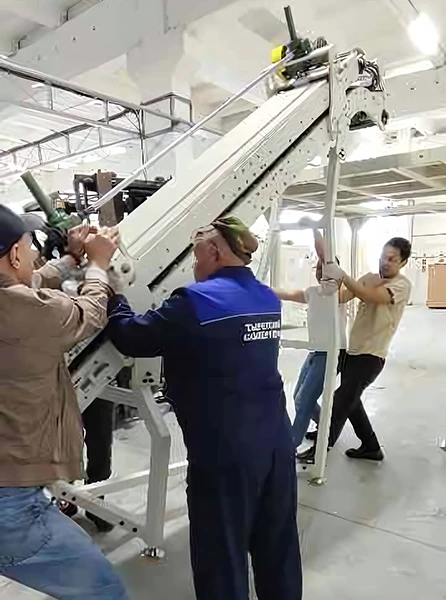
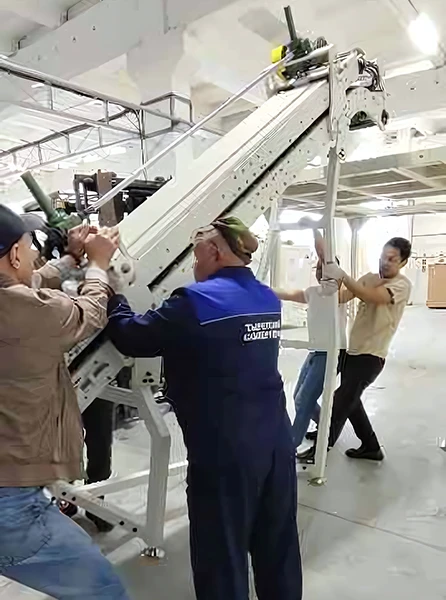
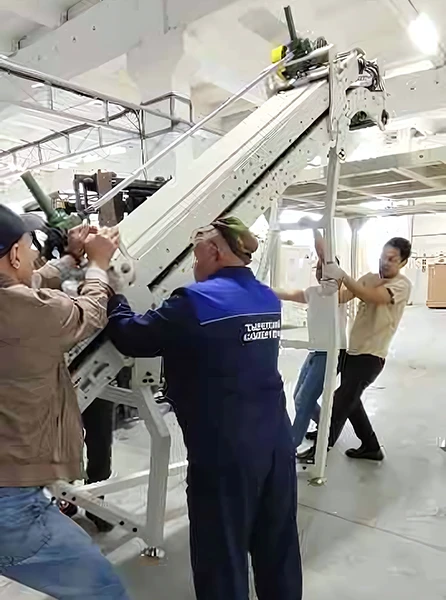
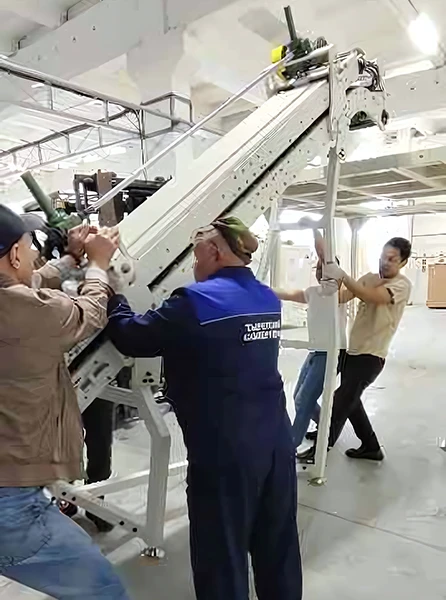
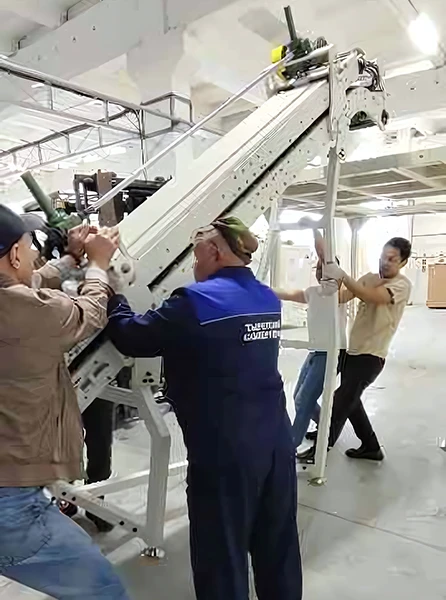
    Automated packaging workshop with inclined belt conveyors, steel platform, and multi-station control cabinets

    When bulk material packaging starts to slip, the whole line pays for it

    A bulk-products plant usually knows the symptom before it knows the cause: pouches arrive unevenly, the film drags, salt bags stay slightly swollen, and the sewing station has to compensate for inconsistent bag shape. That is where output drops and manual correction starts to eat cycle time.

    Bibpu is built for that exact handoff problem. The line combines VFFS filling, controlled transfer, bag flattening, and final woven-sack sewing so the product does not depend on one operator standing at the end of the line and fixing every imperfect bag.
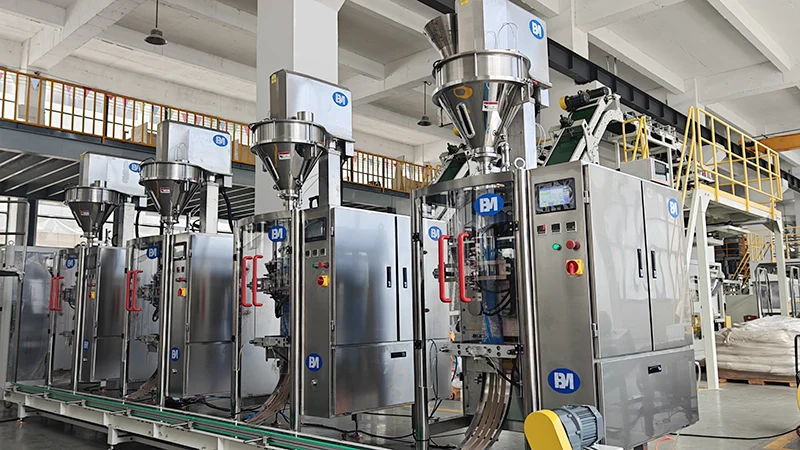
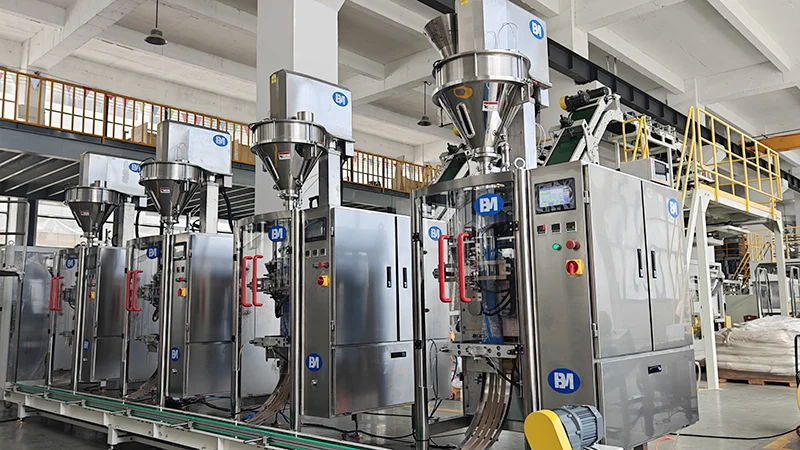
    Row of four BPM vertical form fill seal machines with stainless steel hoppers
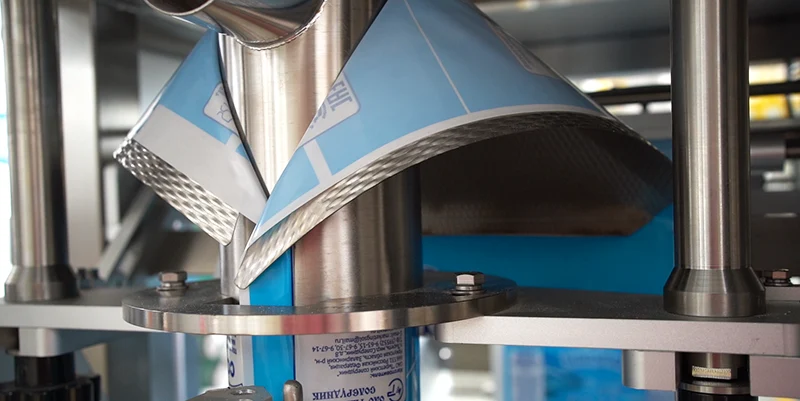
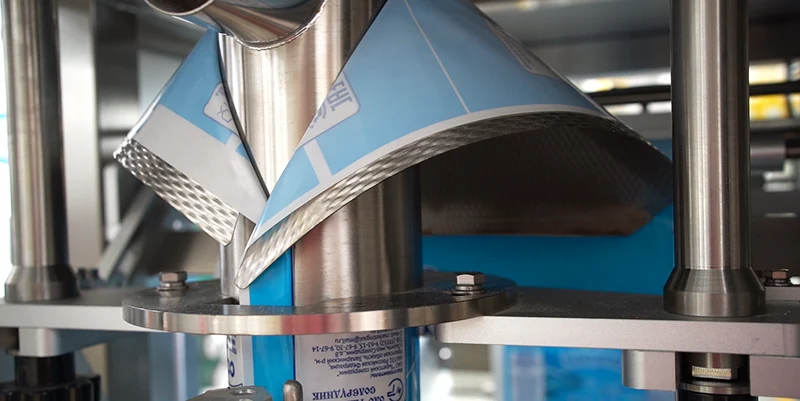
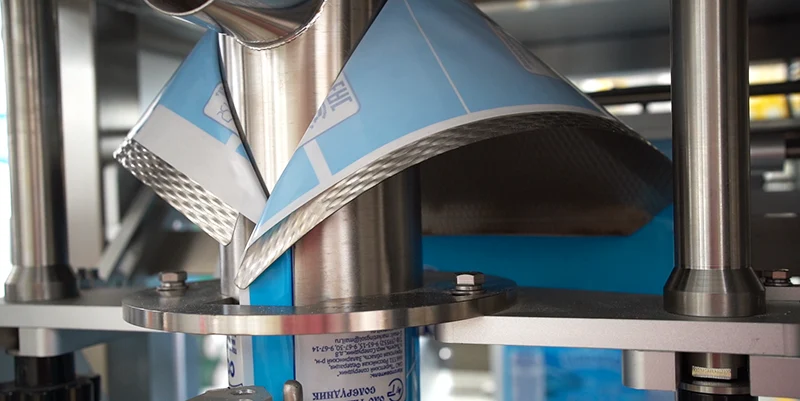
    Dimpled stainless steel forming shoulder of VFFS machine to reduce film sticking
    Typical pain point

    In humid or dusty production, film sticking, bag swelling, and unstable transfer are what make a standard packing line look acceptable at the filling head but fail at the sealing and sewing end.

    Why this line fits free-flowing materials better than a generic setup

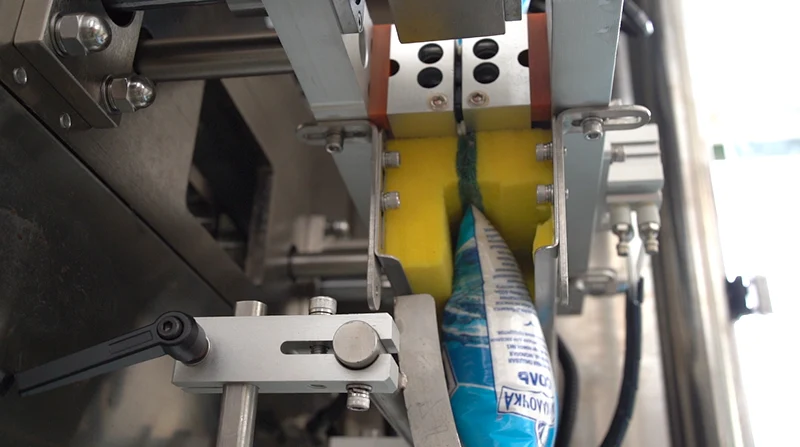
    The machine set is not a loose collection of modules. It is a chain of physical fixes. The dimpled stainless forming shoulder reduces film drag, the guided transfer sections keep bags aligned, and the foam compression stage removes excess air before closing. That is how the line keeps salt bags flatter and easier to stitch.

    The transfer evidence is visible in the machine structure itself. The conveyor and guide sections use steel frames, controlled lanes, and guarded motion paths so bags can move in sequence instead of bunching up. For a plant packaging salt, grains, or other bulk products, that means fewer bag jams and less rework after filling.

    Why it matters: the line solves the problem where product looks full but is still too puffy or too uneven for a stable sewing operation.
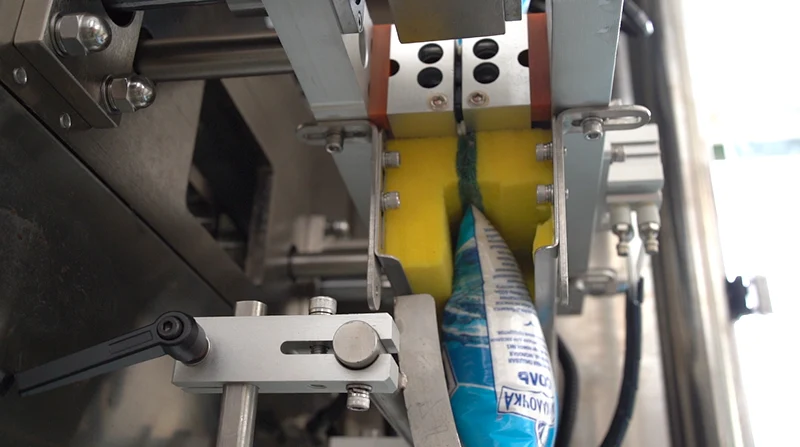
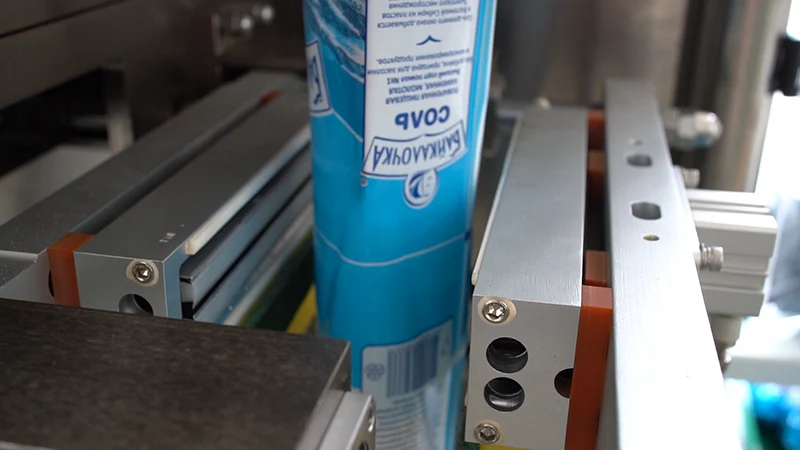
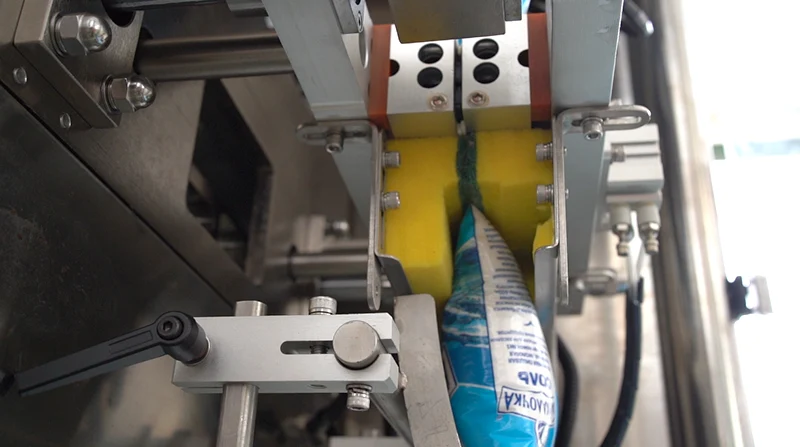
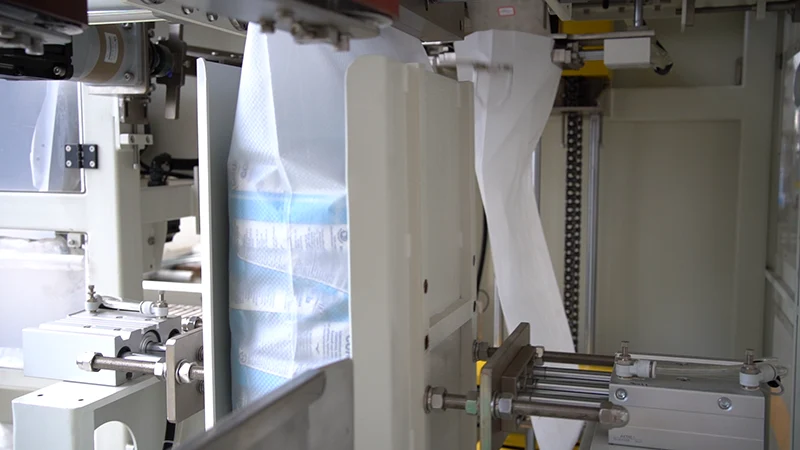
    Soft polyurethane foam guide mechanism on VFFS machine to flatten salt bags
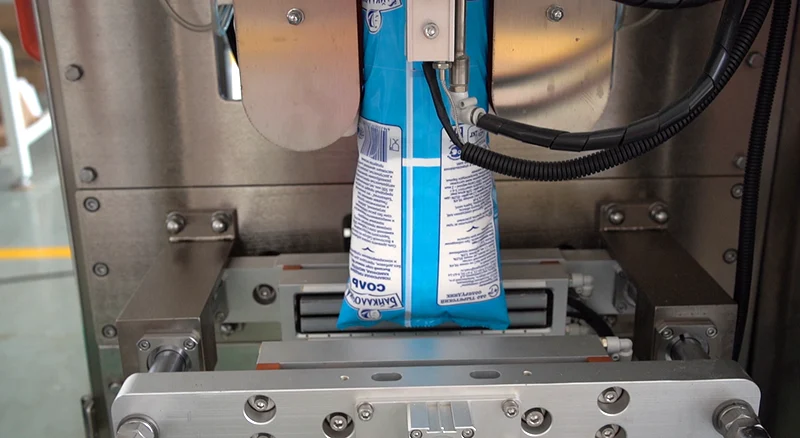
    Open Teflon-coated horizontal sealing jaws of VFFS machine with salt bag

    Structure details that support the final result

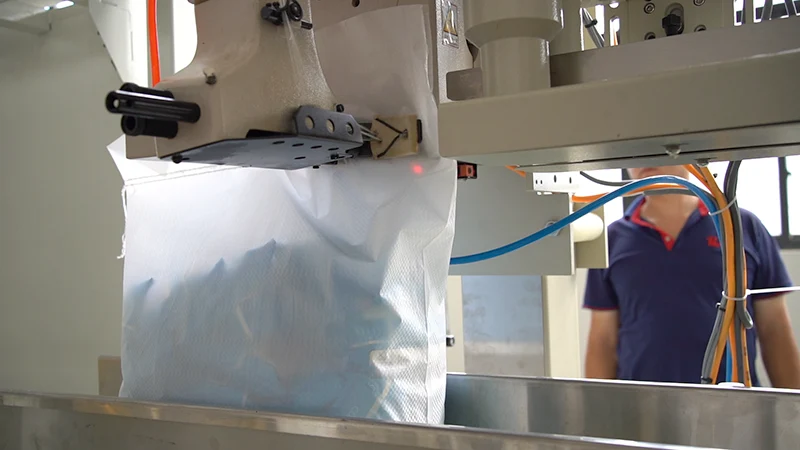
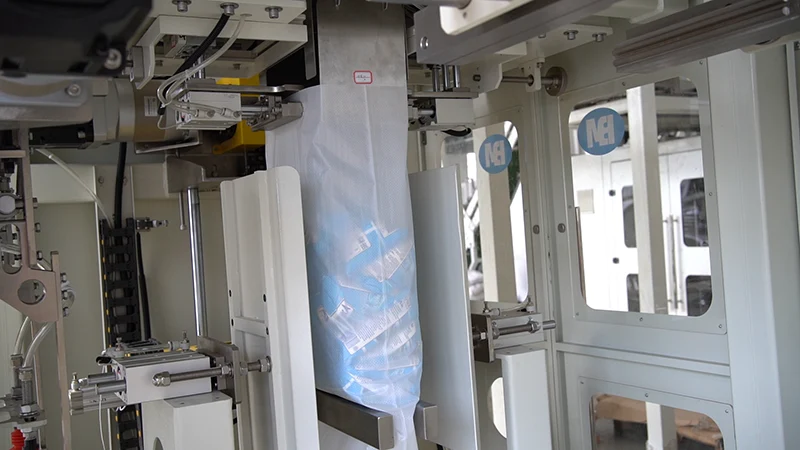
    The transfer-to-sewing section is where the Bibpu line shows its practical value. After the small bags are formed and sealed, the secondary bagging station holds the woven PP sack open, receives the products, compresses the load, and then feeds the bag mouth into the sewing head with a stable geometry.

    The result is not just better packaging appearance. It is cleaner bag insertion, steadier compression before closure, and a more consistent sewing path. That reduces the chance of loose top edges, trapped air, and awkward hand corrections at the end of the line.
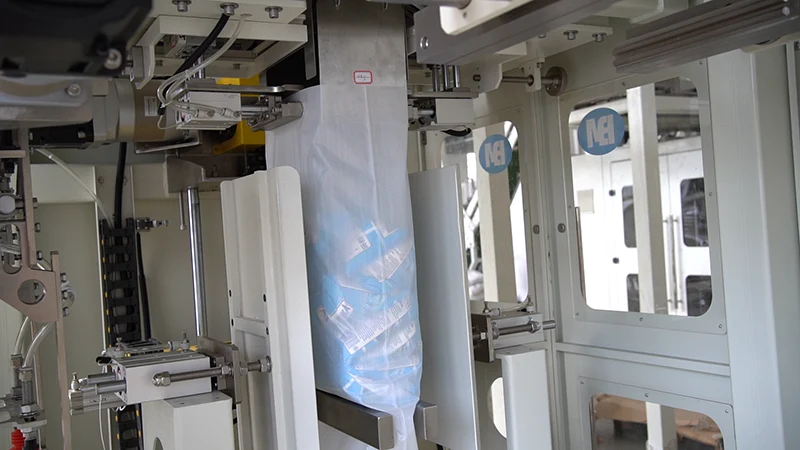
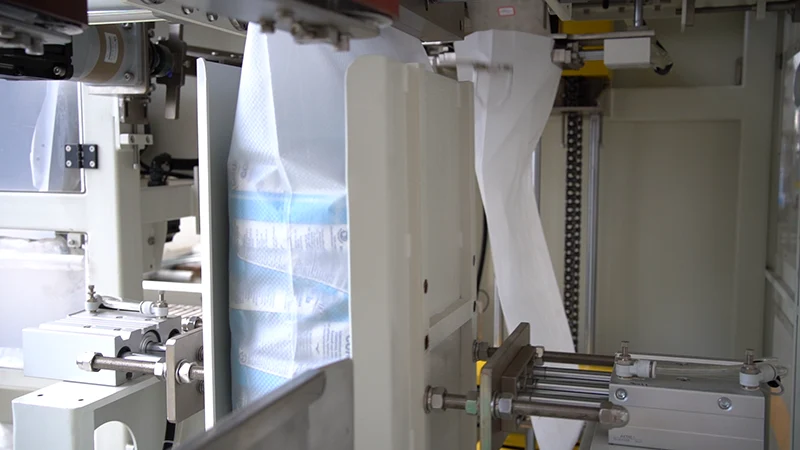
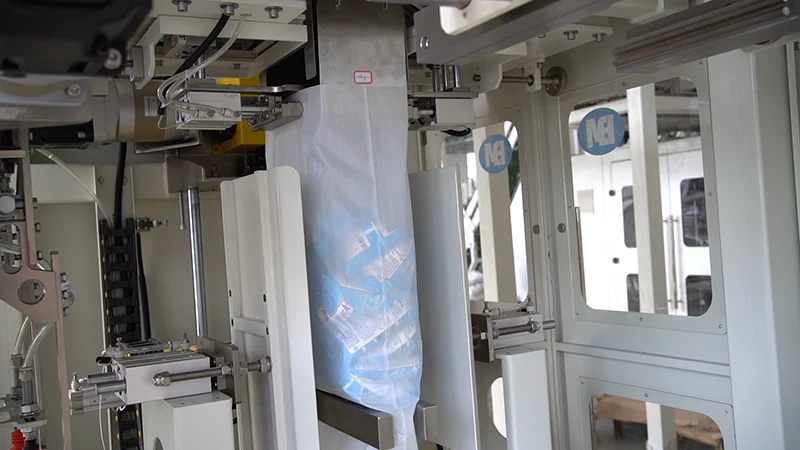
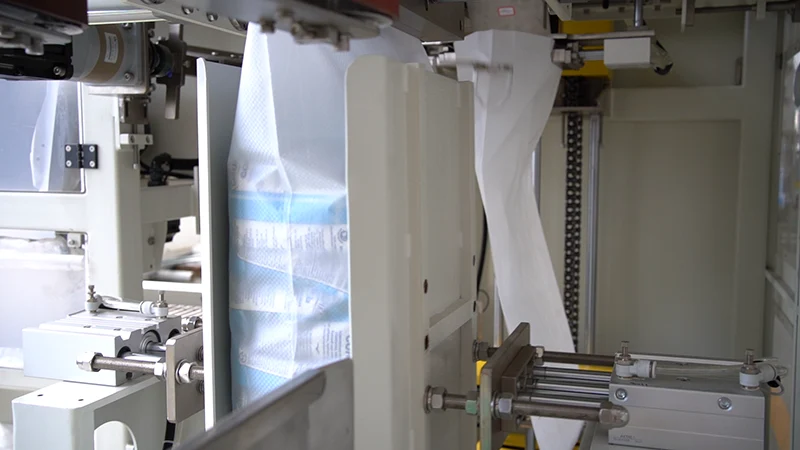
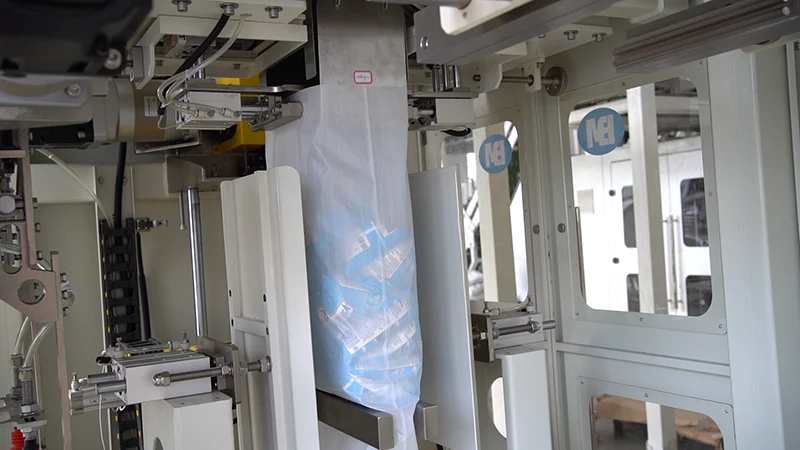
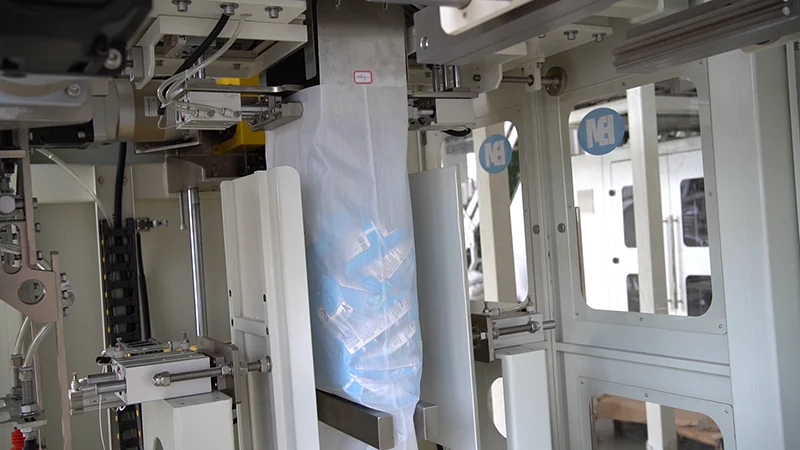
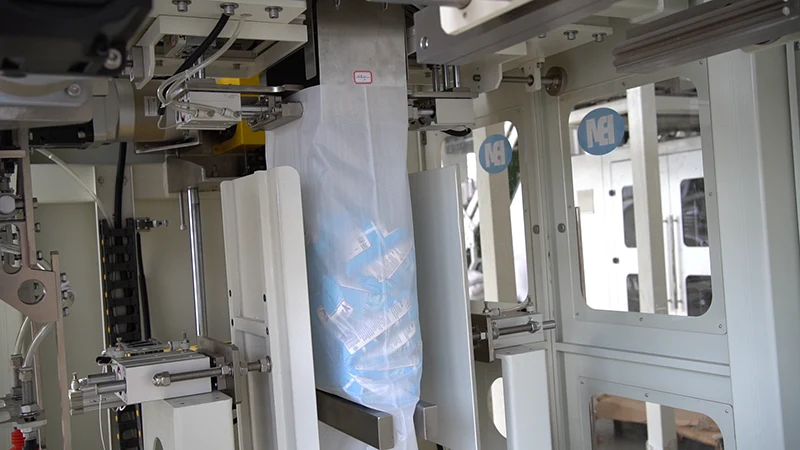
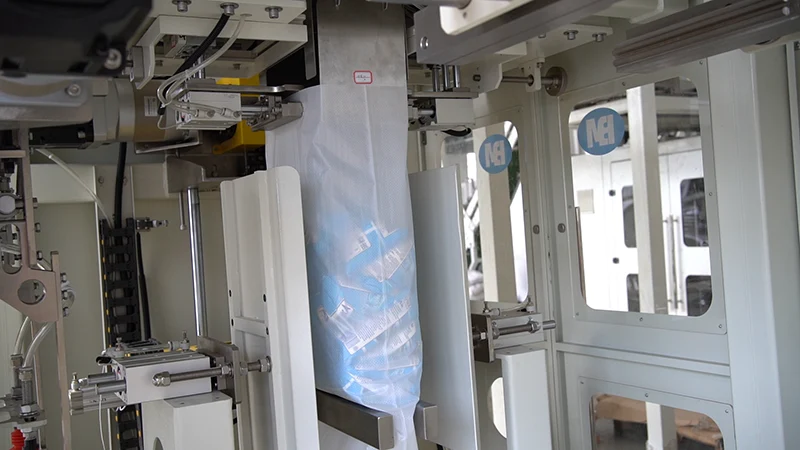
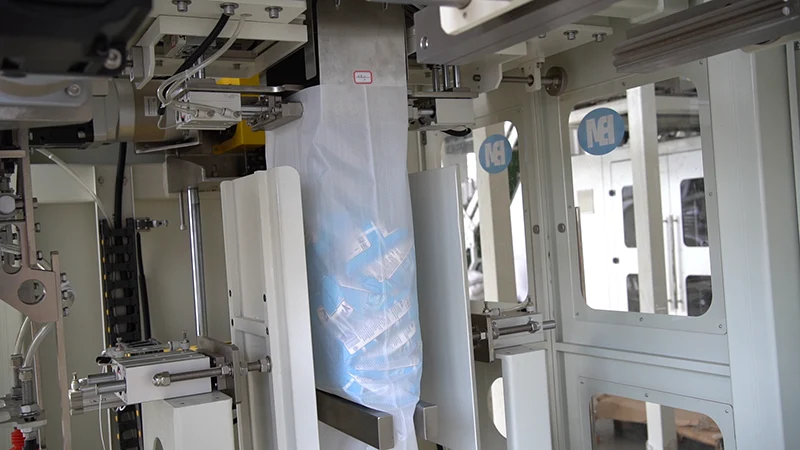
    Refined salt packets falling into secondary woven PP bag held by pneumatic clamps
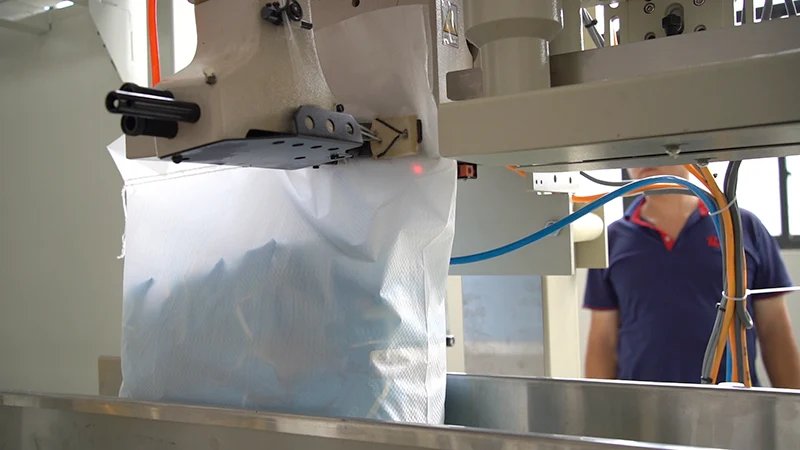
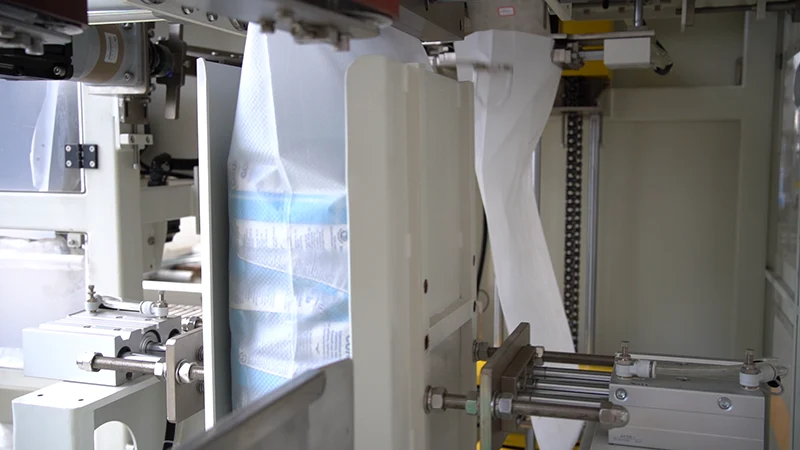
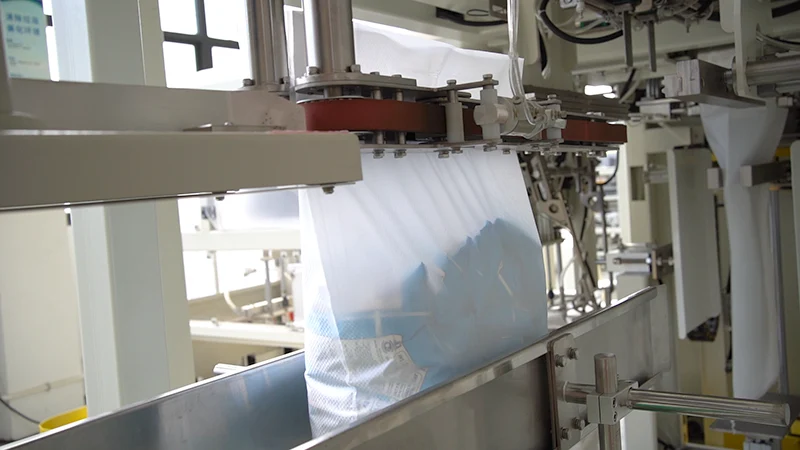
    Loaded secondary woven PP sack compressed by pneumatic side clamping plates
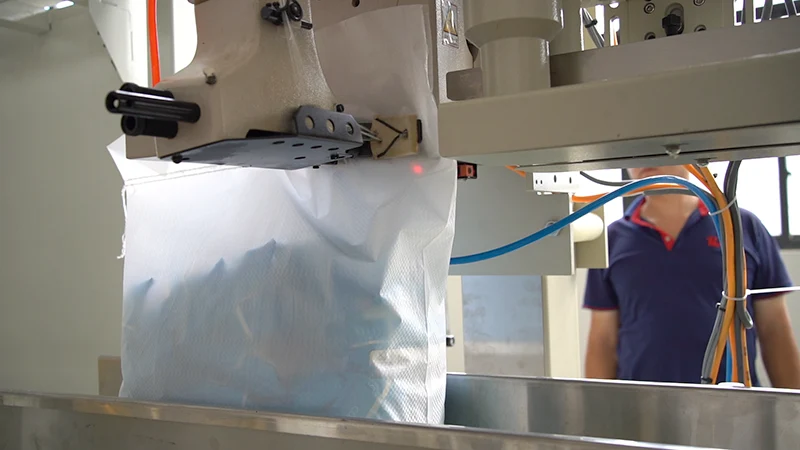
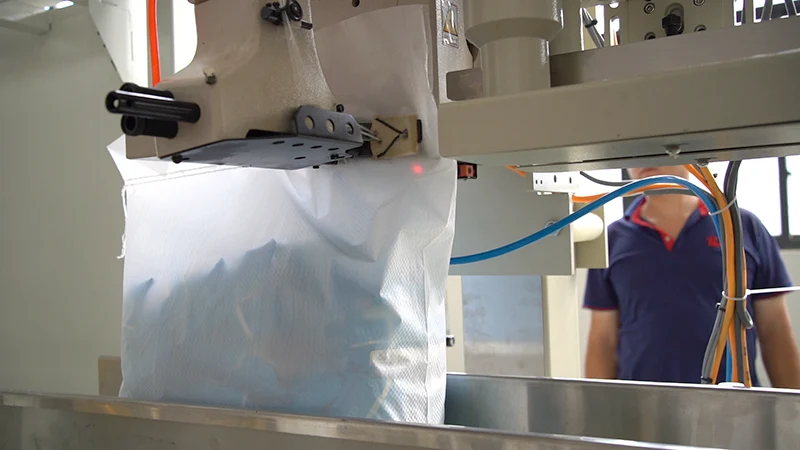
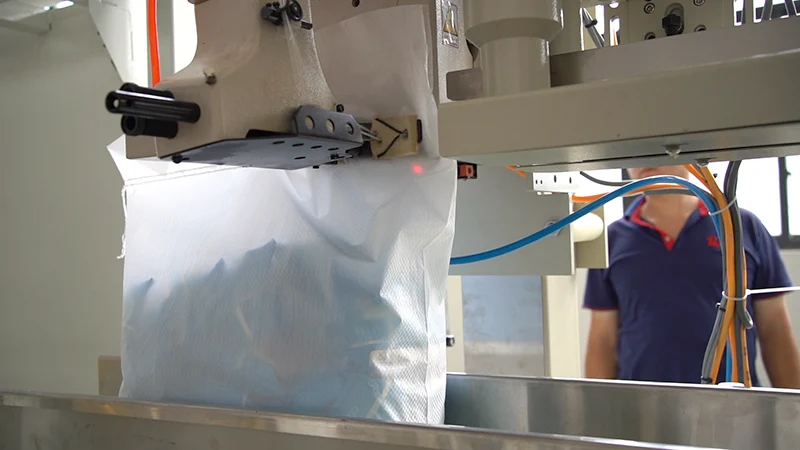
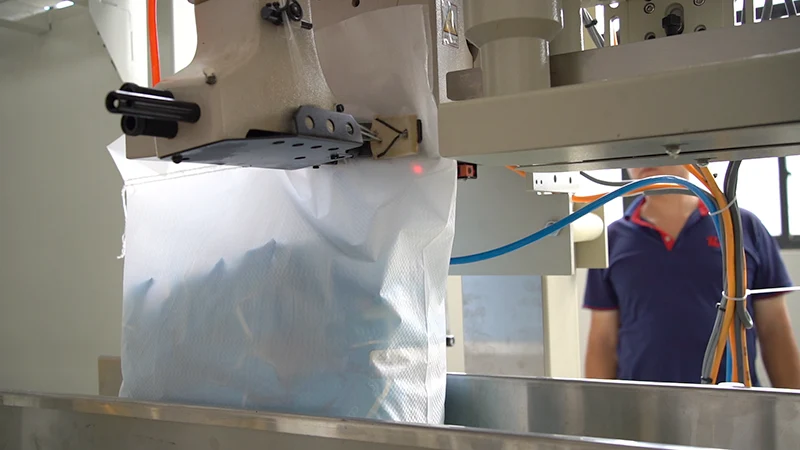
    Industrial Newlong sewing machine head stitching the opening of filled woven sack
    Line stageWhat the image showsWhy it matters for bulk products
    FormingDimpled stainless shoulder and controlled film trackingReduces sticking and helps the film run more evenly
    FlatteningFoam guide and compression section before closingRemoves excess air and improves bag shape
    ClosingSecondary bag handling and sewing headKeeps the final stitch path stable and repeatable

    Final result: less rework, steadier handoff, better line balance

    For salt and other free-flowing materials, Bibpu turns packing into a controlled process instead of a manual rescue operation. The line keeps transfer cleaner, the bags flatter, and the closing station more stable from fill to sewn finish.

    Talk to BPM about your bulk products line
  • Bibpu Secondary Packaging Automation for Salt Bag Compression, Alignment, and Sewing Consistency

    Bibpu Secondary Packaging Automation for Salt Bag Compression, Alignment, and Sewing Consistency

    Secondary packaging automation for salt and woven sacks

    Bibpu Secondary Packaging Automation for Salt Bag Compression, Alignment, and Sewing Consistency

    When filled salt bags move out of the primary packer, the line usually fails at the handoff: bags carry trapped air, edges drift on the conveyor, and the sewing station gets an uneven feed. Bibpu is built to keep that transfer stable with welded conveyor frames, guided accumulation, corrosion-resistant contact parts, and a packaging flow that stays controlled from alignment to final closure.

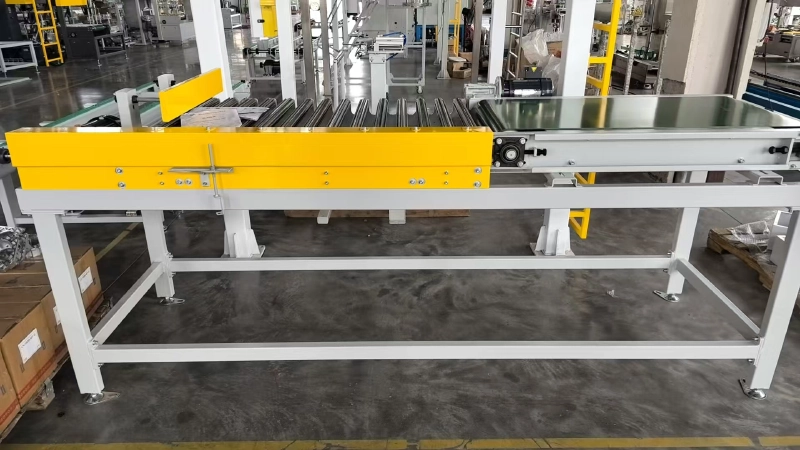
    Steel frame flat belt conveyor with yellow safety steel sheet guards for salt bag secondary packaging automation

    Why the handoff becomes unstable after filling

    A secondary packaging line for salt bags looks simple until the bags start arriving at speed. The packer may discharge a decent pillow bag, but the product still needs to be transferred, grouped, flattened, aligned, and presented to the sewing station without twisting the sack mouth or letting the load shift. If the conveyor surface is inconsistent, or if the guide rails are too loose, the whole line starts to drift.

    That is why the front half of the Bibpu system is designed around controlled movement rather than brute speed. The line uses a welded steel frame, safety guarding, and conveyor modules that keep the bag path steady before the sewing or outer-sack closing step. For salt applications, that matters because every extra burst of trapped air or every sideways slip increases the chance of poor closure, bulging stacks, and unstable pallet build-up later.

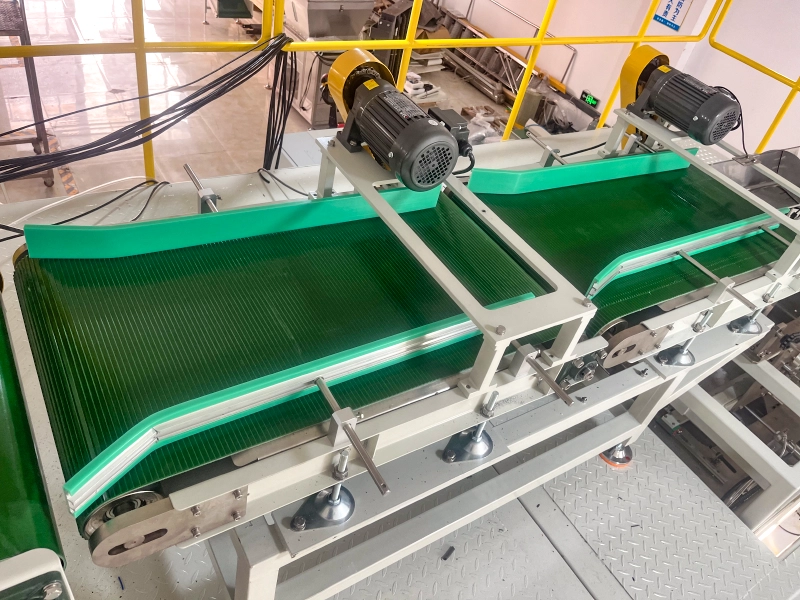
    Parallel green rib belt conveyors with top-mounted AC motors and adjustable guides for stable salt bag transfer
    Common pain point:

    Filled woven sacks or secondary bags often leave the line with uneven top edges, soft corners, and too much internal air. Once that happens, the sewing head or bag-closing station has to fight the product instead of closing it cleanly.

    What makes Bibpu fit this job

    Bibpu solves the problem with hardware that treats the transfer path like a controlled process. The contact side of the line uses UNS S31603 316L corrosion-resistant stainless steel where product exposure demands it, while the structure relies on Q235B welded framing for rigidity. That combination is practical for salt, where humidity and corrosion are part of the operating reality, but stiffness and alignment are just as important as material selection.

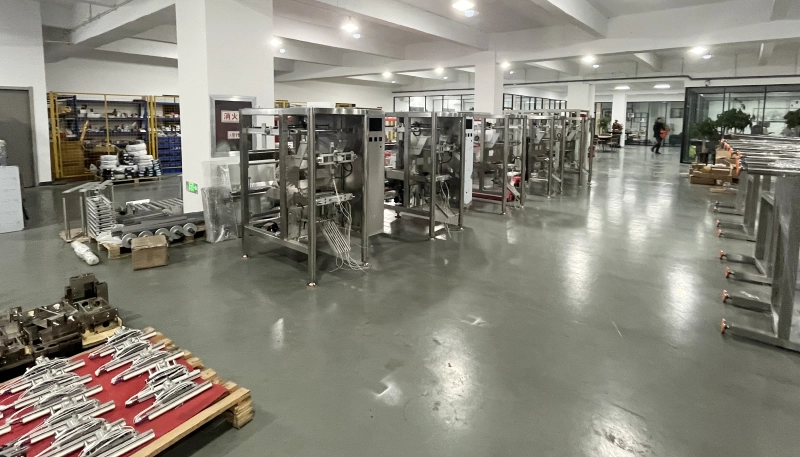
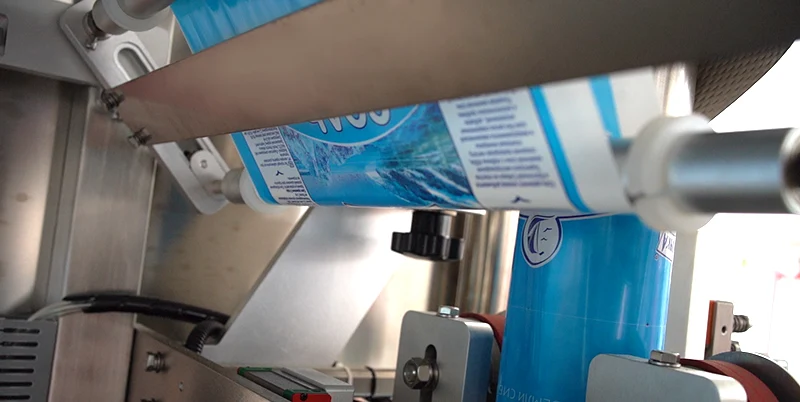
    The image set shows the line from multiple angles: the workshop assembly view confirms the machine is built as a complete modular system, the dimpled forming shoulder reduces film sticking, and the film guide rollers give the operator a straightforward way to keep the web tracking centered. In other words, the line is not trying to fix a bad transfer with software only. It is using mechanical geometry, guide surfaces, and repeatable supports to make the bags behave before the final closure point.

    Engineering note: when the line keeps the bag mouth aligned and the bag body flattened before the sewing station, the closure becomes faster, cleaner, and less dependent on constant manual intervention.

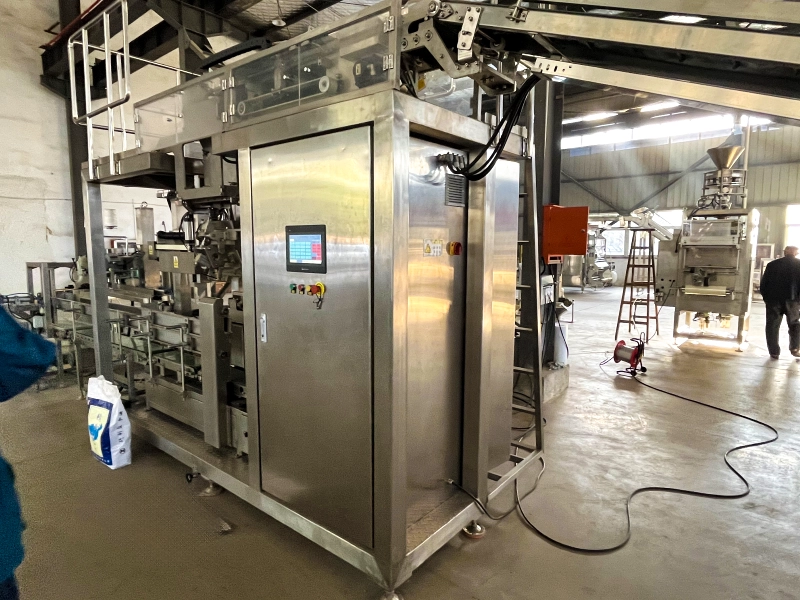
    Assembly line of vertical form fill seal machines with stainless steel frames in workshop for Bibpu secondary packaging automation
    Dimpled stainless steel forming shoulder of VFFS machine to reduce film sticking in salt packaging
    Aluminum film guide rollers and manual alignment collar on VFFS machine for stable bag tracking

    How the line turns the problem into a stable result

    The final result is not just a cleaner-looking bag. It is a line that produces steadier transfer, more consistent sealing or sewing presentation, and a better foundation for downstream palletizing. Once the bag body is properly flattened and guided, the operator spends less time correcting drift and less time reacting to random jams.

    For salt packaging, that stability matters at three levels. First, the product keeps moving through the line without excessive bouncing or twisting. Second, the bag mouth arrives at the closing station in a more predictable position. Third, the finished packs stack more neatly, which helps the warehouse later when the bags must be bundled, transported, and loaded. The system is therefore not only a packaging machine; it is a process control layer for the full secondary packing chain.

    Line issueBibpu design responseResult on the floor
    Bag drift after dischargeGuided conveyor modules with rigid welded supportCleaner transfer and fewer manual corrections
    Bulging or trapped air before closingFlattening geometry and stable presentation before sewingMore reliable closure quality
    Moisture and corrosion risk in salt service316L contact-side stainless steel where exposure mattersBetter long-term durability in harsh environments
    Unstable stack-up downstreamControlled alignment and repeatable bag handlingNeater pallet build and easier logistics

    For plants that want to move from manual correction to repeatable output, this is the key change. The equipment layout is built to support the operator, protect the bag, and keep the line moving at a steady pace instead of forcing the crew to rescue every misaligned sack.

    Need a secondary packaging line that keeps salt bags aligned?

    Tell us your bag size, target throughput, and whether the final step is sewing, outer-sack compression, or pallet-ready grouping. We can match the conveyor flow, material exposure points, and closing station to the way your plant actually runs.

    Contact BPMPack
  • Bibpu Secondary Packaging Automation for Salt Bag Transfer, Compression, and Sewing Stability

    Bibpu Secondary Packaging Automation for Salt Bag Transfer, Compression, and Sewing Stability

    BIBPU secondary packaging automation

    Bibpu Secondary Packaging Automation for Salt Bag Transfer, Compression, and Sewing Stability

    When bags leave the filling machine, the real risk starts: a loose transfer, a bulging woven sack, or a misaligned mouth can slow the line and create rework. Bibpu secondary packaging automation is built to keep that handoff controlled from the conveyor to the sewing head, so the finished sack stays square, compact, and ready for shipment.

    Automated packaging workshop with inclined belt conveyors, steel platform, and multi-station control cabinets

    Why secondary packaging lines struggle at the transfer point

    In a salt or bulk-products plant, the upstream machine may run well, but the handoff to the secondary bagging station often exposes the weakest part of the line. Bags arrive with trapped air, an uneven profile, or a small twist in the body. Once that happens, the sewing station has to fight the product instead of closing it cleanly.

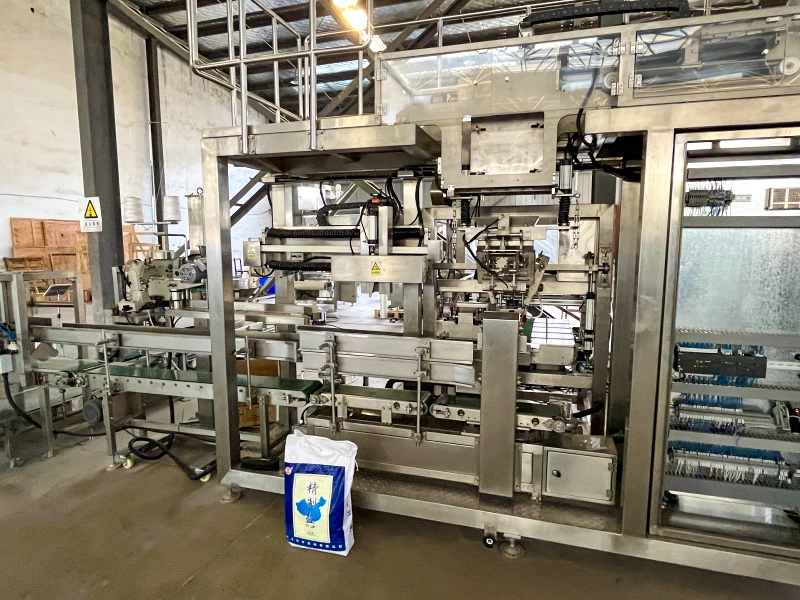
    Bibpu solves that problem with a line layout that keeps feeding, orientation, and operator access in one controlled flow. The workshop image shows the full system logic: conveyors, platform access, and centralized electrical control all positioned to reduce the distance between bag discharge and the next handling step.

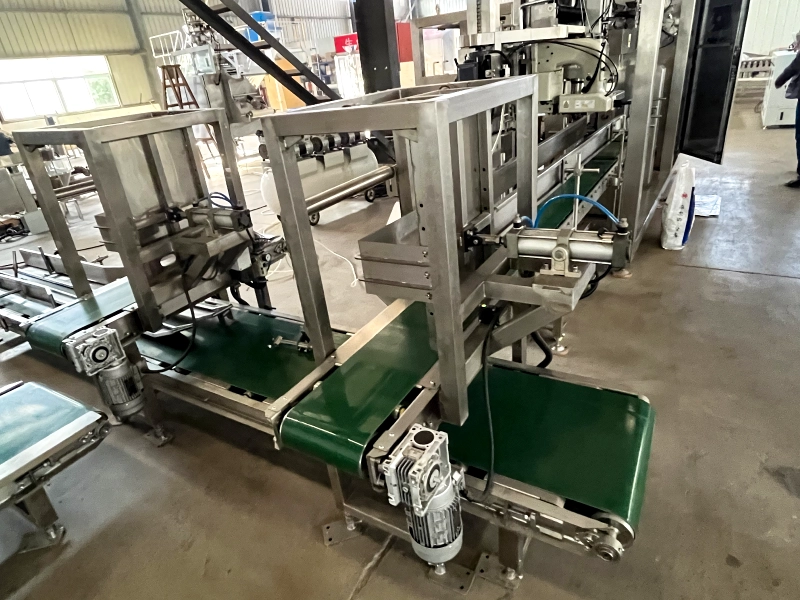
    Stainless steel conveyor transfer unit with pneumatic pusher and dual green belt sections
    Common pain point

    If the bag body is not squared up before sewing, the mouth folds, the stitch line drifts, and the sack leaves the station with a weak seal or poor stacking shape. That creates avoidable rework, especially when the customer needs stable pallets and clean warehouse handling.

    How Bibpu keeps the sack centered before the sewing head

    The transfer unit uses dual belt sections and a pneumatic pusher to correct direction before the bag reaches the next station. This is not cosmetic engineering; it is how the line removes random bag motion. The push-and-carry sequence gives the bag a repeatable path, which is the key to consistent secondary packaging output.

    For woven-sack work, the machine must also control the volume inside the bag. That is why Bibpu includes a dedicated holding zone that opens the PP sack, accepts the product load, and then compresses the body before closure. The result is a flatter sack profile, cleaner sewing access, and less strain on the closure seam.

    Refined salt packets falling into secondary woven PP bag held by pneumatic clamps

    Compression and deaeration make the final stitch dependable

    Once the sack is filled, the next challenge is not just to close it, but to close it on a stable shape. The side compression station pushes the bag walls into a more uniform geometry, which helps the air escape and keeps the mouth line from springing open under the needle.

    This matters most for secondary packaging automation because a loose bag can look acceptable in process and still fail at palletizing. A compact sack stacks better, moves cleaner through warehouse handling, and reduces the chance of load shift in transit. The compression image is the proof point: the bag is being shaped before it reaches the sewing head, not after the damage is done.

    Loaded secondary woven PP sack compressed by pneumatic side clamping plates

    From controlled bag form to a clean stitched closure

    The final step is a sewing station that receives a predictable bag shape. Bibpu uses an industrial sewing head to close the mouth after transfer and compression are complete. At that point, the line is no longer dealing with a soft, shifting sack. It is working with a settled, aligned package that can be stitched faster and more consistently.

    The outcome is simple: fewer jam points, fewer unstable bags, and less operator intervention. For salt, grains, resin pellets, and other bulk products, that means the secondary packaging cell can sustain throughput without sacrificing bag quality.

    Industrial Newlong sewing machine head stitching the opening of filled woven sack

    What this automation delivers in day-to-day production

    In practical terms, Bibpu secondary packaging automation converts a fragile handoff into a stable process chain. The upstream bag is guided, the secondary sack is held open, the load is compacted, and the stitch is applied on a controlled mouth profile. That sequence is what keeps the line predictable.

    For plants that care about shipment quality as much as output rate, the benefit is visible in the final pallet: bags sit flatter, corners stay cleaner, and the finished stack behaves better in storage and transport. The line stops depending on operator timing and starts depending on engineered motion.

    Bottom line: Bibpu is a fit when the old problem is not filling capacity, but transfer quality. If the bag must move from machine to machine, stay square, and finish with a reliable sewn closure, the secondary packaging cell needs this kind of controlled mechanical sequence.

    StageWhat Bibpu controlsProduction result
    TransferConveyor alignment and pneumatic push guidanceLess twisting and better bag orientation
    Bag formingSecondary bag opening and support clampsCleaner filling and easier closure access
    CompressionSide squeeze and deaeration before sewingFlatter sack profile and stronger stacking
    SealingIndustrial sewing head closureStable stitched mouth and cleaner finished package

    Need a cleaner secondary packaging handoff?

    Talk to BPM if your line needs better control between filling, transfer, compression, and sewing. Bibpu is designed for the step where product quality is often lost and recovered only by rework.

    Contact BPM
  • Bibpu Secondary Packaging Automation for Cleaner Transfer from Filling to Sewing

    Bibpu Secondary Packaging Automation for Cleaner Transfer from Filling to Sewing

    Secondary packaging automation for woven-sack transfer

    Bibpu Secondary Packaging Automation for Cleaner Transfer from Filling to Sewing

    For salt plants and bulk-product packers, the hard part is often not the fill itself. The real bottleneck is the handoff from a filled bag to a stable sewing station. Bibpu secondary packaging automation keeps that transfer cleaner, steadier, and easier to control by combining controlled bag support, anti-bulge compression, and a sewing-ready conveyor path.

    Automated packaging workshop with inclined belt conveyors, steel platform, and multi-station control cabinets

    Why secondary packaging becomes unstable after filling

    In salt and powder operations, a filled inner bag or small pouch usually leaves the filling unit in a condition that is easy to disturb: the bag is soft, trapped air makes it bulge, and any misalignment at the transfer point turns into a problem at the sewing head. When the line runs fast, the handoff zone starts to define the quality of the whole secondary packaging line.

    That is why the package transfer stage needs more than a simple conveyor. It needs a guided path, a reliable bag-supporting mechanism, and a way to control the bag profile before the sewing machine closes the top. Bibpu is built around that exact requirement, so the line can keep moving without forcing operators to re-square every bag by hand.

    Internal mechanisms of bag-in-bag machine with pneumatic cylinder guides and guard doors
    Typical pain point

    Most transfer instability comes from three things: bag bounce, uneven fill profile, and air that is still trapped inside the outer sack before sewing. That combination causes crooked feeding, poor seam alignment, and extra rework at the discharge end.

    Why Bibpu fits this use case

    Bibpu secondary packaging automation solves the transfer problem with a physical system, not a guess. The line can use pneumatic clamps to hold the inner packs, side compression to flatten the filled woven sack, and foam or guide elements to remove excess volume before the bag reaches the sewing station. This is what makes the transfer path predictable.

    The result is a cleaner handoff to sewing, less operator intervention, and a more stable output flow for bulk products such as salt, granules, and other free-flowing materials. The same logic also helps when plants need a reliable line for secondary packaging, bag grouping, and outbound handling.

    Field note: in real production, the most valuable improvement is not only speed. It is the drop in manual correction work between filling and sewing, because the line stays aligned at the point where quality is usually lost.

    Structure and parameters that make the transfer stable

    The machine structure matters because every stage in the transfer path contributes to the final seam. A controlled feed section keeps the bag in position, the support clamps keep the load from wandering, and the compression section shapes the sack before the sewing head takes over. In the Bibpu line, the contact parts are designed for corrosion resistance, which is important for salt and other aggressive materials.

    For example, the line can use stainless steel hoppers, guide hardware, and anti-corrosion components such as UNS S31603 (316L) on product-contact surfaces. That is not cosmetic. It helps the line survive humid environments, reduce maintenance risk, and keep the bag path clean enough for continuous operation.

    Transfer problemBibpu responseOperational result
    Bag bulging before sewingPneumatic compression and foam flattening at the discharge sectionCleaner top edge and better seam alignment
    Unstable bag handoffGuided conveyor path with support clamps and controlled transfer geometrySteadier feed into the sewing head
    Salt-room corrosion risk316L stainless contact parts and corrosion-conscious constructionLonger service life in humid production areas
    Dosing hoppers of packaging line with automated bucket elevator conveyor in background
    Refined salt packets falling into secondary woven PP bag held by pneumatic clamps

    What the final output looks like on the shop floor

    When the transfer path is stable, the downstream sewing head does not have to fight a crooked bag or an overfilled sack. Operators see fewer corrective stops, the seam line stays cleaner, and the bag stack leaving the line is easier to palletize. That is the practical value of secondary packaging automation: fewer interruptions, better consistency, and a more controlled handoff from process to process.

    For plants that want to reduce manual correction while keeping throughput high, Bibpu provides a clear route from filling to sewing. The line is not only a packaging machine. It is a transfer system designed to make the second packaging step behave like a controlled process instead of a manual rescue operation.

    Pneumatic sponge guide plate compressing the bulging of plastic bag before sealing
    Industrial Newlong sewing machine head stitching the opening of filled woven sack

    Need a cleaner transfer path before sewing?

    If your current line loses time at the handoff between filling and sewing, Bibpu can be configured for a steadier secondary packaging flow. Tell us the bag type, target speed, and the level of automation you need, and we will match the transfer structure to the process.

    Request a secondary packaging line review
  • Bibpu Secondary Packaging Automation for a Cleaner Handoff to Sewing

    Bibpu Secondary Packaging Automation for a Cleaner Handoff to Sewing

    BIBPU / SECONDARY PACKAGING

    Bibpu Secondary Packaging Automation for Salt Lines That Need a Cleaner Handoff to Sewing

    When loose bags, uneven stack heights, and air trapped in the sack turn every transfer into a rework point, the line needs more than a conveyor. Bibpu combines bag forming, secondary packing, compression, and sewing into one controlled path so the handoff stays stable before the sack leaves the line.

    Automated packaging workshop with inclined belt conveyors, steel platform, and multi-station control cabinets

    Why salt and woven-sack transfers become unstable in older packing rooms

    In many bulk-product plants, the problem is not the filling machine alone. The trouble starts after the primary pack is made: bags arrive with inconsistent shape, the sack opening drifts out of line, and workers have to rescue the load before sewing. That creates slowdowns, spills, and a final package that looks different from one batch to the next.

    Bibpu is built around that exact pain point. The line links the filling section to a secondary bagging station, then adds compression, top guiding, and a dedicated sewing step. Instead of handing an unstable sack to an operator, the system gives the sack a fixed route and a fixed posture before closure.

    Row of four BPM vertical form fill seal machines with stainless steel hoppers
    Typical failure mode

    Loose sack transfer, trapped air, poor alignment at the mouth, and manual correction before sewing all reduce throughput and increase damage risk.

    What Bibpu changes in the pack-to-sew sequence

    The first control point is product flow. The VFFS and dosing section keeps the filling rhythm steady, so the downstream secondary packaging station is not forced to absorb random surges. The second control point is sack capture. Pneumatic clamps hold the woven bag in position while the inner bags are dropped in, which keeps the load centered instead of sliding sideways inside the sack.

    The third control point is shape recovery. The foam flattening stage removes excess air before closure, which matters because a swollen sack does not stack well and it does not feed cleanly into the sewing head. Bibpu then uses a guided opening path and a heavy-duty sewing head so the final closure happens on a flatter, more predictable bag mouth.

    Refined salt packets falling into secondary woven PP bag held by pneumatic clamps

    Practical result: the line does not just package salt; it stabilizes the handoff between filling and sewing so the sack can move downstream with less manual correction.

    Structural details that explain the final result

    The value of Bibpu is visible in the structure. The conveyor and transfer sections are built to keep the bag centered, the compression device removes bulk before sewing, and the stitch station closes the sack with industrial consistency. The machine controls and safety enclosures also matter because a stable line is easier to keep stable when operators can monitor it clearly and intervene only when needed.

    For plants handling salt or similar granular materials, the result is a cleaner transfer path, less wear on the bag mouth, and fewer bags rejected for poor presentation. The package leaves the line in a shape that is easier to palletize and easier to store, which is the whole point of secondary packaging automation.

    Soft polyurethane foam guide mechanism on VFFS machine to flatten salt bags
    Industrial Newlong sewing machine head stitching the opening of filled woven sack
    Old stepBibpu mechanismResult
    Loose manual sack handlingPneumatic clamping and guided bag positioningCleaner handoff before sewing
    Bulging, air-filled bagsFoam compression and flatteningBetter stackability and less rework
    Uneven final closureIndustrial sewing head with controlled feedMore consistent sewn sacks

    Need a steadier secondary packaging line before sewing?

    Bibpu is a good fit when your operation needs to move from bag filling to sack closure without losing shape, alignment, or throughput. If you are planning a salt line, we can map the transfer path, compression stage, and sewing station into one workable layout.

    Request a layout discussion
  • Bibpu Secondary Packaging Automation for Cleaner Salt Transfer Before Sewing

    Bibpu Secondary Packaging Automation for Cleaner Salt Transfer Before Sewing

    Secondary packaging line

    Bibpu Secondary Packaging Automation for Cleaner Salt Transfer Before Sewing

    When small salt packs move into a woven secondary sack, the handoff must stay straight, compact, and easy to sew. Bibpu is built to control that transition with guided transfer, pneumatic holding, side compression, and a heavy-duty sewing finish.

    Automated packaging workshop with inclined belt conveyors, steel platform, and multi-station control cabinets for Bibpu secondary packaging automation

    Why the transfer point becomes the weak link

    In a salt line, the primary packs are usually neat enough at the VFFS stage. The problem starts later, when those packs are dropped into a woven secondary bag and then moved toward sewing. If the bag is not held square, the load shifts. If the trapped air is not managed, the sack bulges. If the mouth is not aligned, the sewing head has to fight the bag instead of closing it cleanly.

    Bibpu is aimed at exactly that problem. It is not only a packaging machine set; it is a controlled handoff sequence. The line brings the filled pouches into the bagging station, keeps the woven sack open with pneumatic clamps, then uses side compression to shape the load before the bag reaches the sewing head.

    Refined salt packets falling into a secondary woven PP bag held by pneumatic clamps in a Bibpu bag-in-bag packaging line
    Pain point

    Without controlled holding and compression, secondary sacks arrive at sewing with uneven fill, loose corners, and air pockets. That leads to unstable handling, harder stitching, and a less compact finished bag for palletizing.

    Why Bibpu fits the secondary packaging job

    The strength of the Bibpu concept is mechanical simplicity at each critical point. The woven PP sack is held by pneumatic clamps, which gives the operator a stable opening. The loaded sack is then compressed from the side, so the bag body becomes flatter and more regular before closure. This helps the sewing head do one thing well: stitch a predictable mouth line.

    The line also reflects practical factory discipline. The image set shows the workshop layout, the bag-holding stage, the compression stage, and the Newlong sewing head. That sequence matters because the result is not only a closed sack; it is a cleaner, more transport-ready secondary package with fewer shape defects and less rework downstream.

    Process note: Bibpu is strongest when the line is tuned as a flow from transfer to hold, from hold to compression, and from compression to sewing. Each stage protects the next one.

    Structure-to-result evidence from the line

    The photos do more than illustrate the machine. They show the actual logic of the secondary packaging sequence: guided infeed, stable bag opening, load shaping, and final sewn closure. That is what makes the line suitable for salt plants that want more consistent handoff quality before palletizing.

    Below is a simple breakdown of how each stage supports the final result.

    StageWhat the image showsOperational result
    Infeed and workshop layoutInclined conveyors, platform access, and centralized control cabinetsCleaner line control and easier transfer coordination
    Bag filling and holdingPneumatic clamps supporting the woven sack while salt packs enterStable opening and less bag distortion during loading
    Load shapingSide compression on the filled secondary sackFlatter bag body and better pre-sew geometry
    ClosureIndustrial Newlong sewing head finishing the sack mouthReliable seam closure for the next handling step
    Loaded secondary woven PP sack compressed by pneumatic side clamping plates before sewing in a Bibpu secondary packaging line
    Industrial Newlong sewing machine head stitching the opening of a filled woven sack at the end of a Bibpu secondary packaging line

    Need a cleaner secondary bagging handoff for salt or similar products?

    Bibpu is a practical fit when the main target is stable transfer, controlled bag shaping, and a sewing stage that does not need to compensate for a poorly formed load. If you want the line to move from loose transfer to compact final sack with less rework, this structure is worth reviewing.

    Talk to BPM about the line layout
  • Bibpu Secondary Packaging Automation for Steadier Salt Bag Handoffs Before Sewing

    Bibpu Secondary Packaging Automation for Steadier Salt Bag Handoffs Before Sewing

    Secondary packaging automation for woven-sack lines

    How Bibpu Keeps Salt Bag Handoffs Steadier Before Sewing

    When a line must move small primary packs into a woven secondary sack and send the sack to sewing without bulging, skewing, or rework, the weak point is usually not filling. It is the handoff. Bibpu is built for that exact handoff: controlled grouping, firm clamping, controlled compression, and a guided transfer path that keeps the bag shape usable for the next station.

    Refined salt packets falling into secondary woven PP bag held by pneumatic clamps

    From unstable manual handoff to controlled secondary packing

    In salt and similar bulk-product operations, the old method is usually a mix of manual bag straightening, loose stacking, and a separate sewing step that depends on operator speed. That approach creates three recurring problems: the bag opening shifts out of line, the sack body swells after fill, and the sewing head receives a bag that is already under stress.

    Bibpu addresses that sequence as one continuous job. The line does not only fill a bag; it groups the product, holds the secondary sack open, compresses the loaded sack back into a sewable shape, and moves the mouth to the closing station in a predictable position.

    Loaded secondary woven PP sack compressed by pneumatic side clamping plates
    Why the old setup wastes time

    Without guided clamping and controlled compression, operators spend time re-squaring the sack, the sewing head gets inconsistent mouth alignment, and the finished load is harder to stack. That means more rework, slower throughput, and less stable pallets.

    Why Bibpu fits this secondary packaging job

    The core advantage is mechanical control. Bibpu uses a grouped transfer path, dual-side holding, and a guided feed into sewing so the sack remains square enough to be handled. The photo evidence matters here: the clamping section shows the loaded sack being compressed in a controlled way, not crushed randomly, which is exactly what a sewing station needs before closure.

    For lines handling salt, granules, or other dense products, this matters because the product itself is not fragile in the same way as the package. The real risk is geometry loss. If the sack loses shape, the stitching head has to compensate. Bibpu reduces that burden by stabilizing the bag before the stitch cycle begins.

    Practical takeaway: the line is not designed around a single machine moment. It is designed around the transfer between moments, where most packaging instability usually appears.

    What the transfer, clamp, and sewing stages show in the images

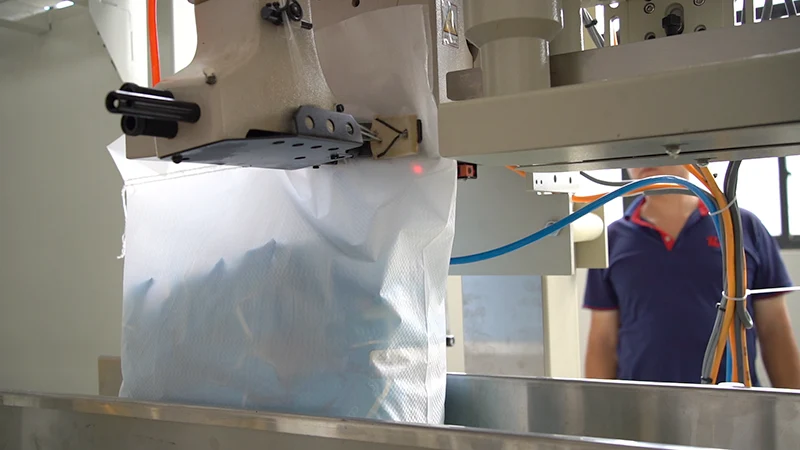
    The conveyor and clamp sequence shows how the system keeps the bag centered before sewing. The belt feeder image shows the mouth of the filled woven bag being held and advanced in a straight path. The sewing-head image then confirms the final step: the bag reaches the stitch station with a controlled opening and a clean feed angle.

    This is the key result buyers usually want from secondary packaging automation: fewer corrections at the last station, a more regular bag shape after fill, and a closure process that can keep up with the upstream packing rhythm. In simple terms, Bibpu turns the weak link of the line into a managed step.

    Top opening of filled woven bag clamped by dual belt feeders to sewing head
    Industrial Newlong sewing machine head stitching the opening of filled woven sack
    StageOld methodBibpu result
    Bag handoffManual straightening and inconsistent positioningGrouped transfer with guided alignment
    Sack shapeBulging bag body before closureControlled compression before sewing
    Closure stationOperator-dependent feed into sewingStable feed into the stitch head
    Final outcomeMore rework and uneven pallet geometryCleaner handoff, steadier closure, easier stacking

    When the bag must reach sewing in shape, control the handoff

    Bibpu is a good fit when the line needs secondary packaging automation that does more than fill. It groups the product, stabilizes the loaded sack, and feeds the closure station with a bag that is much easier to sew, stack, and ship.

    Request a packaging line discussion
  • Bibpu Secondary Packaging Automation for Stable Salt Bag Handoffs Before Sewing

    Bibpu Secondary Packaging Automation for Stable Salt Bag Handoffs Before Sewing

    Secondary packaging line / salt bag handoff

    How a Salt Plant Stabilized Secondary Packaging Handoffs Before Sewing with Bibpu

    When a salt producer moves from small primary pouches into woven-sack secondary packaging, the trouble usually starts at the handoff. Bags arrive unevenly, corners catch, excess air remains inside, and sewing gets blamed for a problem that actually begins upstream. This Bibpu line is built to keep that transfer steady, control the bag shape, and feed a cleaner opening into the sewing station.

    Automated packaging workshop with inclined belt conveyors, steel platform, and multi-station control cabinets

    Why secondary packaging becomes unstable in real salt plants

    In a salt line, the primary bag is often already finished well enough. The real issue appears when several small bags must be collected, guided, compressed, and placed into a woven sack before sewing. If the transfer path is too open, the bags collide, the sack mouth drifts out of square, and the operator has to straighten the load by hand. That manual correction adds labor and creates inconsistent bag geometry.

    Bibpu solves that by treating secondary packaging as a controlled mechanical process, not a loose material handling problem. The line uses guided conveying, stable support, and controlled compression so the sack arrives at sewing in a repeatable position. That is why the workshop layout, electrical control, and transfer modules matter as much as the sewing head itself.

    Stainless steel electrical control cabinet with Siemens touch HMI and tower light
    Typical pain point:

    Loose transfer, bag deformation, excess air, and sewing instability often come from poor upstream guidance rather than from the sealer itself.

    What makes the Bibpu structure fit this job

    The line is organized around stable movement and predictable bag shape. The forming and transfer sections keep the bags centered. The guided secondary bag fill stage supports the woven sack while the pouches drop in. After that, the compression and de-aeration sections flatten the load so the sewing head can close a cleaner mouth with less stress on the material.

    The forming shoulder shown in the line is not just a cover part. Its dimpled stainless surface reduces film sticking and resistance, which helps the packaging flow stay smoother in humid conditions. That matters in salt environments because moisture and residual fines can easily turn a normal transfer point into a drag point. By the time the bag reaches the sewing area, the geometry is already under control.

    Practical insight: when the sack shape is stabilized before sewing, the downstream machine no longer has to compensate for a bad upstream transfer. The result is better seam consistency and less rework.

    Dimpled stainless steel forming shoulder of VFFS machine to reduce film sticking

    How the line turns handoff problems into measurable output

    Once the primary pouches are collected, the secondary sack is held open by pneumatic clamps, filled in a controlled way, and then compressed so the internal voids are reduced before sewing. This is what prevents the bag from bulging at the mouth or wandering on the conveyor. The result is a cleaner feed into the bag closer and a more reliable final closure.

    The sewing head then works on a load that is already squared and de-aerated. That changes the whole process. Instead of forcing the operator to rescue every third bag, the line keeps the mouth aligned and the stitch path steady. For a salt plant, that means fewer interruptions, less manual correction, and more consistent output per shift.

    Observed issueBibpu responseResult
    Uneven bag arrival before sewingGuided transfer and stable line layoutCleaner handoff into the sewing station
    Bulging woven sack and trapped airPneumatic holding plus compression/de-aerationFlatter bag shape and better stack behavior
    Inconsistent seam qualityControlled upstream geometry before closureMore repeatable sewing performance
    Refined salt packets falling into secondary woven PP bag held by pneumatic clamps

    Why the final sewing stage becomes more reliable

    The sewing station is often judged as the bottleneck, but in many lines it is only exposing the weakness of the previous steps. Bibpu improves the whole chain by keeping the sack mouth flat, the fill level steady, and the bag body compact. That is especially important for woven sacks used in salt handling, where the load has to travel, stack, and remain neat after closure.

    With the feed path stabilized and the bag geometry already corrected, the final sewing head can do one job well: close the bag cleanly and consistently. That gives the plant a more predictable end-of-line result, stronger throughput stability, and less dependence on manual bag straightening.

    Industrial Newlong sewing machine head stitching the opening of filled woven sack

    Need a steadier secondary packaging handoff?

    If your salt line still depends on operators to straighten bags before sewing, Bibpu can help move that correction into the machine. The right combination of guided transfer, compression, de-aeration, and sewing control makes the handoff repeatable and the final result easier to manage.

    Talk to BPM Pack
  • Bibpu Secondary Packaging Automation for Stable Woven-Sack Handoffs Before Sewing

    Bibpu Secondary Packaging Automation for Stable Woven-Sack Handoffs Before Sewing

    Secondary packaging automation

    How Bibpu Secondary Packaging Automation Stabilizes Woven-Sack Handoffs Before Sewing

    When a line must move product from filling to compression, then into bag opening and sewing without spill or skew, the weak point is usually not the sealer. It is the handoff. Bibpu is built for that exact gap: a compact secondary packaging workflow that keeps woven sacks square, flatter, and easier to close.

    Automated packaging workshop with inclined belt conveyors, steel platform, and multi-station control cabinets

    1) The real problem is unstable transfer before closing

    In secondary packaging, the bag often arrives from the upstream filling section with trapped air, uneven shoulders, and a soft body shape. That makes the handoff to sewing inconsistent. Bags drift on the conveyor, the mouth opens unevenly, and the operator has to correct the position again and again. In a busy line, that means more rework, slower output, and a higher chance of thread breakage or poor seam alignment.

    Bibpu addresses that stage first. The line is not designed as a single machine in isolation. It is arranged as a sequence: transfer, compression, clamping, feeding, and then sewing. That structure matters because the product stays controlled while it moves, instead of being pushed straight into the closing station with no shape correction.

    Stainless steel packaging line compressed by pneumatic side clamping plates to prepare woven PP sack outputs
    Pain point

    Loose sacks, inconsistent mouth alignment, and excess air before sewing create unstable handoffs and extra manual correction.

    2) Why this layout fits secondary packaging work

    The line uses side compression to square the sack body before the final closing stage. In the image, the compressed output section shows how the product is flattened and stabilized before it reaches the top-feeding path. That is the right approach for woven PP sacks and similar secondary packs because the bag needs geometry control more than raw speed at that point.

    The next handoff is handled by dual belt feeders that grip and guide the bag mouth into the sewing station. That reduces wandering at the entrance of the closer and keeps the opening centered. The final sewing head then works on a more predictable seam line, which is exactly what secondary packaging needs when the job is to protect the primary package, not rebuild it.

    What the structure solves: compression reduces bulging, the dual feeders reduce mouth skew, and the sewing head closes a more stable bag opening with less manual intervention.

    Top opening of filled woven bag clamped by dual belt feeders to sewing head

    3) Evidence on the machine side

    The workshop image shows the broader system context: inclined conveyors, elevated steel structure, and centralized control cabinets. That matters because secondary packaging is rarely one isolated station. It is usually a line that must synchronize feed, transfer, and closure. The control side has to be visible and reachable, and the mechanics have to be compact enough to keep the line moving.

    The closing station adds the final proof. The sewing head image shows an industrial Newlong head stitching a filled woven sack directly at the mouth. This is the last step in the chain, and it only works cleanly when the previous two steps have already corrected the sack shape. That is why Bibpu’s layout is practical: it does not rely on the sewing unit to fix a bad handoff.

    Line elementVisible evidenceOperational result
    Compression sectionPneumatic side clamping platesFlatter sack body before closing
    Bag mouth transferDual belt feedersMore stable mouth alignment
    Final closureIndustrial sewing headCleaner sewn seam with less correction
    Industrial Newlong sewing machine head stitching the opening of filled woven sack

    Secondary packaging works best when the handoff is controlled

    If your line is losing time at the transfer point, the answer is usually not a bigger sewing machine. It is better control before sewing. Bibpu is built for that job: stabilize the sack, guide the mouth, then close it with less manual correction.

    Discuss your secondary packaging line
  • How a Bibpu Secondary Packaging Line Keeps Salt Bag Handoffs Stable Before Sewing

    How a Bibpu Secondary Packaging Line Keeps Salt Bag Handoffs Stable Before Sewing

    Secondary packaging line

    How a Bibpu Secondary Packaging Line Keeps Salt Bag Handoffs Stable Before Sewing

    For plants that re-pack small salt packs into woven PP sacks, the weak point is not filling alone. The weak point is the transfer: loose bags, trapped air, unstable stack shape, and a sewing station that has to compensate for poor line control. This line layout is built to make that handoff cleaner, flatter, and easier to close.
    Automated packaging workshop with inclined belt conveyors, steel platform, and multi-station control cabinets

    Why secondary packaging becomes unstable in real production

    In a secondary packaging job, the plant often starts with finished inner packs and ends with a woven sack or pallet-ready bundle. That sounds simple, but the line usually breaks down at the transitions. Bags leave the filling zone with uneven shape, some carry extra air, and the operator has to manually straighten them before they can be collected, opened, loaded, pressed, and sewn. Every manual correction slows the line and increases the chance of crooked stacks or poor seam quality.
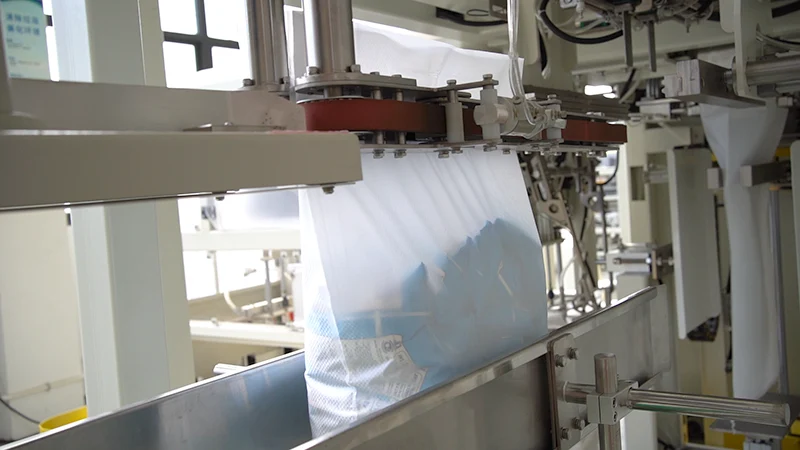
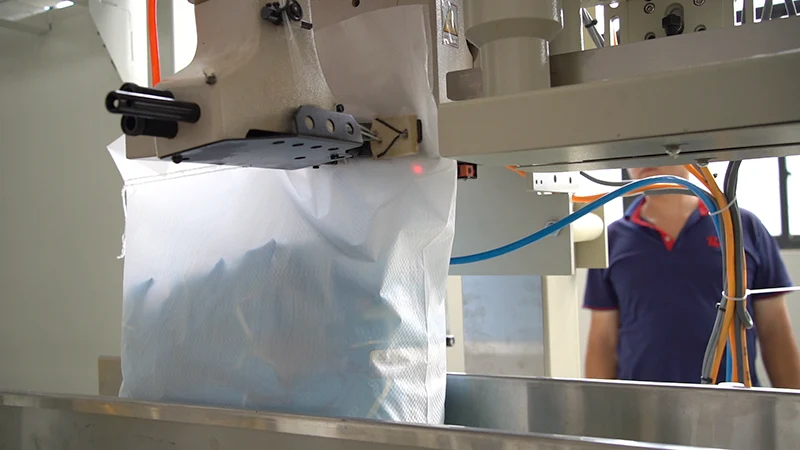
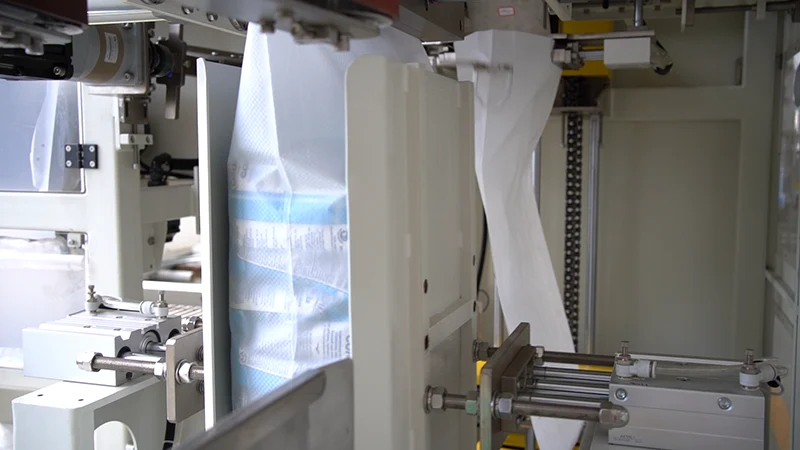
    The common old approach is to rely on a basic conveyor and a worker at each handoff point. That works only when output is low. Once the line runs continuously, the transfer section needs to do more than move product. It must guide, align, hold, compress, and present the bag to the next station in a consistent position.
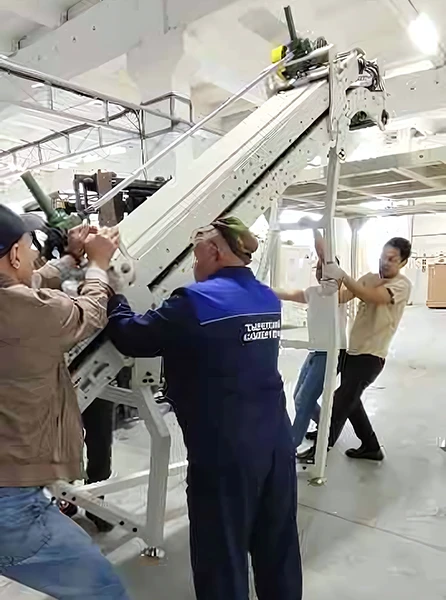
    Row of four BPM vertical form fill seal machines with stainless steel hoppers
    The main pain point

    When secondary packs arrive with uneven geometry or trapped air, the next station pays the price: poor alignment, unstable stacking, and more rework before sewing.

    Why Bibpu fits this job better than a generic transfer line
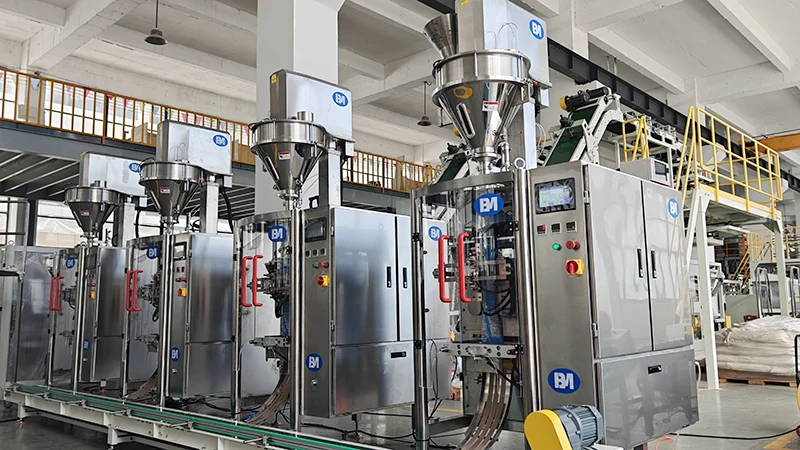
    Bibpu is suited to this workflow because the system is not just a bagging machine. It is a complete secondary packaging path. The line can take product from bagging and transfer it through controlled collection, holding, alignment, compression, and sewing. That matters for salt, where bag shape and sealing quality are both affected by dust, film behavior, and the need to keep the load square before closing.
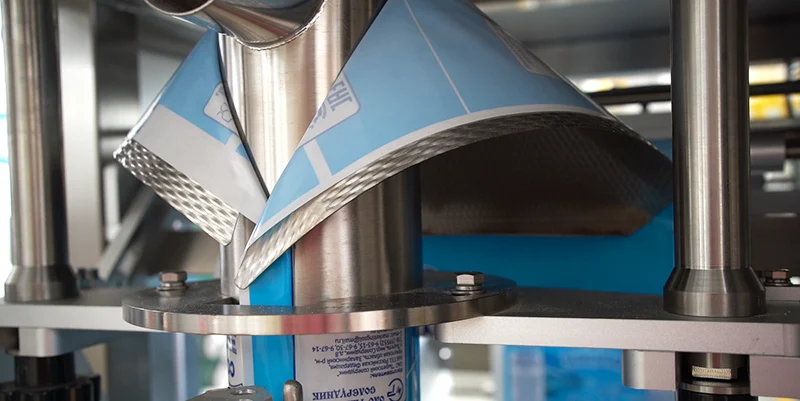
    The machine details in the selected images show the actual engineering behind that stability. The dimpled stainless steel forming shoulder helps reduce film sticking and drag. The heated sealing jaw keeps the closure consistent. The pneumatic clamping and bag holding station keeps inner packs or filled sacks positioned before the next step. And the heavy-duty sewing head at the end turns a stable presentation into a clean final closure instead of asking the operator to fix shape problems by hand.

    Practical insight: in secondary packaging, the best line is often the one that removes correction work from people and moves it into guided structure, controlled transfer, and repeatable closing stations.

    Structure and process evidence from the line

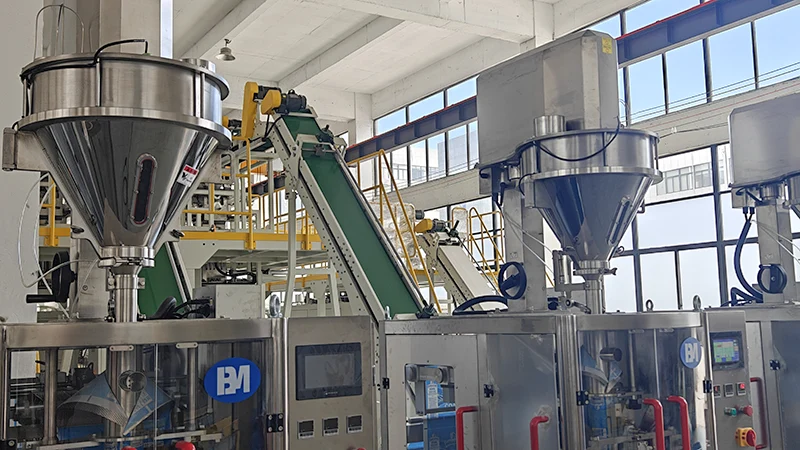
    The line is built around a steel workshop layout, multiple VFFS units, and controlled transfer hardware. The stainless hopper row supports stable feeding. The shoulder section handles film routing with less sticking. The sealing zone keeps the bag edge consistent. Downstream, the woven sack station uses pneumatic clamps to hold the load before the sewing head closes the top.

    That combination is important because each station solves a different failure mode. Feeding solves supply continuity. Shoulder geometry solves film handling. Sealing solves closure reliability. Bag holding solves position control. Sewing solves final integrity. When these functions are linked, the result is fewer crooked bags, less operator intervention, and a cleaner path from inner pack to outer sack.

    Line elementWhat it solvesEvidence from selected image
    Stainless hopper rowStable feed and multi-station continuityFour-machine VFFS array
    Dimpled forming shoulderLess film drag and stickingTextured stainless collar detail
    Heat sealing jawRepeatable closure qualityClosed sealing mechanism during operation
    Pneumatic bag holdingBag position before closingInner packs held inside woven PP sack
    Industrial sewing headFinal secure top closureNewlong sewing head stitching the sack opening
    Dimpled stainless steel forming shoulder of VFFS machine to reduce film sticking
    Heated cross-sealing jaw mechanism of vertical bagger during sealing process
    Refined salt packets falling into secondary woven PP bag held by pneumatic clamps
    Industrial Newlong sewing machine head stitching the opening of filled woven sack

    For plants that need to standardize secondary packaging, the real result is not only higher throughput. It is a more predictable handoff structure. That means less manual sorting, fewer misaligned sacks, cleaner sewing, and a more stable final package ready for storage or shipment.

    Need a secondary packaging layout that reduces handoff rework?

    Use a Bibpu line when your process needs controlled transfer, stable bag shape, and a final sewing step that starts from a well-presented load instead of a manually corrected one.

    Contact us